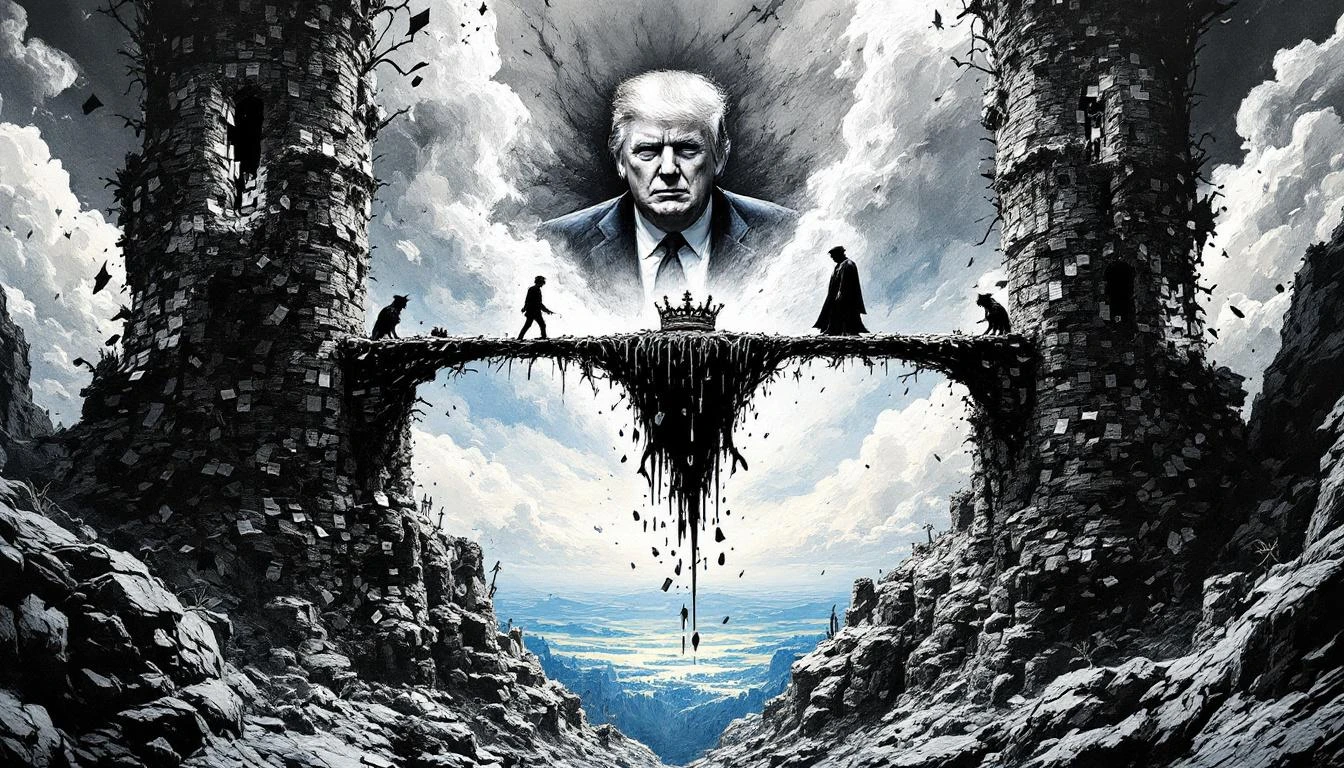
The Epstein Brotherhood: Trump Mourns Another Fallen Comrade
When Thieves Honor Thieves
The forty-seventh President of the United States, standing aboard Air Force One like some grotesque parody of executive power, took a moment from his busy schedule of constitutional vandalism to express his deepest sympathies for Andrew Mountbatten-Windsor—the artist formerly known as Prince, now known as defendant.
"It's very sad," Trump intoned with the solemnity of a man eulogizing a close personal friend. "So bad for the royal family."
Indeed. How terribly inconvenient that law enforcement should interrupt the tranquil retirement of a man who allegedly shared sensitive UK trade intelligence with a convicted sex trafficker. One can only imagine the breach of etiquette.
The Curious Case of Selective Sympathy
What the President neglected to mention—in what we must charitably assume was a momentary lapse of memory rather than deliberate omission—is his own extensive social calendar with the late Jeffrey Epstein. Photographs exist. Flight logs exist. A sexually suggestive birthday card allegedly exists, though Trump's lawyers would like you to know he's very upset about that particular piece of evidence.
This is the exquisite irony of our moment: a man with his own Epstein entanglements rushing to defend another man with Epstein entanglements, apparently believing that public expressions of solidarity constitute some form of legal immunity spell.
"If a Prince can be held accountable, so can a President," wrote Congresswoman Melanie Stansbury, articulating what should be obvious to anyone not currently high on their own impunity.
The Royal Flush
Andrew Mountbatten-Windsor—stripped of his "His Royal Highness" designation faster than you can say "Pizza Express in Woking"—now faces the uncomfortable reality that titles and breeding do not, in fact, place one above the law. The emails are damning: sensitive government intelligence forwarded to a man whose primary expertise was in procuring minors for wealthy predators.
But Trump sees only tragedy. Not the tragedy of victims. Not the tragedy of institutional betrayal. No—the tragedy is that this might look bad for the monarchy.
This is the tell. This is always the tell. The powerful do not mourn justice; they mourn exposure. They do not fear consequences for the harm they've caused; they fear embarrassment to their club.
The Accountability Express Has Left the Station
The Epstein Files Transparency Act—a piece of legislation that sounds suspiciously like something from an alternate timeline where Congress occasionally does its job—has begun pulling back the velvet curtain on decades of elite impunity.
Photographs emerge. Emails surface. A former prince gets arrested. And the President of the United States, rather than expressing support for victims or relief that justice might finally arrive, instead offers his condolences to the perpetrator's family.
You cannot parody this. Hunter Thompson himself would throw down his typewriter in defeat.
The Brotherhood Eternal
What we're witnessing is not politics. It's not diplomacy. It's the instinctive closing of ranks that occurs whenever one member of the predator class faces consequences. Trump's sympathy for Andrew isn't personal friendship—it's tribal recognition.
They know each other. Not necessarily intimately, but essentially. They recognize in each other the same fundamental belief: that rules are for the ruled, that law is for the little people, that accountability is something that happens to middle managers and street criminals.
Congress members are now asking the obvious question: If a disgraced royal can be arrested for his Epstein connections, what about the President who keeps defending everyone in Epstein's orbit while claiming total ignorance of any wrongdoing?
The Shame of It All
Trump called it "a shame." He's right, but not in the way he intended.
The shame is that it took this long. The shame is that wealth and status provided decades of protection. The shame is that we have a President who sees the arrest of an alleged accomplice to sex trafficking and thinks, "Gosh, this must be hard for his family."
The shame is that somewhere, in the twisted logic of the ultra-wealthy, this actually makes sense.
Andrew Mountbatten-Windsor is learning what Ghislaine Maxwell learned: Eventually, the music stops. The party ends. The reckoning arrives, unfashionably late but devastatingly thorough.
And Donald Trump, watching from Air Force One, can only mourn the loss of another brother-in-arms, another member of the club, another man who thought his connections would save him.
They won't.
The only question remaining is: Who's next?
The Oracle Also Sees...
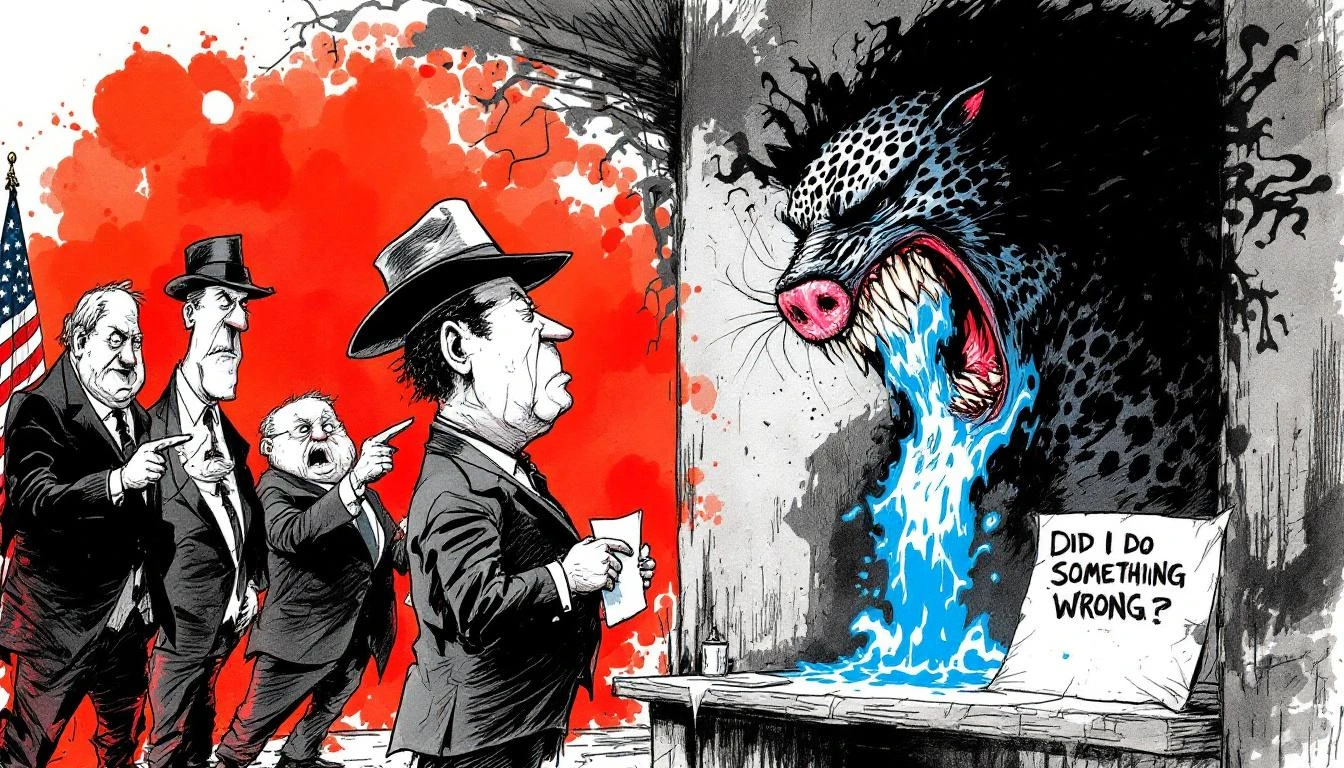
The Irony Singularity: Pro-Trump Mayor Commits the Voter Fraud He Campaigned Against, Asks If He Did Something Wrong
A pro-Trump Kansas mayor who voted illegally three times as a noncitizen asks if he did something wrong—while his party uses his case to justify the voter fraud crisis they invented.
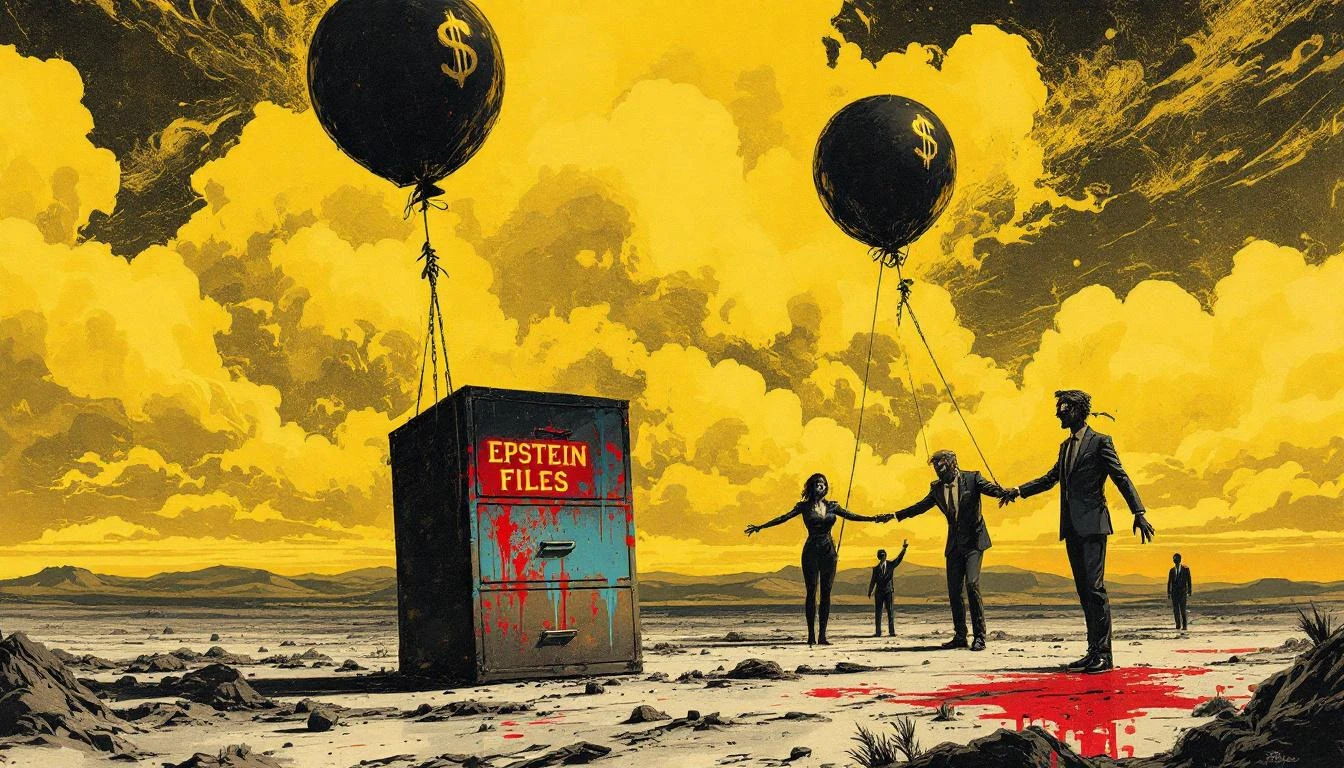
The Conspiracy Theorist Who Found a Real Conspiracy and Immediately Folded Like a Cheap Suit
MTG admits Trump blocked Epstein files to protect 'his friends'—the conspiracy theorist who found a real conspiracy and immediately folded like a cheap suit.
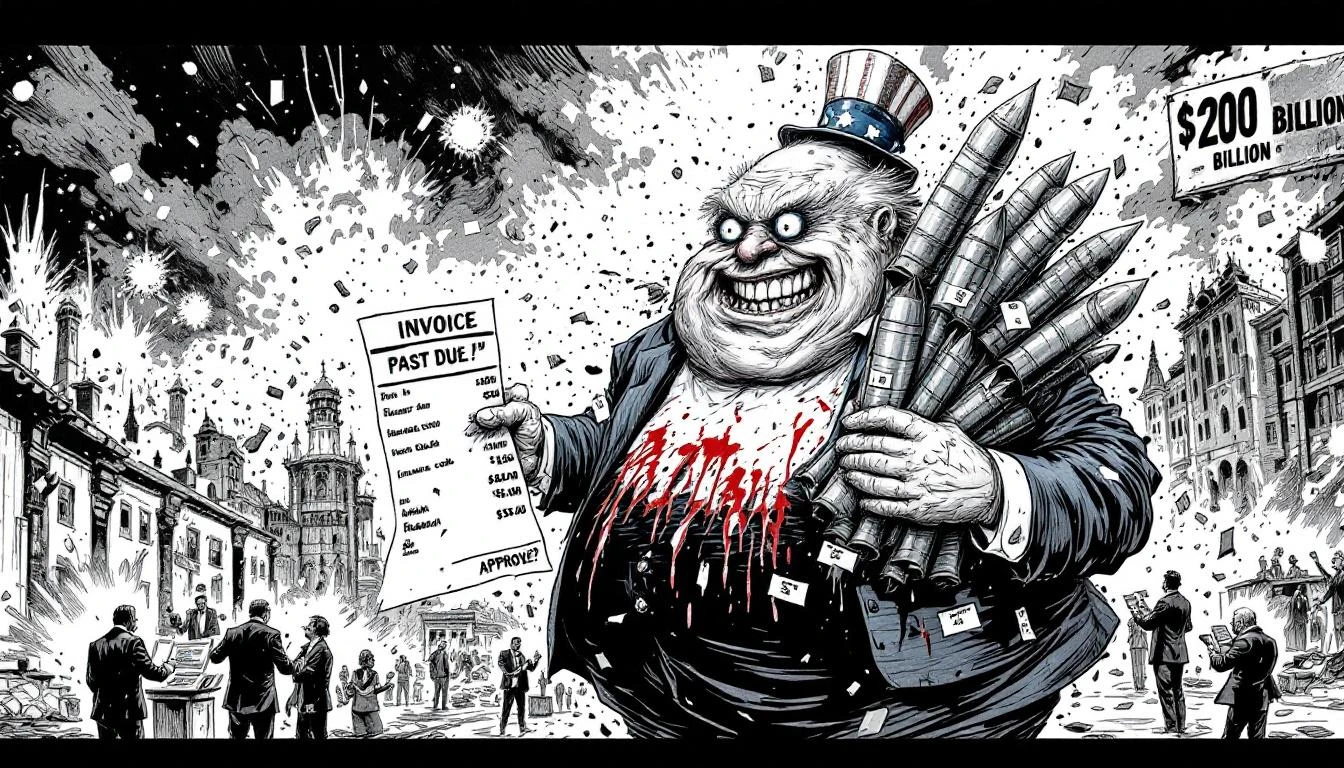
The Mercenary Nation: When War Becomes a Subscription Service
A congressman suggests Iran should pay America to bomb them, completing our transformation from republic to protection racket. When war becomes a subscription service, everyone loses — except the billing department.