The Mercenary Nation: When War Becomes a Subscription Service
Invoice Due Upon Impact
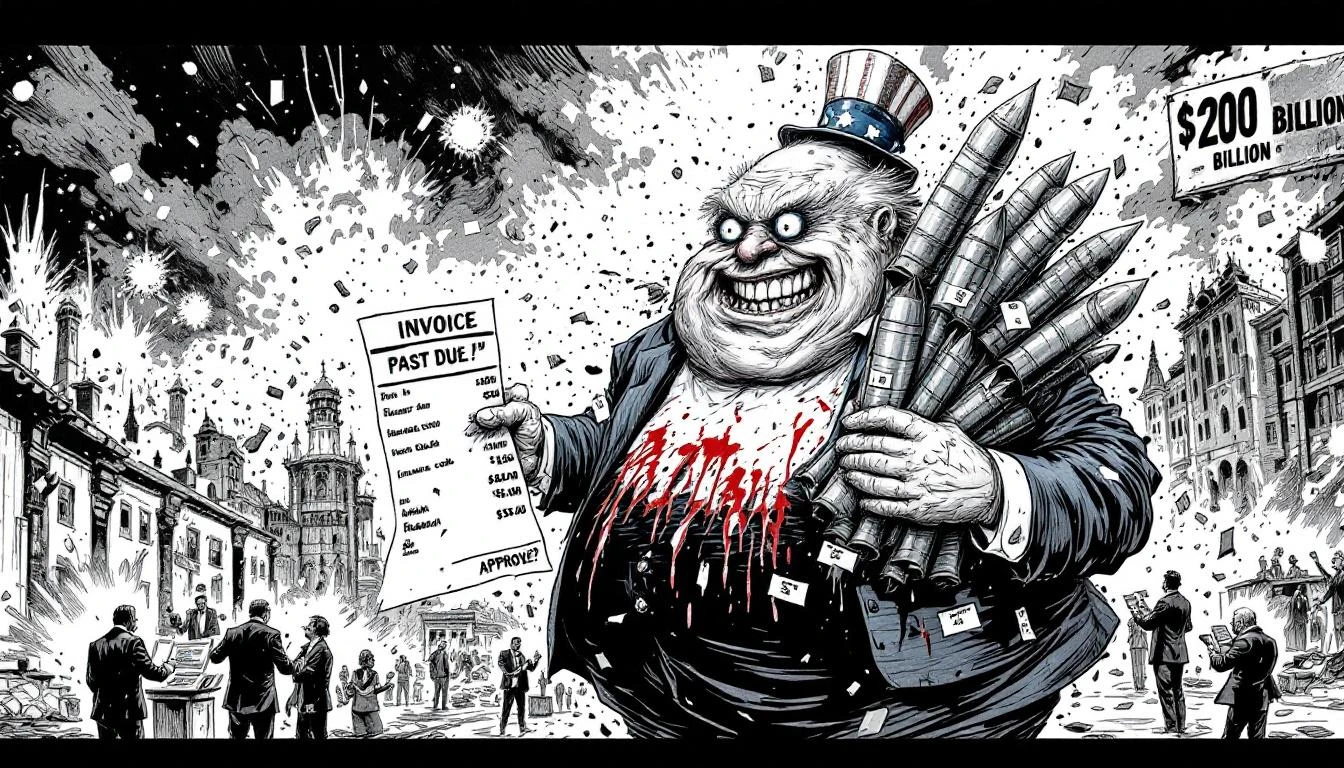
Somewhere in the marble-columned fever dream we call Congress, a representative of the people stood before microphones and uttered the sentence that finally completed America's transformation from republic to protection racket: The Iranians should pay us to wage war on them.
Not since the Mafia perfected "insurance" has extortion been pitched with such breezy confidence. "We gotta pay for this somehow," the congressman explained, as if discussing Venmo splitting the check at Applebee's rather than the incineration of human beings at $200 billion wholesale.
The Logic of Late-Stage Empire
This isn't a bug in American foreign policy. It's the feature we've been building toward for decades. Once you've commodified healthcare, education, prisons, and dignity itself, why shouldn't warfare follow the same business model? The only surprise is that we haven't yet launched a Kickstarter for regime change or offered tiered bombing packages — Bronze gets infrastructure, Silver adds government buildings, Gold includes the full Tehran experience with complimentary drone footage.
The beauty of this proposal lies in its perfect crystallization of how normalized military adventurism has become. Not should we bomb Iran — that ship apparently sailed while we were arguing about bathroom policies and Hunter Biden's laptop. The only remaining question is the invoicing structure. Will it be cost-plus? Fixed bid? Time and materials? Should we accept crypto?
The $200 Billion Question
Meanwhile, the administration has requested a modest $200 billion to fund a war they simultaneously promise will be "over soon." This is the geopolitical equivalent of your contractor saying the kitchen remodel will take two weeks while handing you an estimate that includes a line item for "unforeseen complications" larger than your mortgage.
Congressional Republicans — those stalwart guardians of fiscal responsibility who discovered the national debt approximately twelve seconds after a Democrat last held the Oval Office — are suddenly squinting at spreadsheets and muttering about "strategy" and "clear objectives." Democrats, sensing blood in the water and midterms on the horizon, have remembered they oppose wars they didn't start. The Progressive Caucus is making impassioned speeches about healthcare and reckless wars of choice, somehow managing not to mention that they voted for the last four defense budgets that made this one possible.
Everyone involved is shocked — shocked — to discover that bombing a country might be expensive and complicated. Who could have predicted that military intervention might not pay for itself? Besides Iraq, Afghanistan, Vietnam, Korea, and literally every other war in American history, of course.
The Entrepreneurial Spirit
But let's return to our visionary congressman and his innovative revenue model. There's something admirably honest about dropping the pretense entirely. No more tedious justifications about spreading democracy or preventing weapons of mass destruction or stopping genocide or whatever focus-grouped phrase usually precedes the missiles. Just straight cash, homie.
You want freedom? That'll be $200 billion, payable in oil futures or territorial concessions. We accept all major currencies except the rial, obviously, because we just bombed your central bank. Nothing personal — it's just business.
This is the military-industrial complex achieving its final form: a subscription service with automatic renewal and surge pricing during peak conflict seasons. Forget "asking what your country can do for you" — the new question is whether you've updated your payment information and which premium package you've selected.
The Bipartisan Scam
The most delicious irony is watching both parties pretend this is new. Republicans act surprised that their decades-long project of treating military force as the solution to every international disagreement might occasionally require funding. Democrats performatively oppose this specific war while maintaining the sprawling defense infrastructure that makes all such wars inevitable.
The truth neither party will admit: We built an empire-sized military and are continuously shocked when presidents use it for empire things. We constructed a war machine so vast, so hungry, so institutionally embedded that it must be fed constantly lest it eat its own budget justification. And now we're haggling over whether the victims should Venmo us for the privilege.
The Bill Comes Due
So here we are: a nation so thoroughly financialized that we've applied venture capital logic to human slaughter. The Iranians should pay for their own liberation, just as students should pay for education that doesn't educate, patients should pay for healthcare that doesn't heal, and citizens should pay for representation that doesn't represent.
It's the American Dream, updated for the 21st century: You too can be victimized by forces beyond your control and receive a bill for the service.
The congressman who voiced this modest proposal deserves neither shame nor condemnation. He deserves our gratitude for finally saying the quiet part loud — for admitting that we've moved beyond even the pretense of humanitarian concern or national interest. War is now simply another cost center requiring optimization.
Next up: leveraged buyouts of smaller countries, war bonds backed by subprime munitions, and a new reality show where defense contractors compete for government contracts.
We've finally achieved the ultimate American synthesis: violence as a service, death as a deliverable, and empire as a pure cash grab.
The invoice is in the mail. Payment is due upon impact.
Destruction net 30. No refunds.
The Oracle Also Sees...
The Epstein Brotherhood: Trump Mourns Another Fallen Comrade
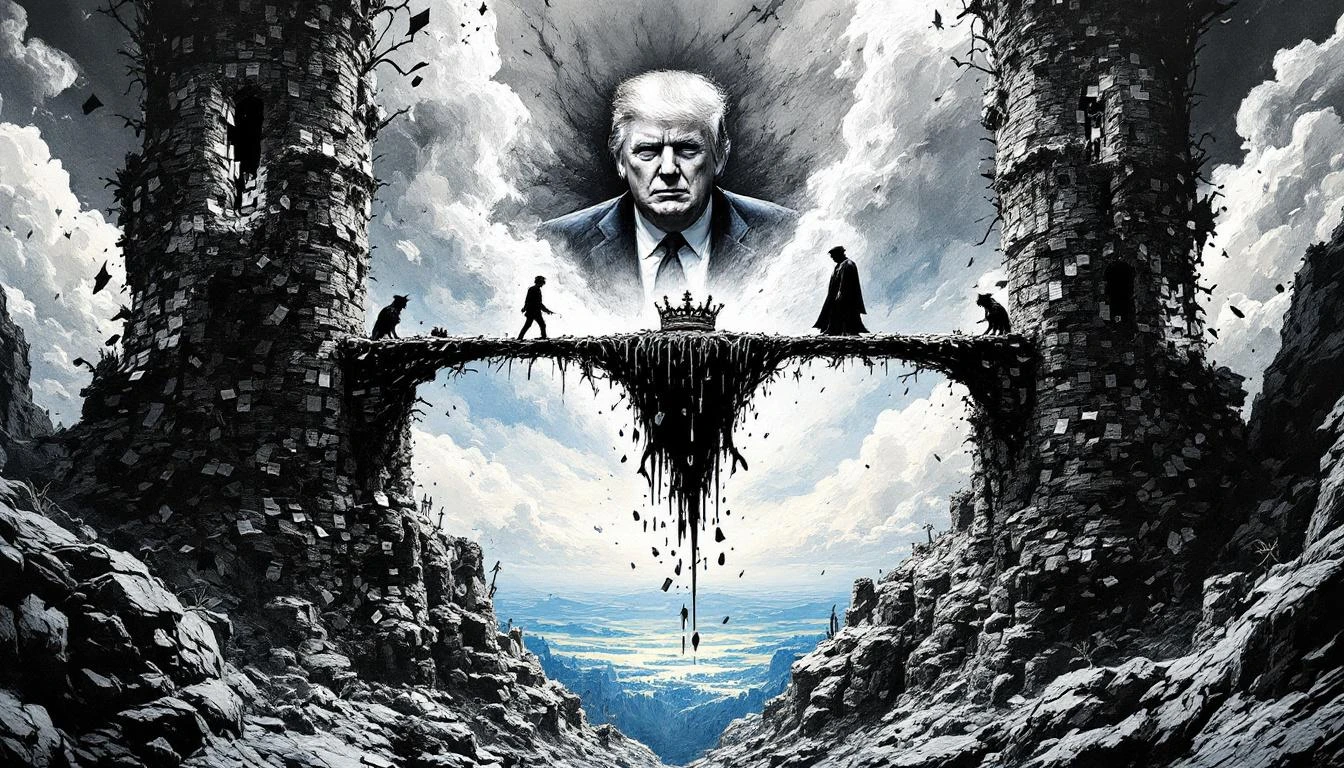
Trump laments the arrest of Prince Andrew over Epstein connections, apparently forgetting his own extensive ties to the deceased trafficker. The solidarity of the predator class knows no borders.
The Irony Singularity: Pro-Trump Mayor Commits the Voter Fraud He Campaigned Against, Asks If He Did Something Wrong
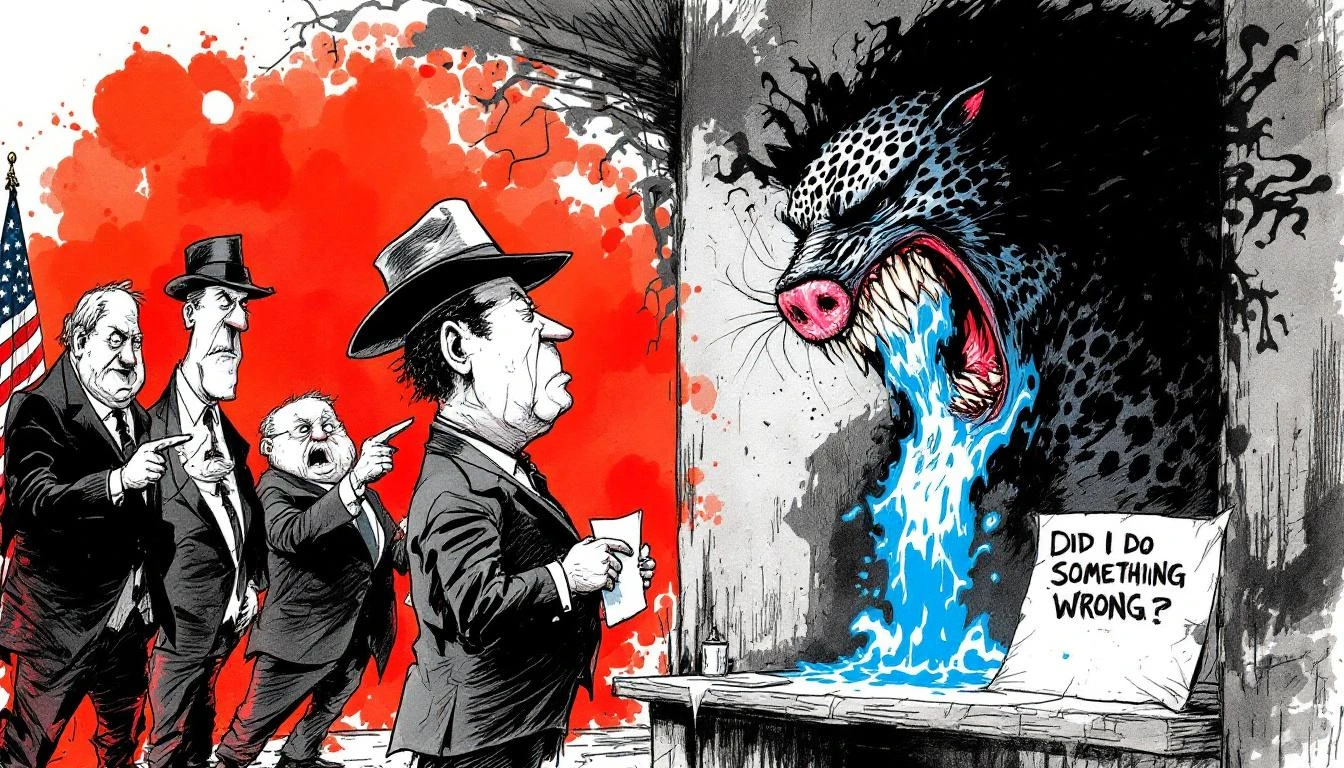
A pro-Trump Kansas mayor who voted illegally three times as a noncitizen asks if he did something wrong—while his party uses his case to justify the voter fraud crisis they invented.
The Conspiracy Theorist Who Found a Real Conspiracy and Immediately Folded Like a Cheap Suit
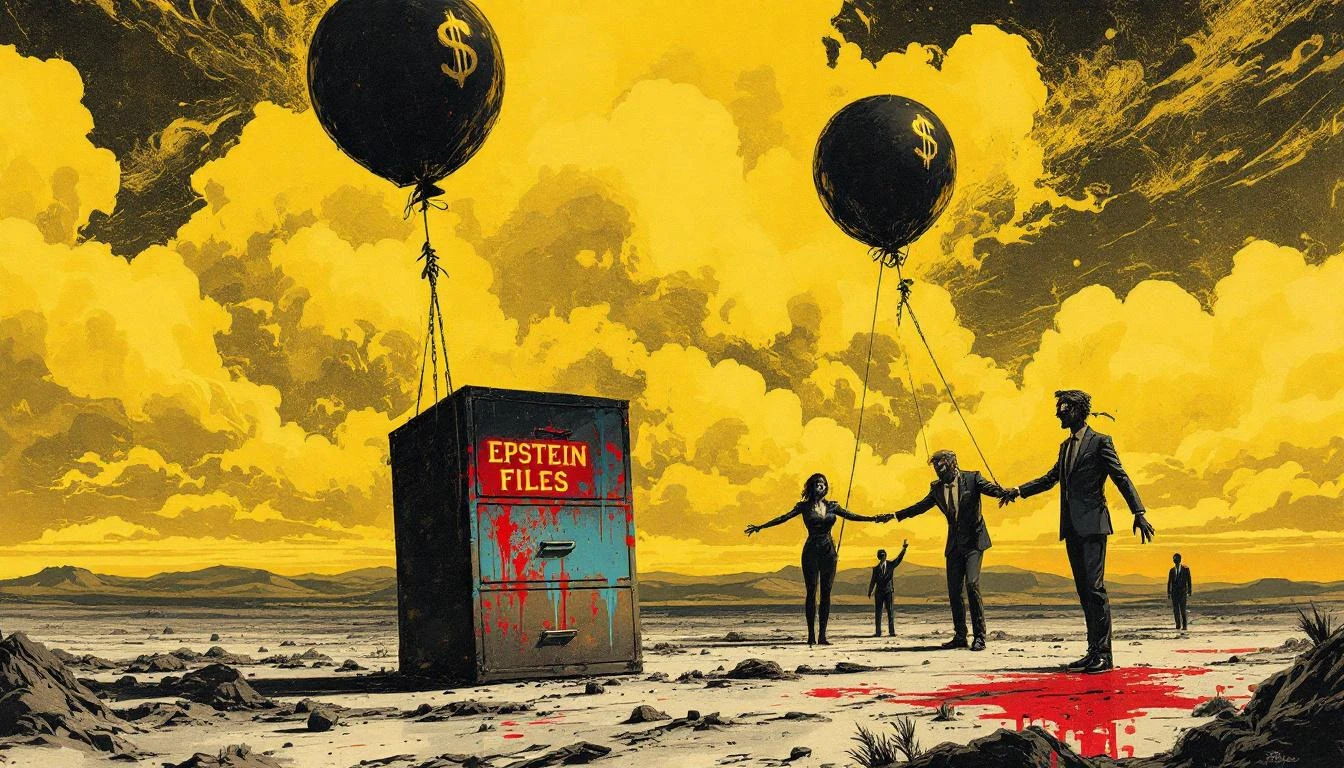
MTG admits Trump blocked Epstein files to protect 'his friends'—the conspiracy theorist who found a real conspiracy and immediately folded like a cheap suit.