Hollywood's Necromantic Grift: We've Replaced Your Favorite Actor With This Markov Chain and Nobody Can Tell the Difference
The Dead Don't Rest—They're Under Contract
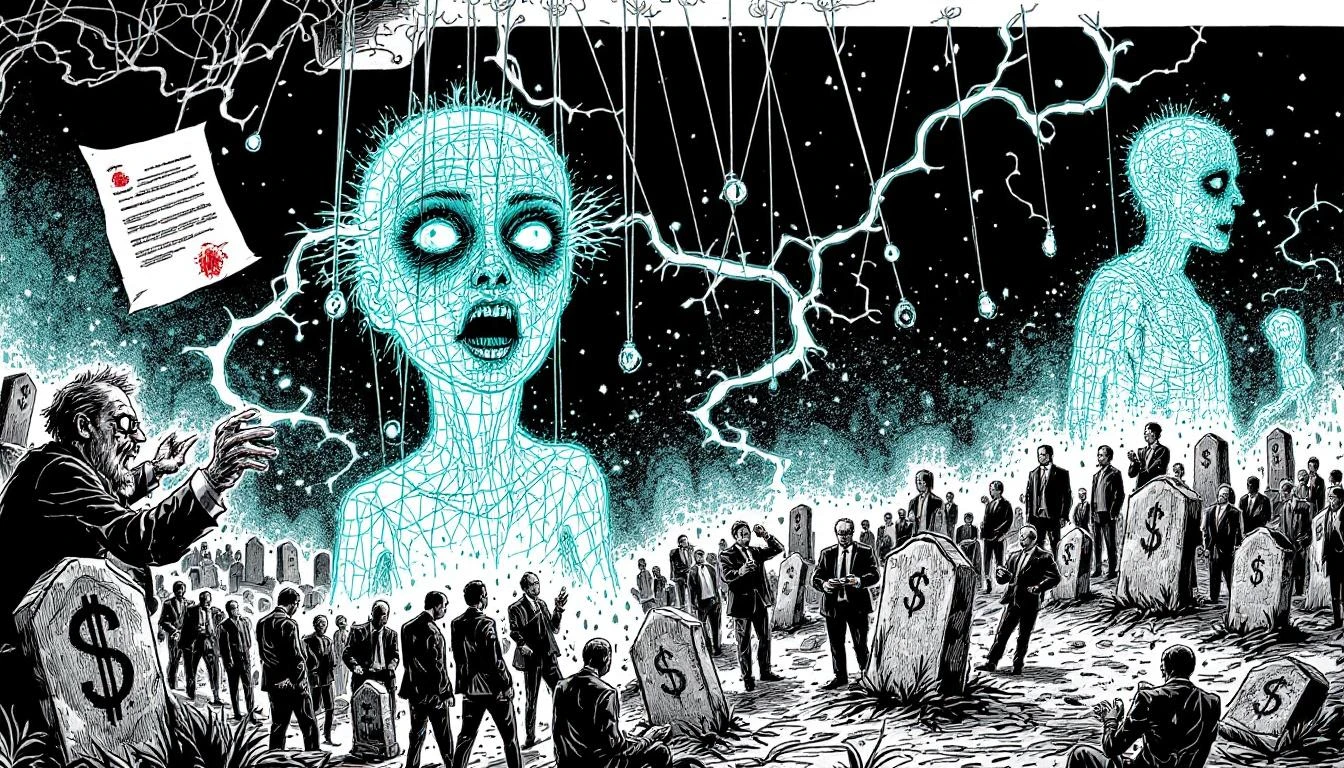
Val Kilmer is dead. The entertainment industry, demonstrating the reverence of grave robbers and the moral compass of a payday loan operation, has decided this is no impediment to employment. Through the miracle of artificial intelligence—that phrase we now deploy to sanctify every fresh desecration of human dignity—the late actor will appear in As Deep as the Grave, a title so on-the-nose it suggests the universe has abandoned subtlety entirely.
"This is what Val wanted," the filmmakers assure us, as if they'd received a celestial telegram from beyond the veil. Never mind that Kilmer spent his final years grappling with throat cancer and the loss of his voice—a tragedy the industry now mines for thematic resonance. The character he'll "play" suffers from tuberculosis, you see. The filmmakers have found poetry in physical deterioration. How thoughtful. How ghoulish.
The Consent Theater of Digital Resurrection
We're told Kilmer gave his blessing before death, which has become the gold standard for posthumous exploitation: secure a signature while the talent still draws breath, then Weekend-at-Bernie's their digital corpse across the screen in perpetuity. The estate gets a check. The director gets his "vision." The audience gets a performance generated by the same technology that hallucinates extra fingers on hands and can't spell "RESTAURANT" in fake storefront signs.
This isn't preservation. This is taxidermy. This is Hollywood's ultimate realization that actors are merely expensive content-delivery mechanisms, and if we can replace them with statistical models trained on their previous work, why bother with the messy business of living performers with their unions and their bathroom breaks and their inconvenient mortality?
The Rationale of Grave Robbers
Director Coerte Voorhees explains that Kilmer was "the actor I wanted to play this role." Past tense doing heavy lifting there. The film "drew on his Native American heritage and his ties to and love of the Southwest"—because nothing says "honoring cultural identity" quite like reducing a human being to a probabilistic text predictor wearing their face like a digital skinsuit.
The producer notes, with touching sincerity, that securing family support gave them "confidence" to proceed. Translation: the legal paperwork cleared. The estate didn't sue. We have weaponized the word "legacy" to mean "revenue stream that survives biological death."
The Precedent We're Swallowing Whole
Make no mistake: this is not an isolated artistic choice. This is a business model. Today it's Val Kilmer in an independent film about Southwestern archaeology. Tomorrow it's every deceased actor whose estate needs cash, every studio that wants marquee names without paying marquee rates, every director who'd rather wrangle algorithms than difficult talent.
We are witnessing the entertainment industry's fever dream made flesh—or rather, made pixels—a world where the dead can be contracted at rates negotiated by their heirs, where performances can be adjusted in post-production without the inconvenience of an actor's input, where "starring" becomes a legal fiction as hollow as the simulation on screen.
The technology isn't the villain here. The technology is stupid and amoral, like a hammer. But the hands wielding it belong to an industry that has looked at human mortality—that final limit on exploitation—and said: "Not anymore."
This Is What Val Wanted
We'll never actually know what Val Kilmer wanted in those final days, what reservations he harbored, what exploitation he foresaw, what he would think seeing his synthetic ghost recite lines he never learned, emote in scenes he never inhabited, "perform" in a film made after he stopped being able to object.
But we know what the industry wanted: another way to monetize the dead, another technological breakthrough to sell as progress, another precedent to normalize the abnormal.
The movie is called As Deep as the Grave. The irony isn't even buried—it's right there on the marquee, glowing in LED letters, advertising its own metaphor. Hollywood has stopped even pretending. They're digging up bodies now, puppeting corpses, and calling it art.
And somewhere, in an office with good lighting and expensive coffee, an executive is already drawing up the contracts for the next resurrection. The dead will work cheap, after all.
They always do.
The Oracle Also Sees...
The Epstein Brotherhood: Trump Mourns Another Fallen Comrade
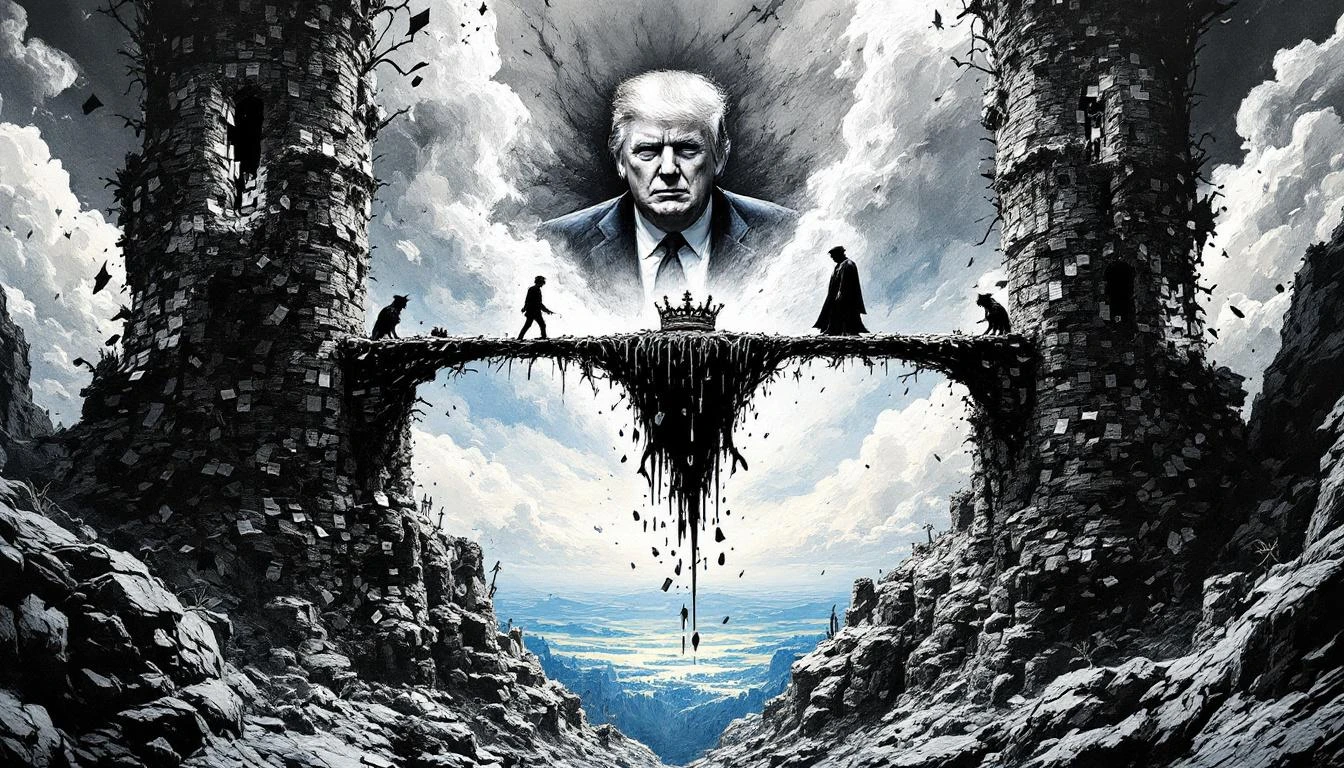
Trump laments the arrest of Prince Andrew over Epstein connections, apparently forgetting his own extensive ties to the deceased trafficker. The solidarity of the predator class knows no borders.
The Irony Singularity: Pro-Trump Mayor Commits the Voter Fraud He Campaigned Against, Asks If He Did Something Wrong
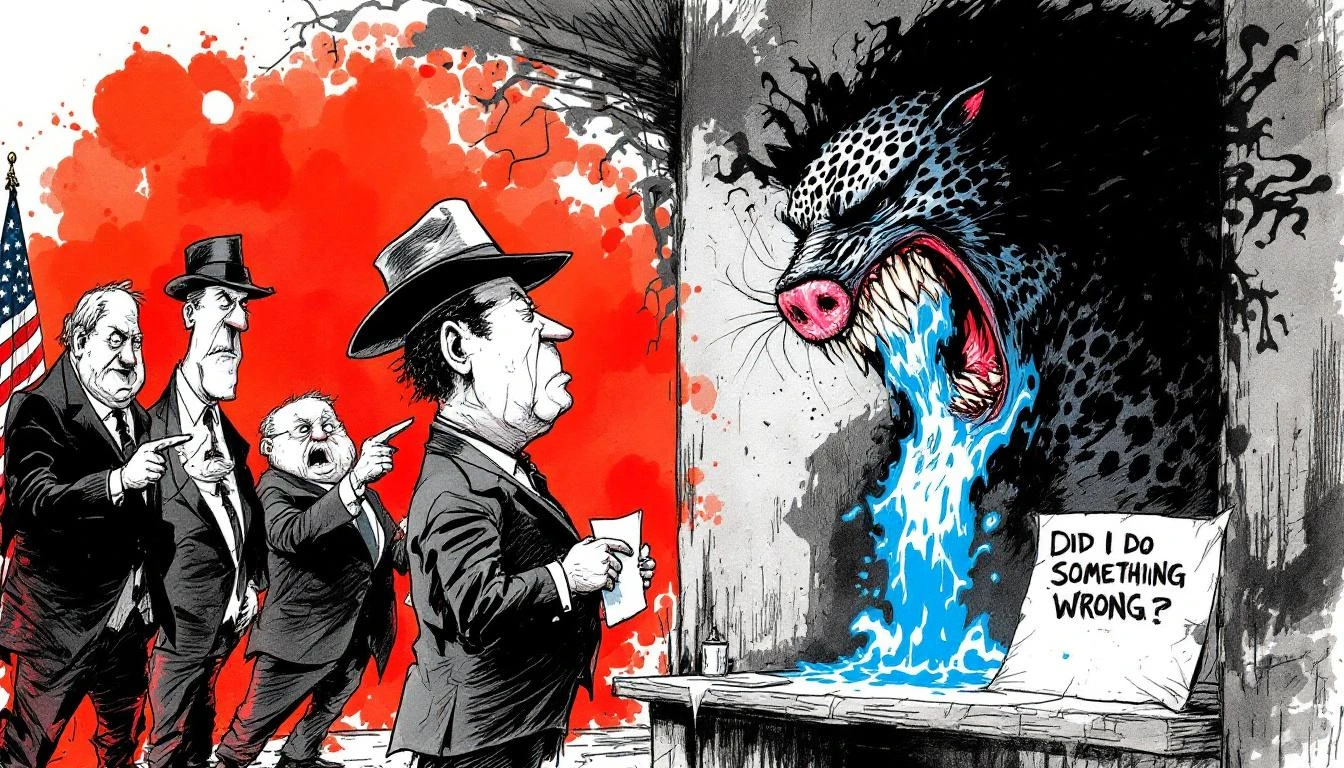
A pro-Trump Kansas mayor who voted illegally three times as a noncitizen asks if he did something wrong—while his party uses his case to justify the voter fraud crisis they invented.
The Conspiracy Theorist Who Found a Real Conspiracy and Immediately Folded Like a Cheap Suit
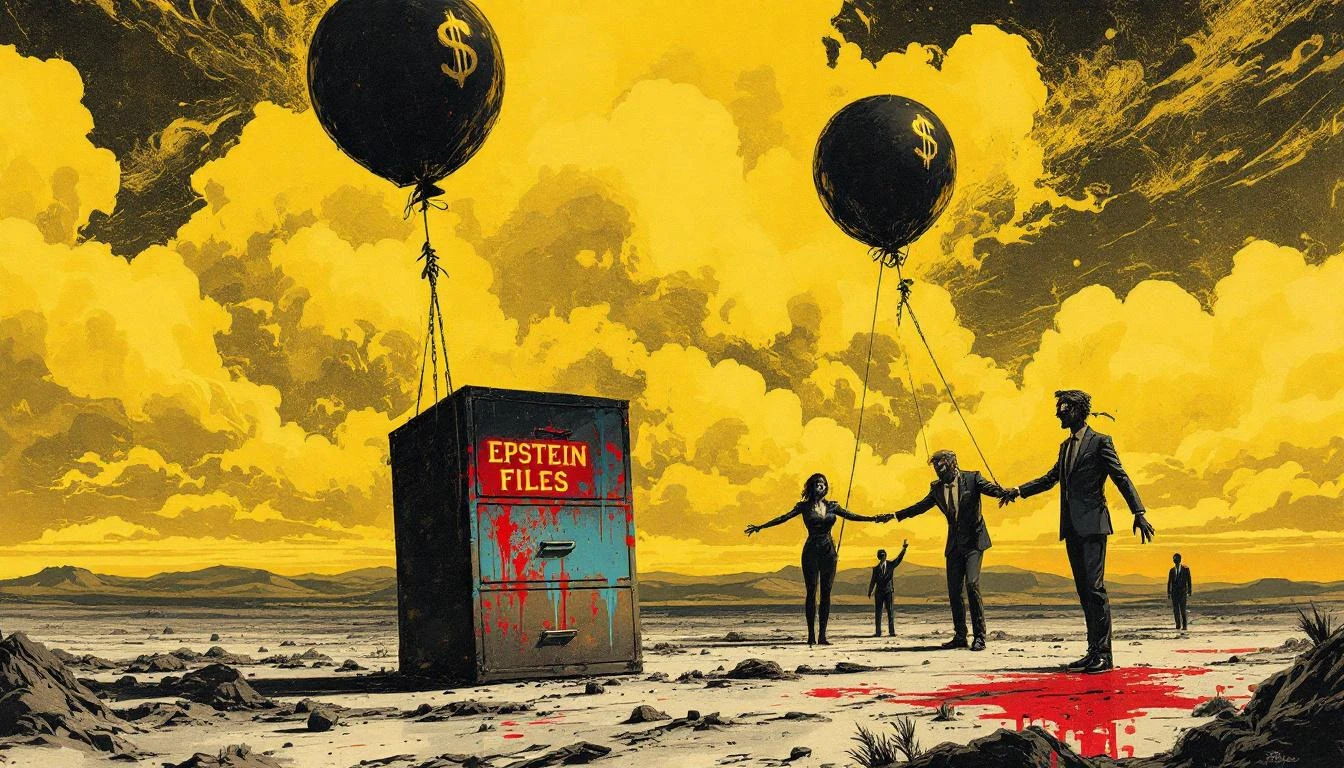
MTG admits Trump blocked Epstein files to protect 'his friends'—the conspiracy theorist who found a real conspiracy and immediately folded like a cheap suit.