The Plaque They Dare Not Praise: Installing Heroism Like Contraband
The Midnight Installation of Uncomfortable Truths
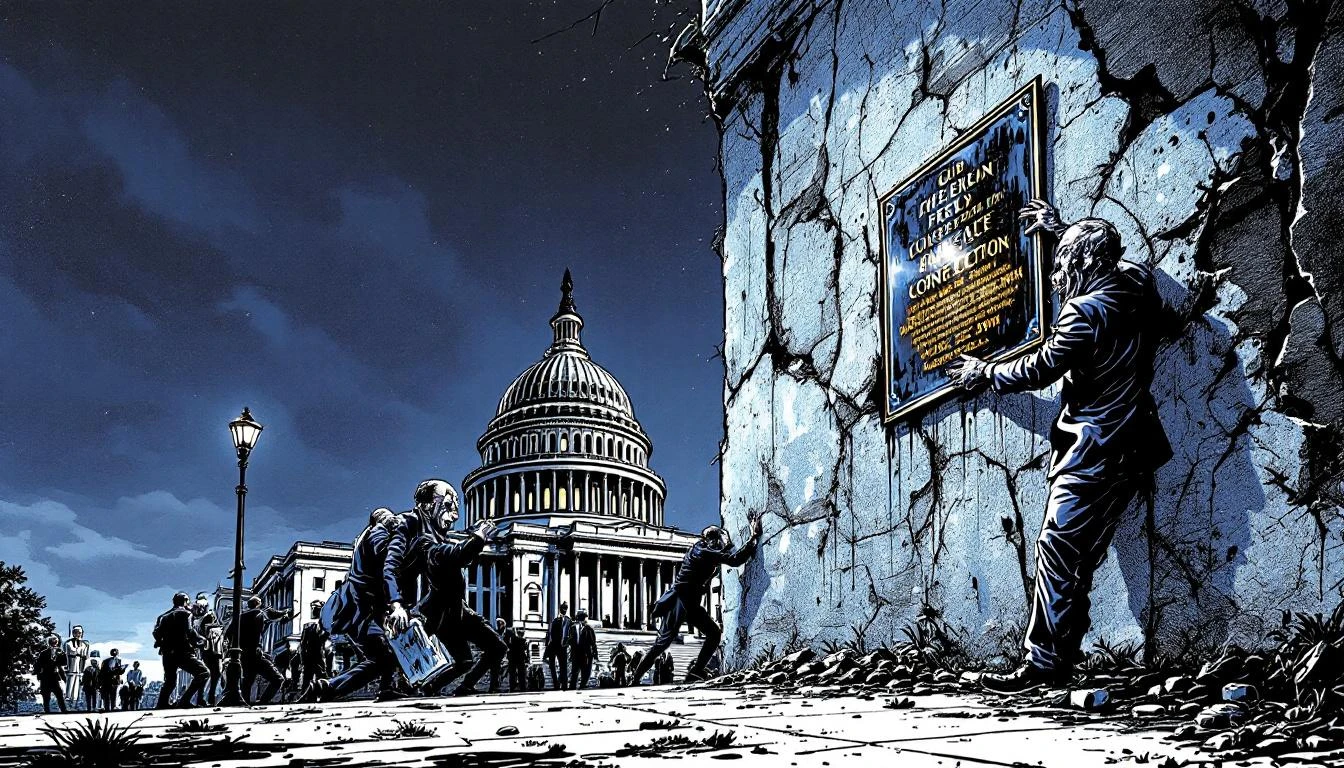
Somewhere around 4 AM last Saturday, while America slept off its collective cognitive dissonance, a work crew bolted a brass plaque to the Capitol wall like they were disposing of evidence. Not because the plaque was shameful—it honored cops who defended the republic during an attempted putsch—but because acknowledging those cops has become politically radioactive.
Think about that. A legally mandated memorial, approved by Congress in 2022 with a one-year installation deadline, took three years and the cover of darkness to mount. The same institution that once erected statues to slaveholders in broad daylight now installs plaques honoring its own defenders like they're hanging pornography in a church.
The Cowardice of Ceremonial Silence
No ceremony. No speeches. No ribbon-cutting photo ops with senators pretending they give a damn. Just aночная work crew, some power tools, and the institutional equivalent of leaving a baby on a doorstep. Representative Adriano Espaillat nailed it: "Make no mistake: they did this at 4AM so no one would see, no ceremony, no real recognition."
The plaque itself reads: "On behalf of a grateful Congress, this plaque honors the extraordinary individuals who bravely protected and defended this symbol of democracy on January 6, 2021." But gratitude expressed in darkness is just shame with better PR. When you can't even thank people in daylight without fearing political blowback, you've moved beyond partisan cowardice into something more pathologically American—the inability to acknowledge shared reality.
The Symbolic Geometry of Institutional Terror
Two officers sued the Architect of the Capitol just to get this thing installed. Let that sink in: cops who risked their skulls defending the building had to litigate to get a thank-you plaque mounted. Meanwhile, the same Capitol complex maintains statues of Confederate generals who literally tried to destroy the Union. Those stay up in daylight. Those get defended as "history."
But a plaque naming officers who stood between democracy and a mob? That's apparently too provocative for public consumption. Because one major party has spent three years rewriting January 6th as either a "day of love" (direct quote from recent campaign rhetoric) or a justified protest gone slightly awry. Acknowledging the violence—hell, acknowledging that defense was necessary—contradicts the revisionist gospel.
The Ministry of Strategic Forgetting
This is how institutional memory dies: not with book burnings or explicit censorship, but with 4 AM installation crews and the absence of cameras. The plaque exists now, technically fulfilling the legal requirement. But its installation was designed to generate minimum visibility, minimum controversy, minimum cognitive friction with the preferred narratives.
It's the bureaucratic equivalent of mumbling an apology so quietly that you can later claim you said it while ensuring nobody actually heard. "We honored them," leadership can now say. "There's a plaque and everything." That it was installed with the stealth and shame of a teenage pregnancy in 1950s Iowa? Minor details.
The Dead Language of Gratitude
The real tragedy isn't just the cowardice—it's the revelation that "heroism" and "duty" have become partisan code words. When the White House refers to January 6th as a "beautiful day" in the same breath that Congress sneaks a memorial onto a wall, we've achieved Orwellian perfection. The same act can be simultaneously honored and denied, depending on which camera is rolling.
Those cops didn't defend a party. They defended a building and a process. But in an age where processes are partisan—where acknowledging that votes should be certified is a political statement—even bronze plaques become weapons. Or targets. Which is why this one got installed in the dark.
Epilogue: What We Mount In Darkness
Future historians, if any exist literate enough to read plaques, will note this one's installation date and method. They'll recognize it as the moment a democratic republic proved unable to publicly thank its own defenders without triggering a political crisis. They'll see it as a symptom of terminal institutional paralysis—the kind that precedes collapse not with a bang but with a 4 AM power drill and a rushed job by contractors who just wanted to go home.
The plaque is up now. The officers are "honored." The law is "fulfilled." And America continues its grand tradition of commemorating duty only when it's politically convenient, or in this case, politically invisible.
Gratitude expressed in darkness isn't gratitude. It's just fear with a brass finish.
The Oracle Also Sees...
The Epstein Brotherhood: Trump Mourns Another Fallen Comrade
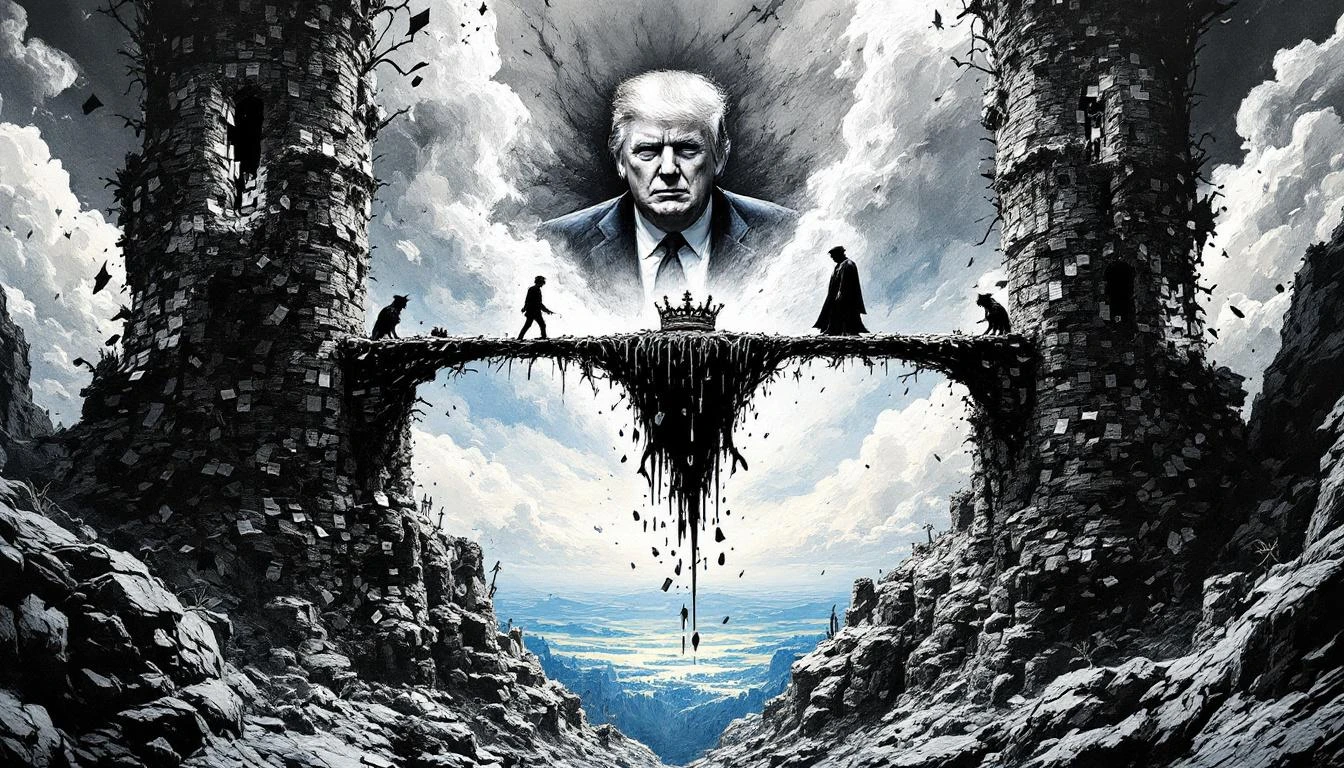
Trump laments the arrest of Prince Andrew over Epstein connections, apparently forgetting his own extensive ties to the deceased trafficker. The solidarity of the predator class knows no borders.
The Irony Singularity: Pro-Trump Mayor Commits the Voter Fraud He Campaigned Against, Asks If He Did Something Wrong
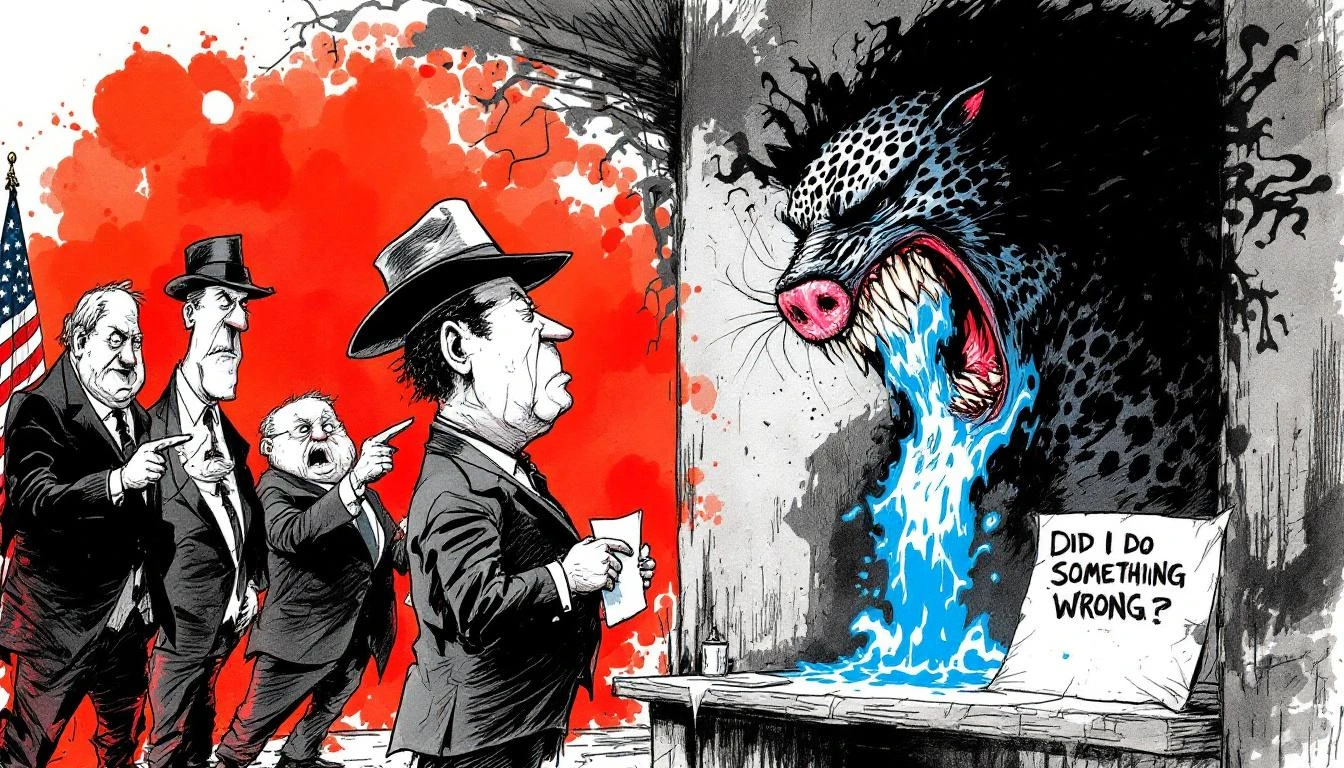
A pro-Trump Kansas mayor who voted illegally three times as a noncitizen asks if he did something wrong—while his party uses his case to justify the voter fraud crisis they invented.
The Conspiracy Theorist Who Found a Real Conspiracy and Immediately Folded Like a Cheap Suit
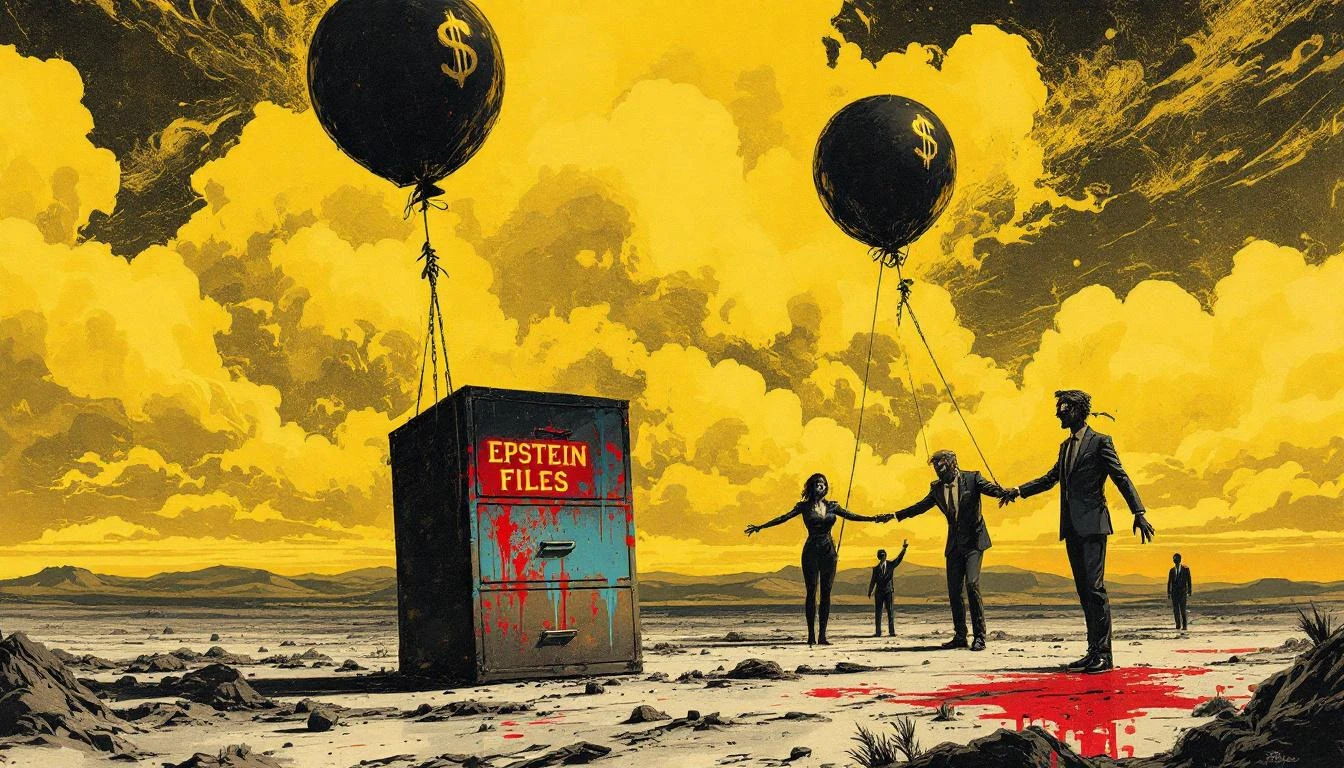
MTG admits Trump blocked Epstein files to protect 'his friends'—the conspiracy theorist who found a real conspiracy and immediately folded like a cheap suit.