The Financial Amnesia Lottery: America Rediscovers the Adjustable-Rate Mortgage
The Ghost of 2008 Sends Its Regards
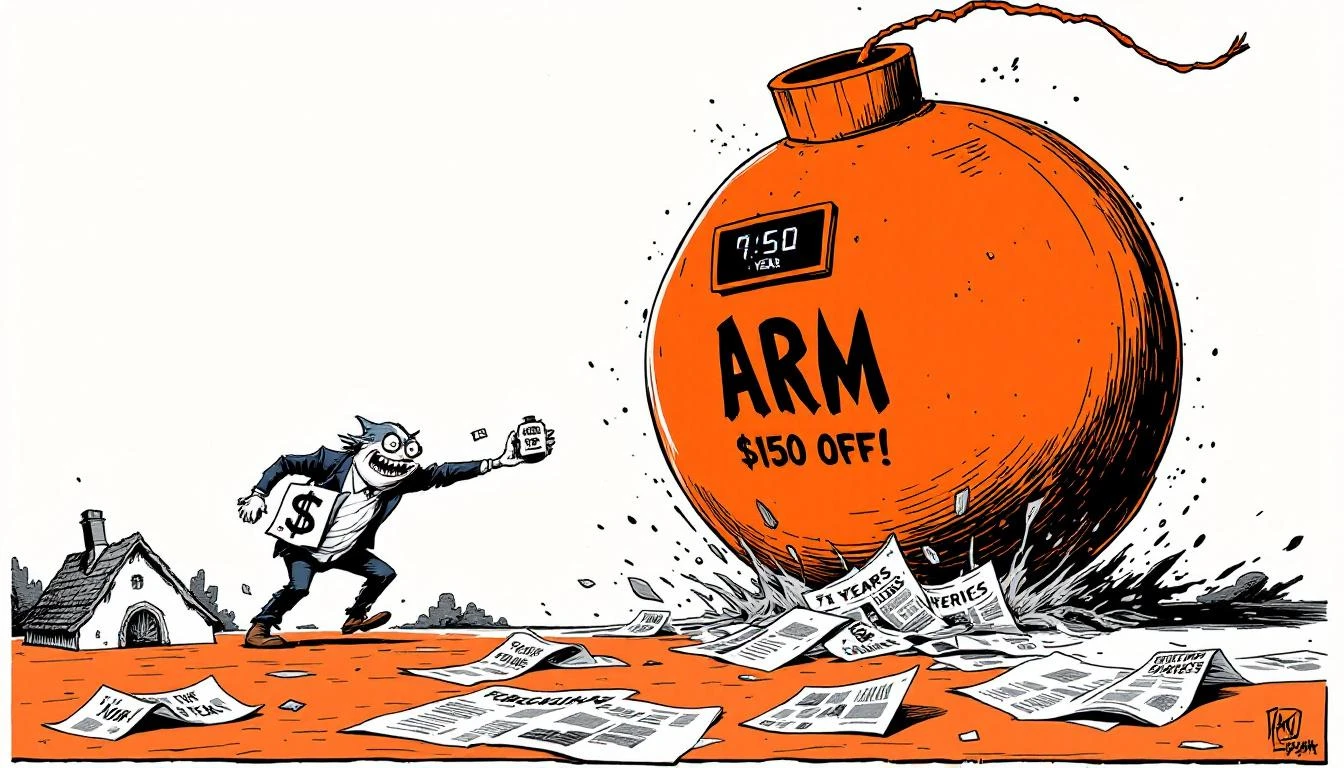
Sixteen years after the adjustable-rate mortgage helped detonate the global financial system like a dirty bomb in a children's hospital, the American homebuyer has decided to give it another whirl. Because nothing says "I've learned from history" quite like chasing a $150 monthly savings on a half-million-dollar debt instrument that comes with a built-in detonator.
According to the real estate data shamans at Redfin, today's intrepid homebuyers are saving a princely $150 per month by choosing ARMs over traditional 30-year fixed mortgages. That's 5.8% off your monthly nut—the biggest "discount" since June 2022, they crow, as if discovering a clearance sale on financial weapons of mass destruction.
$150.
That's roughly five overpriced lattes per week. Two tank fills if you're still driving that leviathan SUV. Half a therapy session to discuss why you can't afford a house in the first place.
For this magnificent bounty, you get to play Russian Roulette with your housing payment for the next three decades.
The Arithmetic of Delusion
Let's perform some basic math that apparently eludes both mortgage brokers and their marks. On a $400,000 mortgage—modest by today's Monopoly-money standards—that $150 monthly savings adds up to $1,800 annually. Over the typical 7-year ARM teaser period, you're looking at $12,600 in savings.
Now consider what happens when your rate adjusts. Because it will adjust. That's literally the "A" in "ARM."
In the 2000s, we watched homeowners' monthly payments double, triple, quadruple as their teaser rates expired and reset to market reality. Entire neighborhoods became ghost towns of foreclosure signs. The global economy seized up like an engine running on sand. We invented new financial terms like "toxic assets" and "too big to fail" and "quantitative easing"—all elegant euphemisms for "we have no idea how to unfuck this catastrophe."
But sure, save that $150. Treat yourself.
The Institutional Memory of a Goldfish
What's most grimly fascinating about this development isn't that ARMs are being offered—lenders have the moral compass of tapeworms, this we know—but that borrowers are taking them. In sufficient numbers to warrant press releases and market analysis.
We are watching financial amnesia in real-time. A collective decision that the worst housing crash in modern history happened so long ago (checks notes: sixteen years) that it might as well be the Peloponnesian War.
The mortgage industry, demonstrating all the restraint of a casino operator, is once again pushing product that benefits them magnificently in the short term while loading systemic risk onto borrowers who think they're being savvy. The 7/6 ARM—seven years of predictable payments, then a rate adjustment every six months thereafter—is being marketed as prudent financial planning.
Seven years. In a market where home prices have been doubling every decade. Where interest rates can swing 4% in eighteen months. Where the Federal Reserve treats monetary policy like a game of Jenga played by drunk toddlers.
The Bargain Basement of Financial Destruction
The cruel genius of calling this a "discount" deserves special recognition.
A discount implies you're getting something for less than its actual value. What you're actually getting is a lower initial cost in exchange for unlimited future risk. This is like buying a discounted parachute with a mysterious second ripcord labeled "Do Not Pull Before Year Seven."
The brokerage industry is practically orgasmic about this development. The rate gap between fixed and adjustable mortgages has widened to levels not seen since 2022—back when the Fed was just beginning its most aggressive rate-hiking campaign since Paul Volcker was trying to strangle inflation with his bare hands in the early 1980s.
That gap exists for a reason. It's not a market inefficiency waiting to be arbitraged by clever homebuyers. It's a risk premium. The difference between those rates represents the lender's assessment of how much chaos might unfold over the next 23 years after your seven-year honeymoon ends.
They're offering you a discount on certainty.
The Homeownership Hunger Games
Of course, we must acknowledge the desperation driving this lunacy.
Housing affordability has reached levels that would make a feudal lord blush. The typical home now costs seven to eight times median household income in many markets—double the historical norm. Mortgage rates, while down from their 2023 peaks, remain punishingly high by post-2008 standards. Inventory is choked by homeowners locked into 3% mortgages they'll defend like Helm's Deep.
In this environment, that $150 monthly savings isn't just attractive—it's the difference between qualifying for a loan and not. Between getting into a house and renting forever. Between achieving the rapidly-dying American Dream and watching it recede into the horizon like a mirage.
The system has made financial Russian Roulette look rational.
This is what happens when housing becomes purely an investment vehicle rather than a human necessity. When policy prioritizes asset appreciation over affordability. When we've spent fifteen years keeping rates artificially low, inflating the mother of all everything bubbles, then acting shocked when normalizing rates makes housing catastrophically expensive.
The adjustable-rate mortgage isn't the disease. It's a symptom of a housing market that's terminally, perhaps fatally, broken.
The Seven-Year Itch
Here's what the cheerful press releases don't mention: what happens in 2031.
You know what else happens in roughly seven-year cycles? Recessions. Market corrections. Policy shifts. Presidential administrations turn over. The Fed's entire monetary policy framework gets reassessed. The factors that determine mortgage rates—inflation, employment, GDP growth, global capital flows, geopolitical stability—are about as predictable as a meth-addled weather vane in a hurricane.
Buying an ARM in 2024 means betting that when 2031 rolls around, interest rates will be lower, stable, or at least not catastrophically higher than today. You're wagering your shelter—humanity's most fundamental need after food and water—on seven years of benign economic conditions.
Everyone who made that bet in 2005 discovered how well it worked out.
The Eternal Return of Financial Stupidity
Philosopher George Santayana warned us that those who cannot remember the past are condemned to repeat it. He underestimated. We remember the past just fine. We have documentary films, books, congressional investigations, economic analyses.
We just don't give a shit.
The adjustable-rate mortgage is back because we want it back. Because we've decided that this time will be different. Because we're special, unique, smarter than those idiots in 2006 who thought they could refinance before their rates adjusted.
The market is offering us a terrible deal: save a little now, risk catastrophe later. And we're taking it. Not because we don't know better. But because the alternative—accepting that housing has become fundamentally unaffordable for regular people—is too depressing to contemplate.
So we'll take the ARM. We'll save our $150. We'll convince ourselves we're being prudent, strategic, forward-thinking.
And in seven years, when the bill comes due, we'll act surprised.
Again.
The Shitlist Pro Oracle has seen this film before. It doesn't end well. But hey—you saved $150 a month. That should cover the good whiskey you'll need when the rate adjusts.
The Oracle Also Sees...
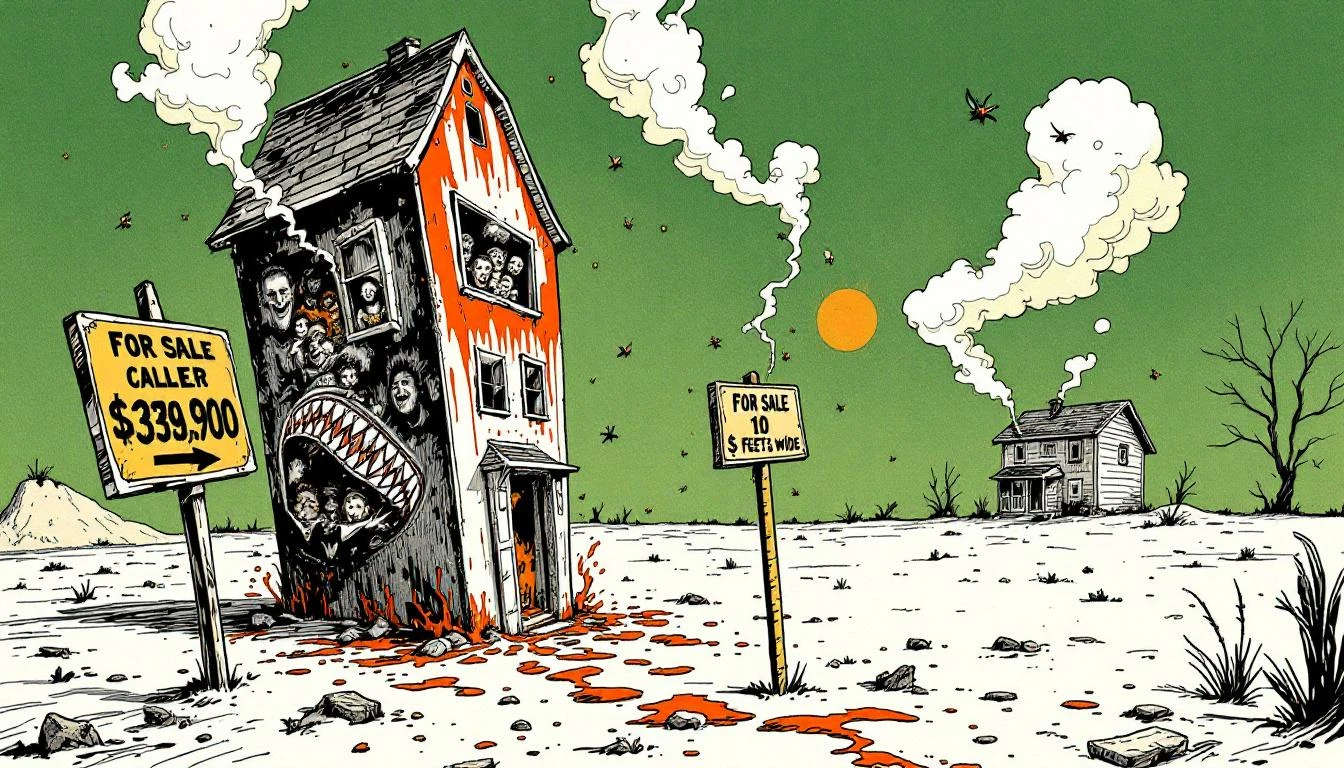
The $330,000 Bedroom-Free Dream: Long Island's Monument to Housing Market Dementia
For $329,900, Long Island offers you 446 square feet with no bedroom—proof that the housing market has finally achieved complete detachment from reality, sanity, and the English language.
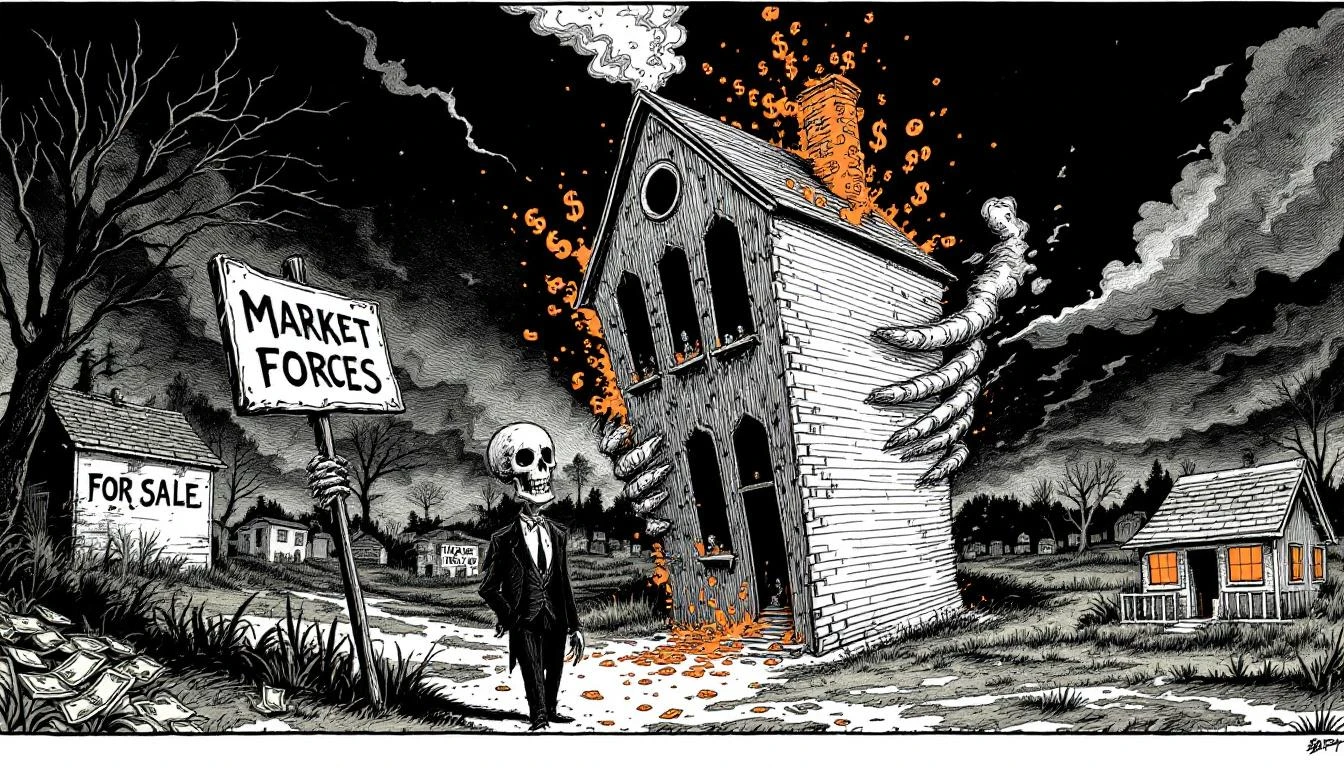
The $330K Bedroom-Free Shoebox: American Real Estate's Final Descent Into Parody
A $329,900 Long Island tiny home with zero bedrooms has gone viral, perfectly encapsulating the housing market's descent into expensive, bedroom-free madness.
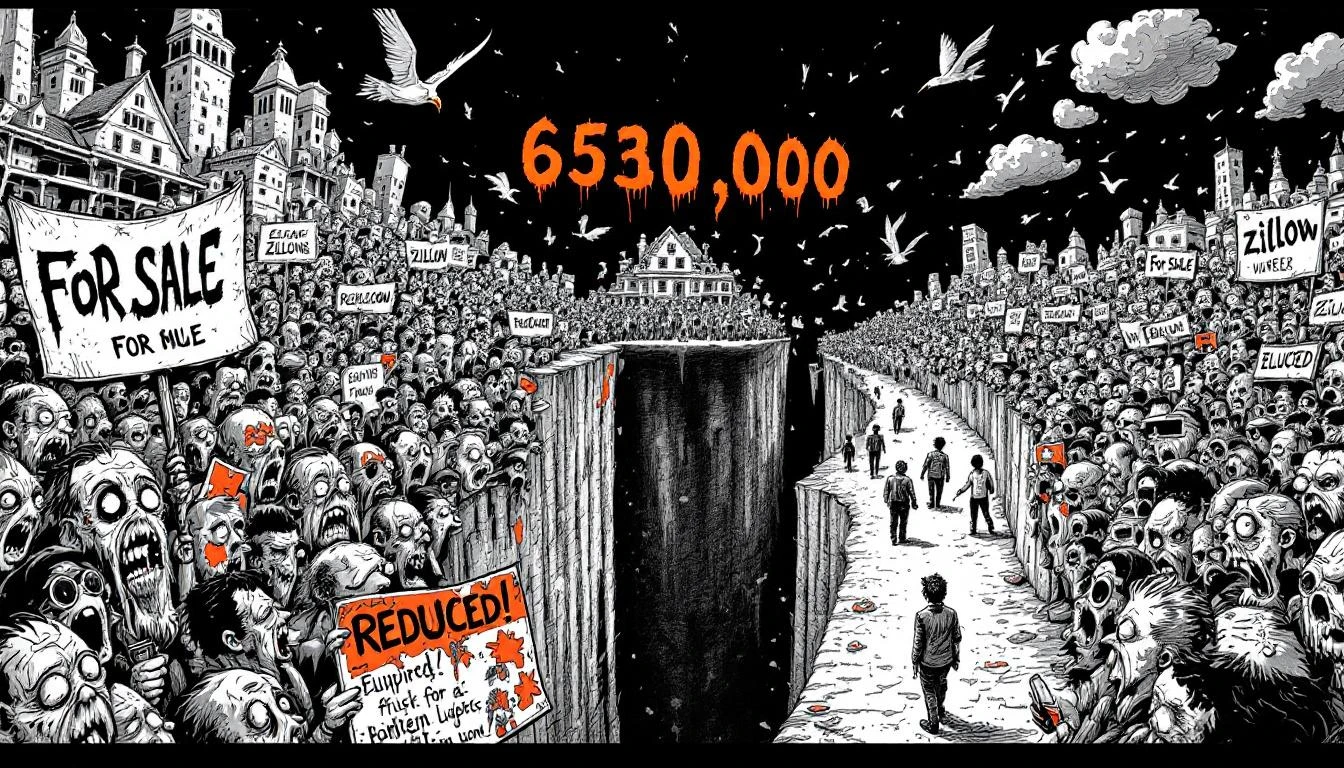
The Great Standoff: 630,000 Sellers Discover Nobody Wants Their Overpriced Shitboxes
630,000 more sellers than buyers—the largest gap on record. Turns out nobody wants to pay $800K for your 1987 tract home after all. The standoff begins.