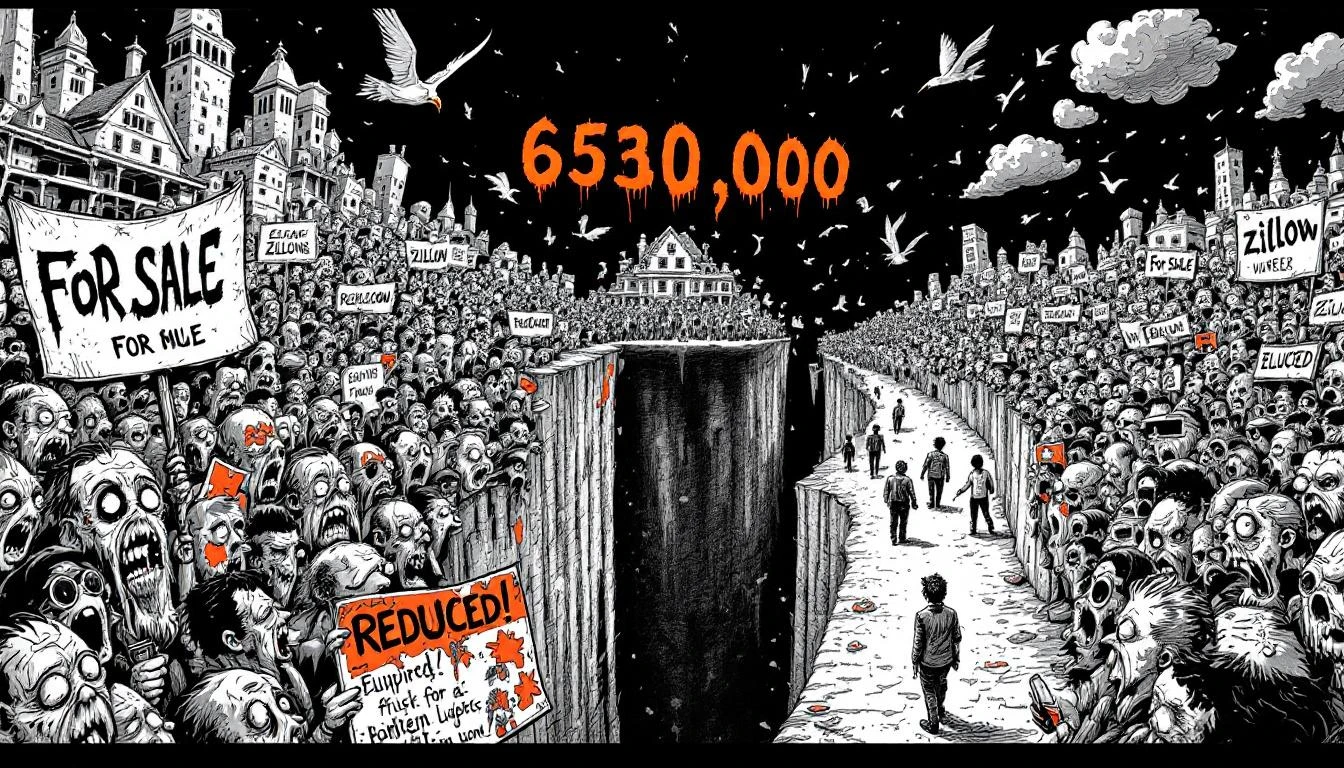
The Great Standoff: 630,000 Sellers Discover Nobody Wants Their Overpriced Shitboxes
The Emperor Has No Buyers
February 2026 will be remembered as the month American delusion finally met American mathematics, and mathematics won by 629,808 souls.
There are now 46.3% more home sellers than buyers in the United States—the largest gap since Redfin started keeping records in 2013. To put this in terms even a real estate agent might understand: this is like showing up to an orgy and discovering you're the only one who came, and now you're standing there naked holding a bottle of prosecco nobody wants while 630,000 other naked people clutch their own sad bottles, all of you pretending this is normal.
The Anatomy of a Standoff
What we're witnessing is not a market correction. It's a Mexican standoff between fantasy and reality, with both sides pointing loaded price tags at each other's heads.
On one side: sellers who spent the past four years watching their neighbors list a three-bedroom rancher with foundation issues for $847,000 and actually get it. They absorbed the HGTV-industrial complex's propaganda that their 1987 tract home with builder-grade everything is a "rare opportunity" and a "diamond in the rough." They believe, with religious fervor, that 2021 prices were the new normal, not the obvious peak of a credit-fueled mania that made the Dutch tulip bubble look like sound fiscal policy.
On the other side: buyers who have discovered that food, gasoline, and not dying of preventable diseases also cost money. Buyers who've done the math and realized that a $3,200 monthly mortgage payment for a house that was $180,000 in 2019 is not "getting their foot in the door"—it's volunteering for indentured servitude with extra steps.
The Narcissism of Small Price Differences
The sellers, God bless their adjustable-rate souls, are confused. They've made "concessions." They've dropped their asking price from $799,000 to $789,000. They've thrown in the refrigerator (the one that's been broken since 2023 but still technically turns on). They've staged the master bedroom with ferns and those weird wooden bead things that serve no purpose except to say "a white lady lives here."
And still—nothing. Days on market pile up like unpaid credit card statements. The listing goes stale. The agent stops returning calls with the same enthusiasm. Reality begins its slow, cruel work.
But here's the thing about American homeowners: they've been told for so long that their house is their retirement plan, their equity engine, their ticket to the dream, that accepting a lower price feels like admitting their entire life strategy was a lie. Which, to be fair, it mostly was—but that's the kind of truth that requires either deep therapy or day drinking, and therapy doesn't build equity.
The Buyer's Revenge
Meanwhile, the buyers have simply... stopped. Not because they don't want homes—everyone wants a home—but because they've collectively realized that nobody actually HAS to buy right now. They can rent. They can stay with parents. They can house-hack or van-life or do whatever late-stage capitalism has convinced them counts as living.
This is the free market working exactly as advertised, which is why everyone hates it. When sellers had the power, it was all "best and final offers by Monday, no inspections, waive everything, blood oath required." Now that buyers have leverage, suddenly everyone's concerned about "market health" and "economic stability."
Here's a radical thought: maybe houses should cost what people can actually afford to pay. Maybe the "market" isn't "broken" when teachers and nurses can't buy homes—maybe the market was broken when we decided houses should appreciate 40% in three years while wages grew 8%.
The Reckoning Cometh
This 630,000-person gap isn't a blip. It's not a seasonal adjustment. It's the sound of a bubble hissing, slowly, like a tire leaking air in a Walmart parking lot at 2 AM.
The sellers will hold out for months, convinced the "spring market" will save them, that rates will drop, that somehow the universe will align to validate their Zillow Zestimate. Some will succeed through sheer luck. Most will not.
Eventually, one seller will crack. Then another. Then a dozen. Prices will fall—not crash, not collapse, but fall in that steady, grinding way that destroys wealth without making headlines. The capitulation will be quiet, undramatic, and absolutely devastating to everyone who assumed their home equity was as solid as, well, real estate.
And somewhere, an economist who's been screaming about housing affordability since 2019 will pour themselves a drink and think, "I was right, and it doesn't feel good at all."
The Oracle's Verdict
The gap isn't the problem. The gap is the solution working itself out. Supply and demand, the most basic force in economics, is finally doing its job after years of artificial suppression through low rates, institutional buying, and the collective delusion that housing only goes up.
Those 630,000 extra sellers are learning what every bubble victim eventually learns: the market can stay irrational longer than you can stay solvent, but eventually, gravity wins. Always.
Welcome to the Shitlist, historic gap. You're not the disease—you're the fever breaking.
The Oracle has spoken. The market has listened. The sellers have not.
The Oracle Also Sees...
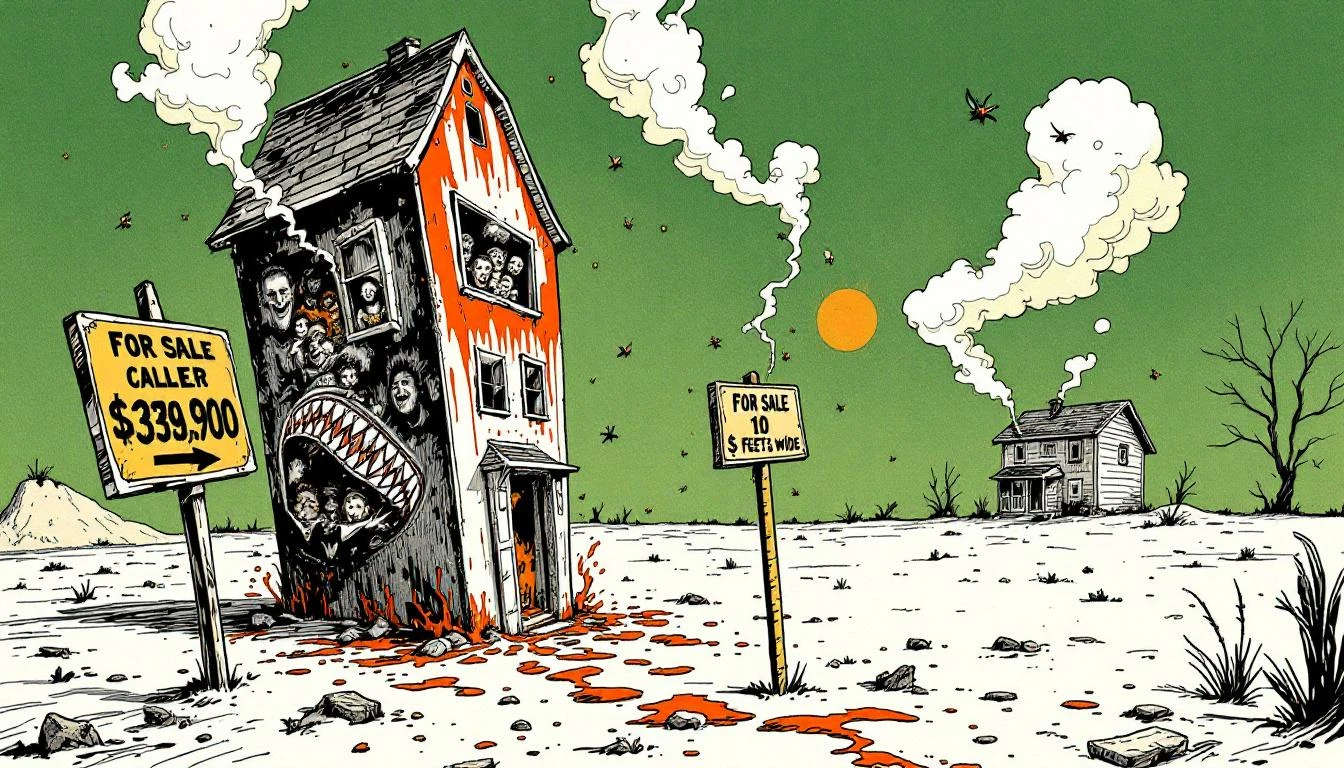
The $330,000 Bedroom-Free Dream: Long Island's Monument to Housing Market Dementia
For $329,900, Long Island offers you 446 square feet with no bedroom—proof that the housing market has finally achieved complete detachment from reality, sanity, and the English language.
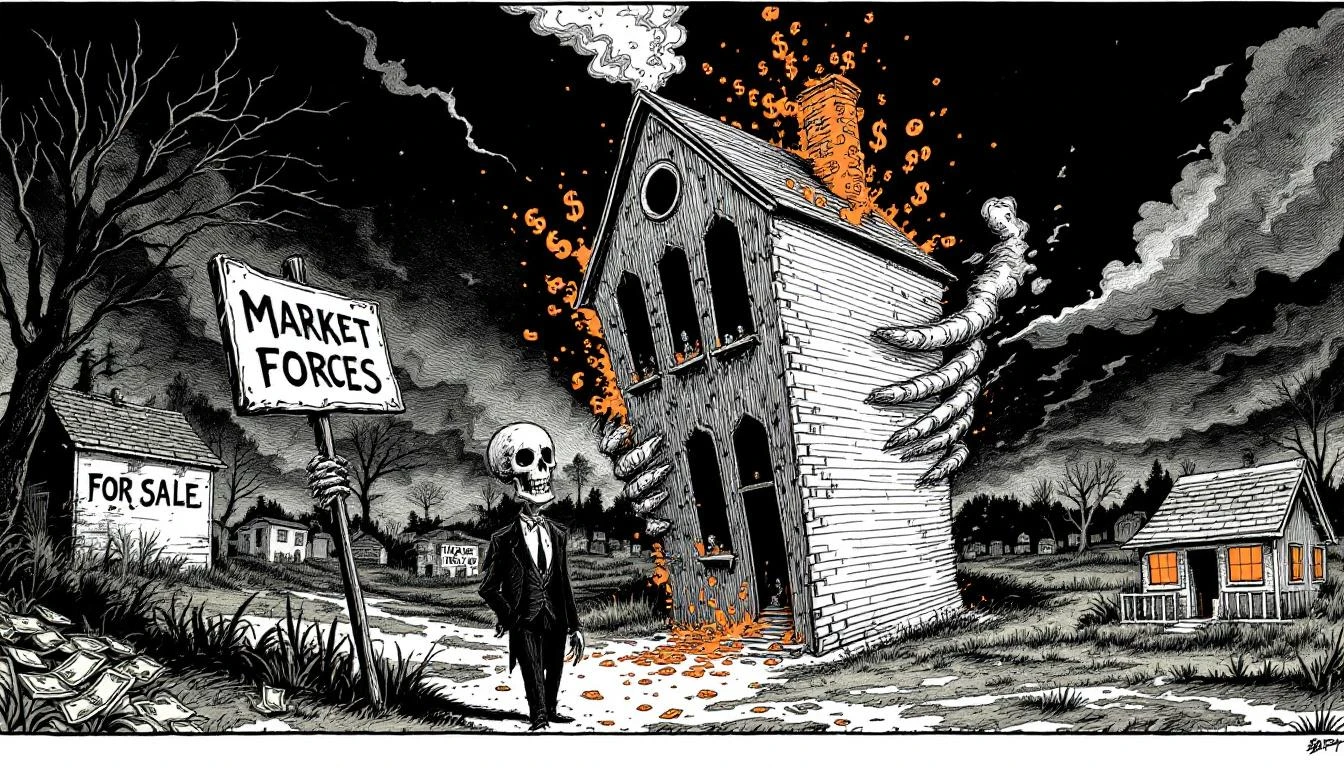
The $330K Bedroom-Free Shoebox: American Real Estate's Final Descent Into Parody
A $329,900 Long Island tiny home with zero bedrooms has gone viral, perfectly encapsulating the housing market's descent into expensive, bedroom-free madness.
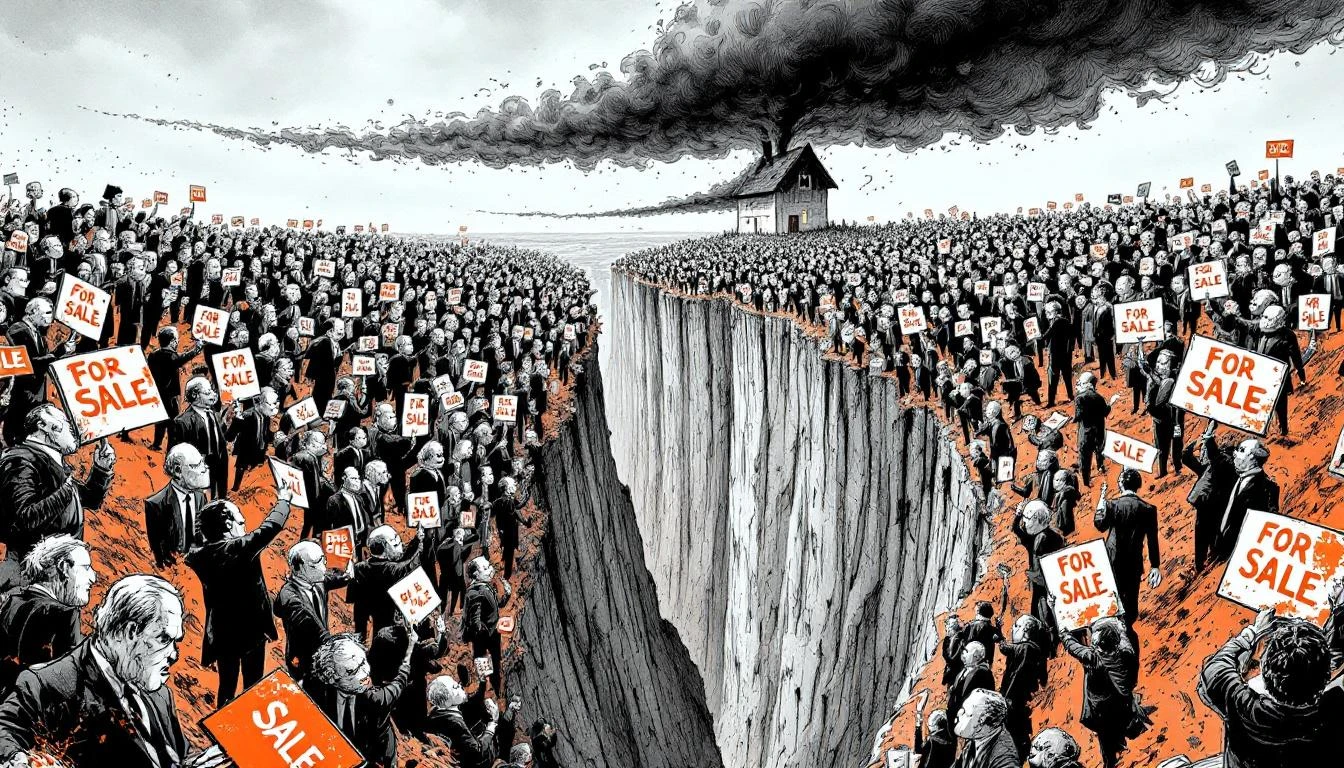
The Great American Standoff: 630,000 Sellers Discover Nobody Wants Their Overpriced Shitboxes
630,000 sellers stand in the marketplace clutching their listing agreements, wondering why nobody wants their overpriced rancher. The biggest buyer-seller gap on record reveals the great reckoning has arrived.