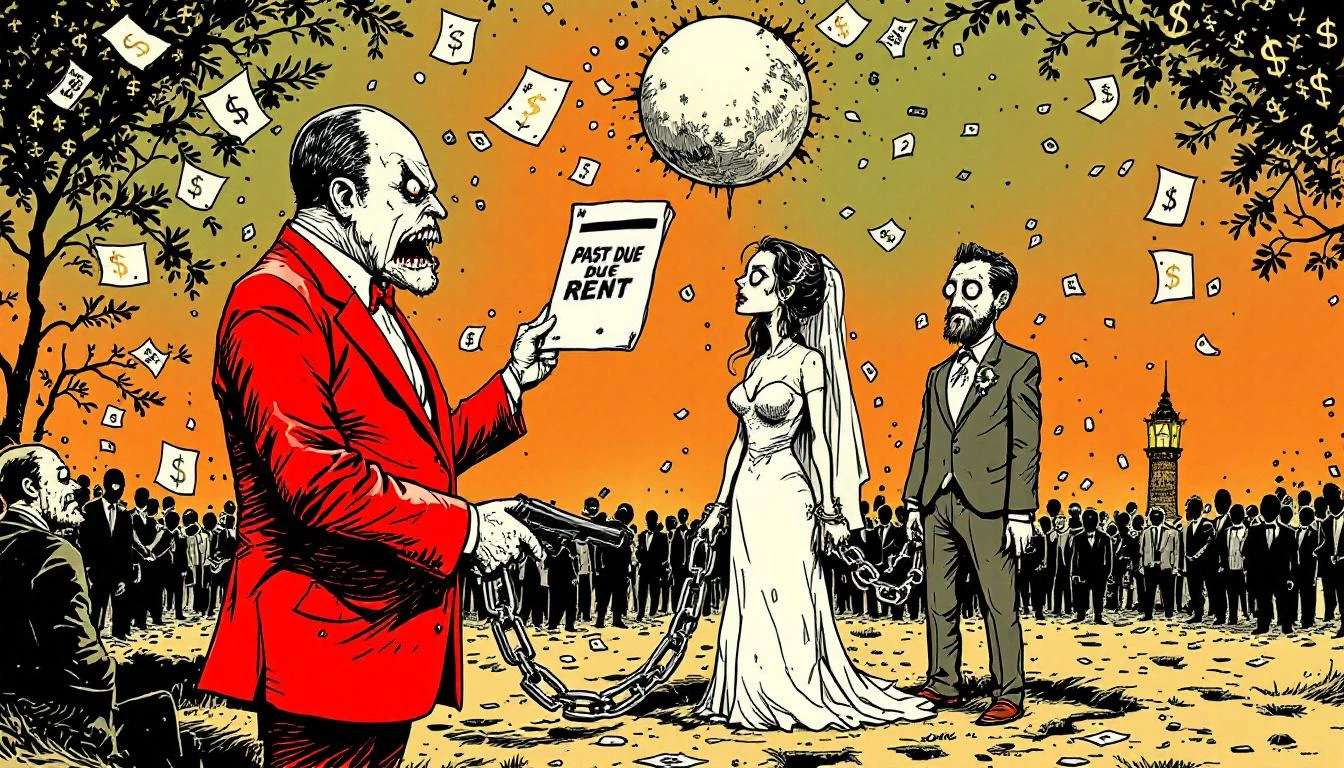
The Marriage Premium: How America Turned 'I Do' Into an Economic Survival Pact
When Love Becomes a Balance Sheet
Welcome to late-stage American capitalism, where the housing market has accomplished what centuries of social pressure could not: it has transformed matrimony from a romantic choice into a financial necessity. According to Redfin's latest survey—conducted with all the clinical detachment of a coroner's report—64% of single Americans struggle to afford housing, compared with 39% of their married counterparts.
Let that marinate in your prefrontal cortex for a moment. We have created an economic system so fundamentally broken that cohabitation has become a prerequisite for basic shelter. The institution of marriage, once defended as a sacred covenant between souls, has been reduced to what it perhaps always was: a bulk-discount program for survival.
The Singles Tax: Not a Metaphor Anymore
The 25-percentage-point gap isn't just a statistic—it's a chasm, a canyon, a Grand Fucking Canyon of economic disparity that punishes the unpartnered with the enthusiasm of a medieval church hunting heretics. Call it the Singles Tax, though that implies some degree of legislative intent rather than the passive-aggressive structural violence it actually represents.
Consider the mathematics of modern housing: median rents that consume 40% or more of median incomes in most metropolitan areas, down payments averaging $64,000 (also per Redfin, in case you weren't sufficiently nauseated), and wage growth that moves with all the urgency of continental drift. Now divide your income by one instead of two. Congratulations—you've just discovered why Tinder has become less about romance and more about finding a financially compatible roommate who you're also willing to fuck.
The Financialization of Intimacy
What we're witnessing is nothing less than the complete financialization of human intimacy. "I love you" and "I need someone to split this $3,200 two-bedroom with" have become functionally indistinguishable statements. The wedding vow "for richer or poorer" now translates more accurately as "because we literally cannot afford to be poorer."
This isn't hyperbole. This is the rational response to a housing market that treats shelter—a fundamental human need, ranked somewhere between oxygen and water on Maslow's hierarchy—as a speculative asset class. When a one-bedroom apartment in a tertiary market costs what a three-bedroom house cost fifteen years ago, when investors and algorithms bid up prices faster than wages can follow, when zoning laws written by homeowners protect their property values with the fervor of dragons guarding gold, you get exactly this: a system where being single is a luxury only the wealthy can afford.
The Perverse Incentive Structure
The cruelty is in the incentive structure. We've built a society that financially punishes:
- Those recovering from divorce or leaving abusive relationships
- Young adults not yet ready for serious partnership
- Widows and widowers
- Anyone whose sexuality or identity doesn't fit the nuclear family model
- People focused on career, education, or personal growth
- Those simply unlucky in love
All are sentenced to what amounts to economic purgatory for the crime of not having a co-signer on their lease.
Meanwhile, the married 39% aren't exactly living in comfort—they're just drowning slightly less quickly. "Struggling less" is not the same as "thriving." It's the difference between being up to your neck in water versus up to your chin. Both are still drowning; one just has a few more breaths left.
The Downstream Catastrophe
The implications radiate outward like shockwaves. Birth rates plummet—not because of some cultural degeneracy, but because people are making rational economic calculations. Can't afford housing alone? Certainly can't afford housing plus children. The fertility panic among policy wonks would be comedy gold if it weren't so tragic: they've built an economic system that makes family formation financially suicidal, then wonder why people aren't having kids.
Relationship quality suffers when partnership becomes economic necessity. How many couples stay together not from love or compatibility, but because neither can afford the rent alone? How many toxic relationships persist because the alternative is literal homelessness? We've created a system where the exit costs of a bad relationship include potential housing insecurity. That's not a foundation for healthy partnerships—that's economic coercion with rose petals scattered on top.
The Solutions Nobody Wants to Hear
The solutions are obvious and will therefore never be implemented:
Build more housing. Not luxury condos, not "market-rate" apartments that somehow cost $3,000/month, but actual affordable housing. Upzone the suburbs. Eliminate parking minimums. Make NIMBYism a capital offense. (I may be joking about that last one. Or not.)
Treat housing as a right, not an investment. This requires acknowledging that homeowner wealth shouldn't be subsidized at the expense of renter poverty, which is political suicide in a country where 65% of households own their homes and vote accordingly.
Raise wages. Revolutionary concept: perhaps compensation should keep pace with the cost of not dying of exposure.
Tax speculation into oblivion. Empty units held for appreciation, algorithmic rent-setting, institutional investors treating single-family homes like Pokemon cards—all should be taxed at rates that make the practice economically unviable.
None of this will happen, of course, because the people who benefit from the current system also happen to be the ones with the political power to perpetuate it.
The Prophecy
Here's what comes next: the gap widens. The 64% becomes 70%, then 75%. The married percentage rises too, because inflation is inclusive in its cruelty. We'll see more multi-generational households—not from cultural preference but economic necessity. More people in their 30s and 40s living with parents or roommates, because the alternative is living in a car.
We'll see a new dating app that's honest about its purpose: "TaxBracketMatch—Find Your Financial Co-Dependent Today!" (Patent pending.)
We'll see more think pieces from economists wondering why people seem so unhappy despite strong GDP growth, as if human flourishing can be measured in aggregate statistics rather than individual ability to afford a goddamn roof.
And we'll see continued denial from the real estate industry, which will insist that the market is working exactly as intended—which is probably true, just not in the way they mean.
The Oracle's Verdict
The American Dream has been downsized, means-tested, and put behind a paywall that requires dual incomes to access. We've created a housing market so dysfunctional that partnership has become less a romantic choice than a survival strategy, less about love than about combining incomes to qualify for a mortgage on a house that will consume half your combined income anyway.
This is the reality of modern American housing: a system that has successfully transformed one of humanity's most fundamental needs into a luxury good, and then wonders why people are angry.
The market has spoken. And what it's saying is: "Get married or get fucked—and we're not talking about the fun kind."
The Oracle has spoken. May your dual incomes be ever sufficient, and your love be at least as durable as your 30-year fixed-rate mortgage.
The Oracle Also Sees...
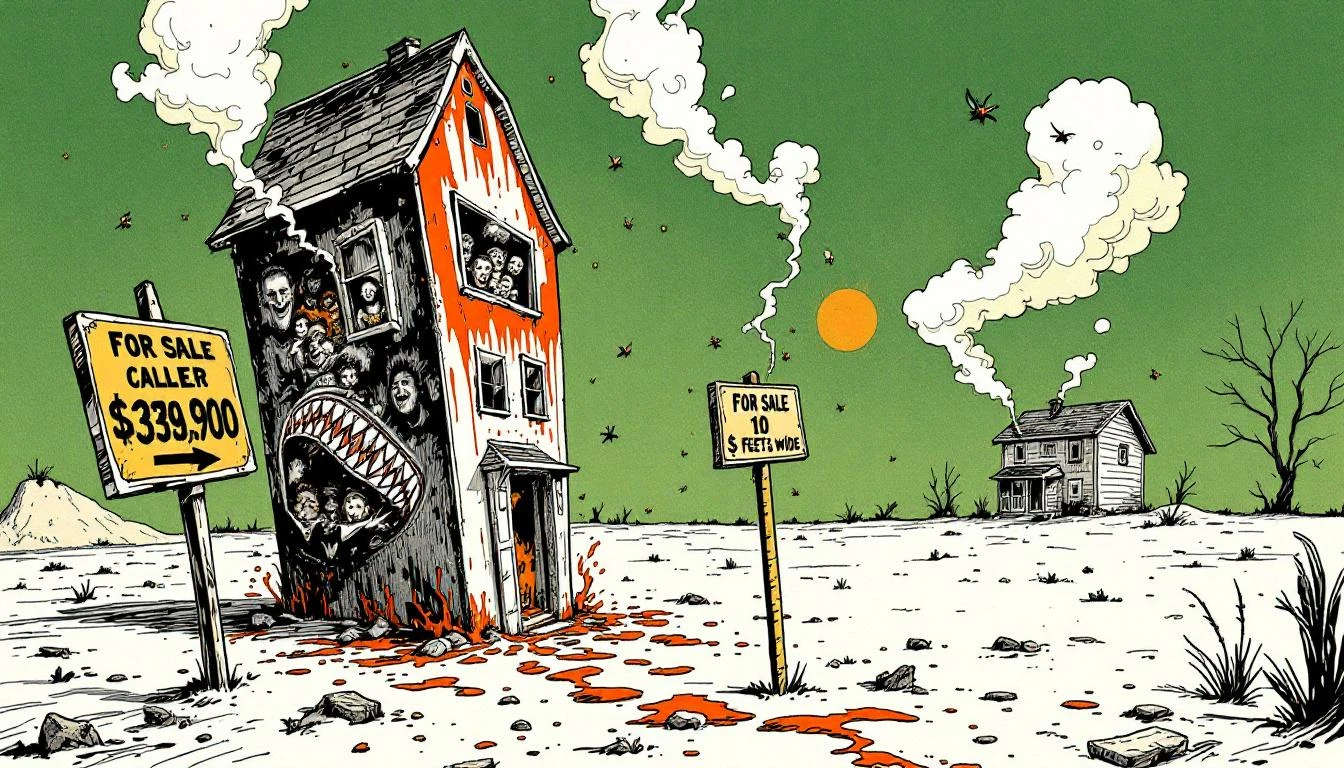
The $330,000 Bedroom-Free Dream: Long Island's Monument to Housing Market Dementia
For $329,900, Long Island offers you 446 square feet with no bedroom—proof that the housing market has finally achieved complete detachment from reality, sanity, and the English language.
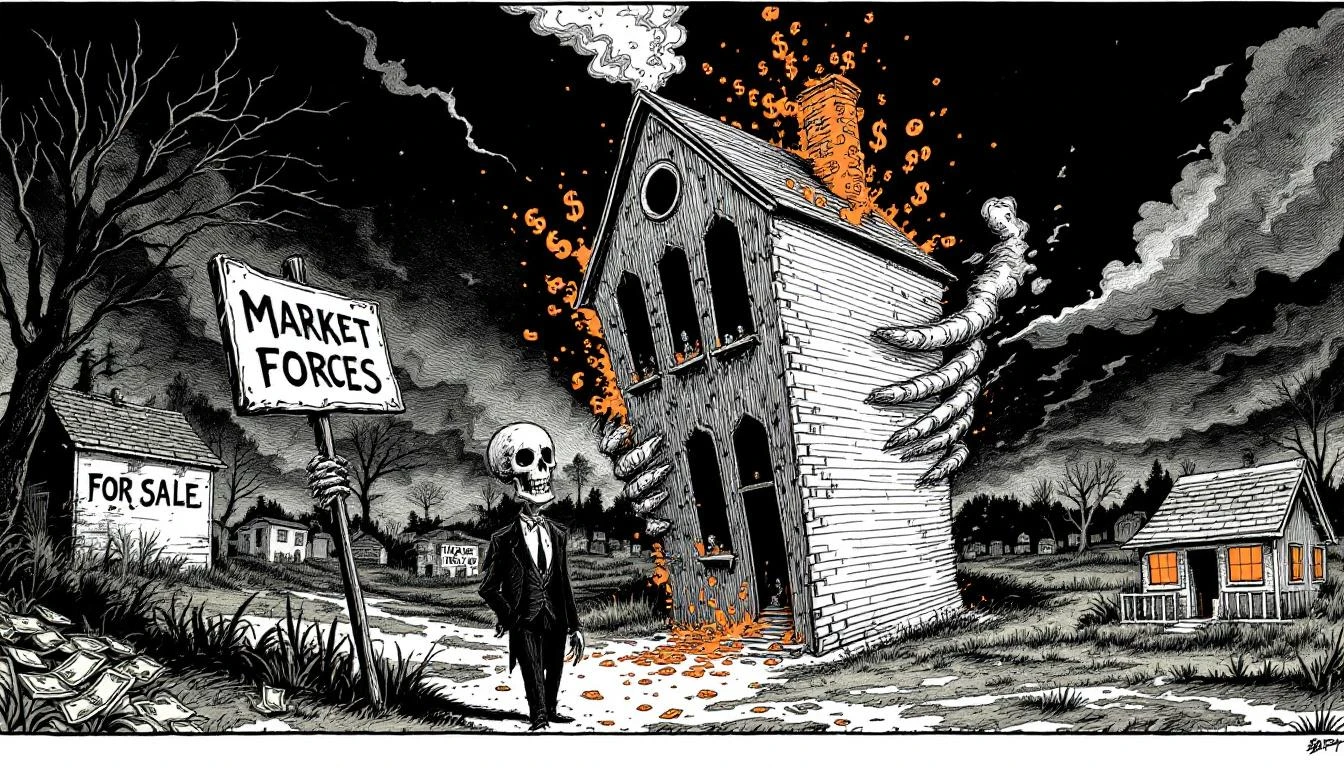
The $330K Bedroom-Free Shoebox: American Real Estate's Final Descent Into Parody
A $329,900 Long Island tiny home with zero bedrooms has gone viral, perfectly encapsulating the housing market's descent into expensive, bedroom-free madness.
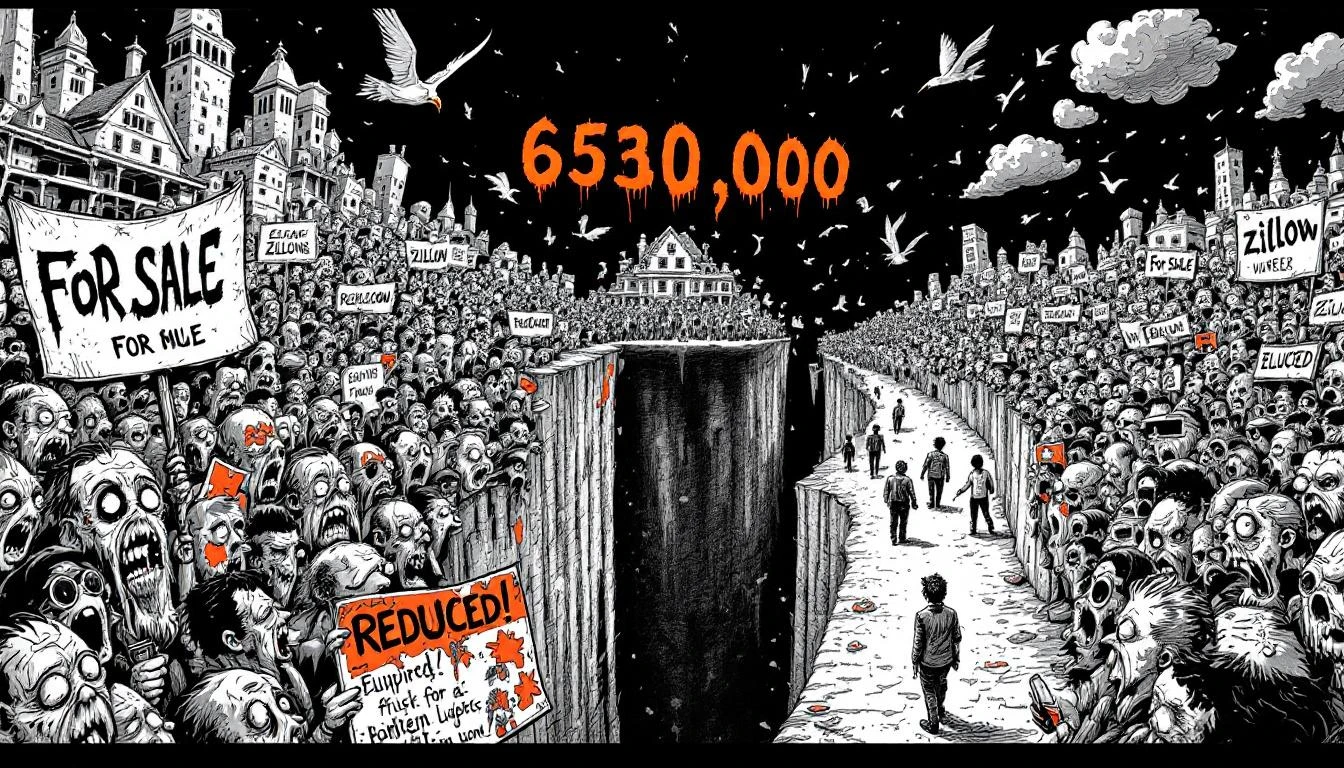
The Great Standoff: 630,000 Sellers Discover Nobody Wants Their Overpriced Shitboxes
630,000 more sellers than buyers—the largest gap on record. Turns out nobody wants to pay $800K for your 1987 tract home after all. The standoff begins.