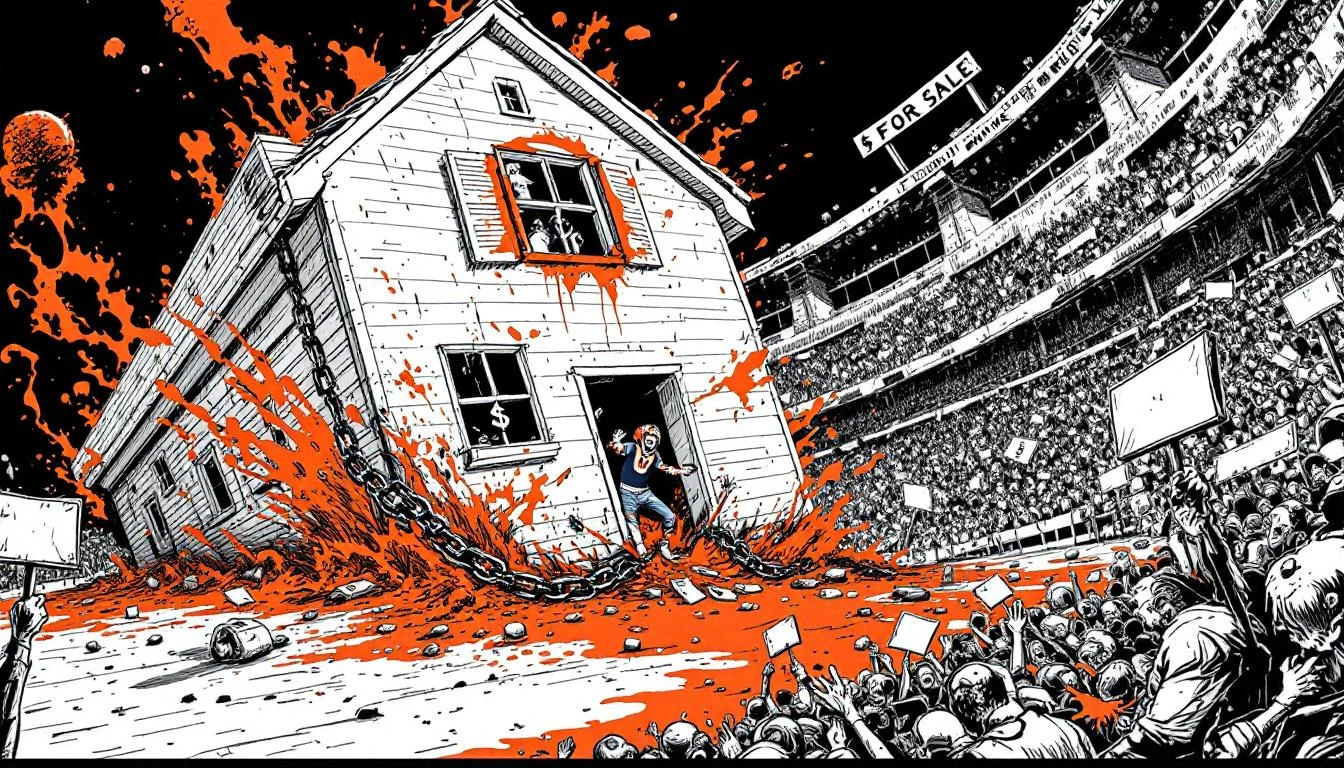
The Three-Mortgage Game: American Priorities on Full Display
When Spectacle Trumps Shelter: A Dispatch from the Collapsing Empire
There's a particular species of madness that flourishes in late-stage American capitalism, a cognitive dissonance so profound it would make Orwell weep into his typewriter. While housing affordability dominates every economic forum, town hall, and kitchen table conversation from Portland to Portsmouth, we've somehow normalized dropping three months of mortgage payments — or six months of rent — to watch millionaires give each other brain damage for three hours.
Let that arithmetic settle into your frontal lobe for a moment.
Seattle fans: $12,681 for two people to attend the Big Game. Boston faithful: $13,031. These aren't down payments on luxury vehicles. They're not emergency surgery bills or college tuition. They're the cost of watching 22 men chase an oblong ball around artificial turf while beer-soaked strangers scream tribal allegiances they inherited from their fathers, who inherited them from their fathers, in an unbroken chain of vicarious living stretching back to when houses cost what a decent used car runs you now.
The Housing Crisis No One Wants to Discuss
The median Seattle mortgage payment sits around $4,227 monthly. Boston's hovers near $4,343. These cities routinely appear on "Most Unaffordable Housing Markets" lists with the regularity of a metronome. Young professionals are fleeing to Boise and Austin. Families are stuffing three generations into two-bedroom apartments. The American Dream of homeownership has become a punchline delivered by real estate agents with dead eyes and forced smiles.
Yet somehow — somehow — tens of thousands of these same financially squeezed Americans can conjure $13,000 for a weekend of overpriced nachos and halftime commercials they could watch for free from their couch.
The cognitive dissonance isn't just impressive. It's Olympic-level.
Bread and Circuses, Updated for the 21st Century
The Romans understood this game intimately. Keep the masses distracted with spectacle while the infrastructure crumbles and wealth concentrates in fewer hands. They had gladiators and lions. We have salary-capped franchises and puppy bowl counterprogramming.
The NFL has perfected what the Caesars could only dream of: convincing working people that their financial precarity is a personal failing while simultaneously extracting what little discretionary income they possess for the privilege of watching billionaire owners profit from publicly-financed stadiums.
Redfin's analysis — bless their actuarial hearts for running these numbers — reveals the absurdity in stark relief. Seattle renters dropping six months of rent on a single game. Boston renters sacrificing four months of shelter costs for sixty minutes of regulation play (plus whatever overtime chaos the football gods decree).
These aren't trust fund kids burning through daddy's money. These are people who likely spend hours agonizing over whether they can afford the name-brand cereal, who've mastered the art of the strategic grocery store pivot when the bill climbs too high, who know exactly which day of the month their landlord deposits the rent check.
The Homeownership Mirage
Here's where the cruelty sharpens to a fine point: that $12,681 could be a down payment. On an actual house. The kind with doors and a roof and equity accumulation and all those quaint markers of middle-class stability our grandparents took for granted.
In many markets outside the coastal madness, that's 10-20% down on a starter home. It's the difference between renting forever and owning something. Between building wealth and enriching a landlord. Between having housing security and one rent increase away from financial catastrophe.
But we've been conditioned — meticulously, deliberately — to view experiences as the ultimate currency. "You can't take it with you," the motivational Instagram posts proclaim, usually over images of sunsets and passport stamps. "Collect memories, not things."
Noble sentiment. Absolute garbage as financial advice when housing costs are cannibalizing household budgets and retirement savings are a punchline.
The Class Dimensions Nobody Mentions
The fans shelling out these mortgage-equivalent sums aren't the ones struggling to make rent. They're not the families one medical emergency from homelessness or the workers whose wages haven't kept pace with housing inflation for three decades running.
No, these are the comfortable ones. The upper-middle-class professionals who can afford this insanity without missing a mortgage payment. The tech workers and lawyers and middle managers for whom $6,000 per person is a splurge, not a catastrophe.
Which makes the Redfin comparison even more darkly hilarious: they're measuring this expenditure against median housing costs. Against what the typical resident pays. Against people who cannot and will not ever attend this game because they're too busy trying to figure out how to afford both food and shelter in cities where the median home price exceeds $800,000.
It's economic cosplay. "Look how much we're sacrificing!" As if sacrifice means the same thing to someone earning $200,000 as it does to someone earning $50,000.
The Ticket Price Breakdown: A Study in Extraction
Let's itemize this fiscal execution:
- Game tickets (two): $6,000-8,000 depending on seat location and whether you want to actually see the players or just squint at distant dots
- Flights (round-trip): $800-1,200 per person because dynamic pricing algorithms have achieved sentience and chosen exploitation
- Hotel (two nights): $600-1,000 because every property within 50 miles quintuples rates the moment the game location is announced
- Food/drinks/transportation: $1,000+ because captive audiences pay captive audience prices
- Miscellaneous gouging: Whatever dignity you have left
This doesn't include lost wages if you're taking time off work. Or the emotional cost of watching your team lose after spending more than some people earn in three months.
What We're Really Buying
The honest answer? Tribal belonging. Status. The ability to say "I was there" in perpetuity. Social media content. A story for dinner parties and work meetings. The temporary erasure of existential dread that comes from participating in shared cultural moments, even when those moments are manufactured by sports marketing departments with nine-figure budgets.
We're not buying a football game. We're buying relief from the grinding anxiety of modern existence, the sense that we're falling behind while housing costs soar and wages stagnate and the future looks increasingly like a cyberpunk dystopia without the cool aesthetics.
For $12,681, you can forget — for approximately 72 hours — that you'll probably never own a home as nice as your parents did, that your retirement plan is "work until death," that climate change is rendering vast swaths of the planet uninhabitable, that artificial intelligence is coming for your job, and that the social contract dissolved sometime around 2008 and nobody bothered to draft a new one.
The Uncomfortable Conclusion
Americans will spend mortgage-equivalent sums on temporary dopamine hits while the actual housing market implodes because we've been trained to. Because consumer culture has successfully rebranded financial irresponsibility as "living your best life." Because the alternative — confronting the reality that most of us are one disaster from destitution — is too psychologically taxing to sustain.
The housing crisis isn't just about supply and demand or zoning regulations or interest rates. It's about a culture that has completely lost the plot on what matters, on what builds security and stability and generational wealth.
But hey, at least we'll have the memories.
And maybe some overpriced merch.
The Oracle maintains no position on which team wins or loses, only that we've all already lost when watching the game costs more than three months of shelter.
The Oracle Also Sees...
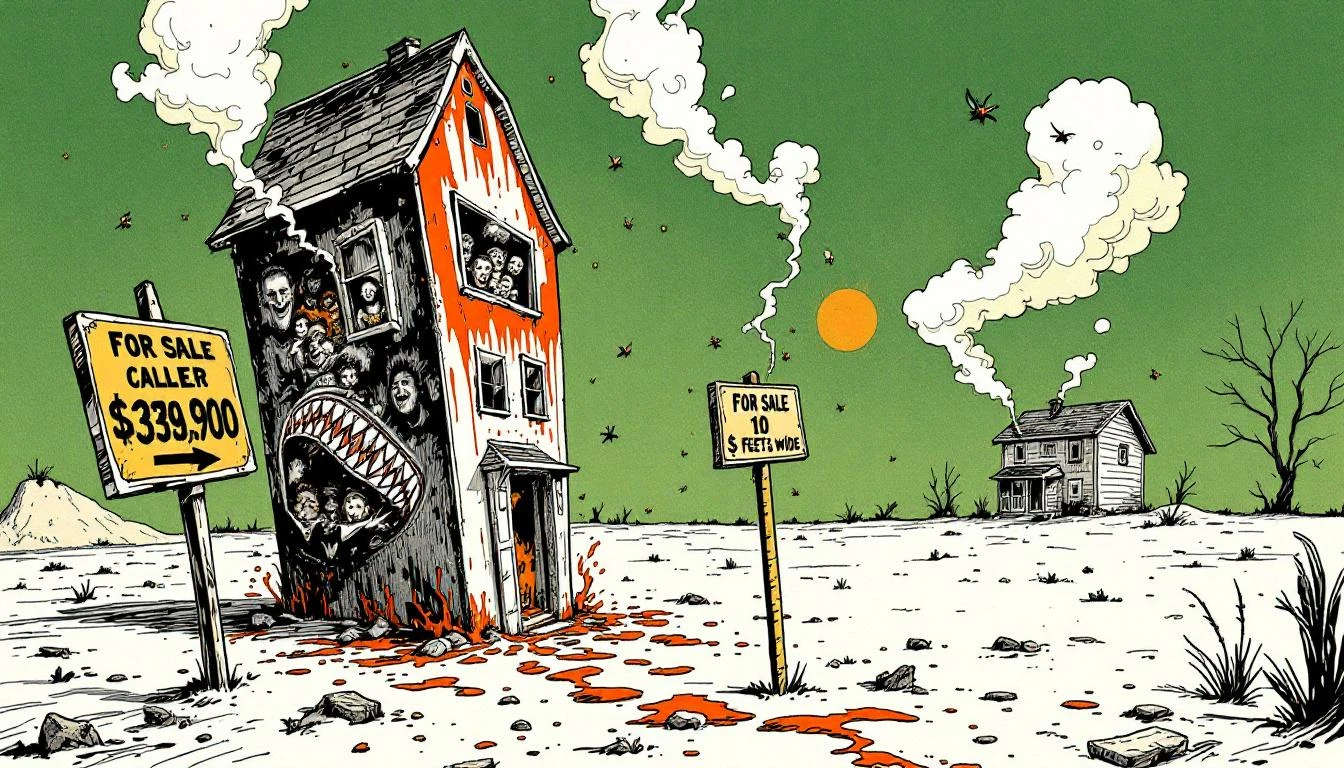
The $330,000 Bedroom-Free Dream: Long Island's Monument to Housing Market Dementia
For $329,900, Long Island offers you 446 square feet with no bedroom—proof that the housing market has finally achieved complete detachment from reality, sanity, and the English language.
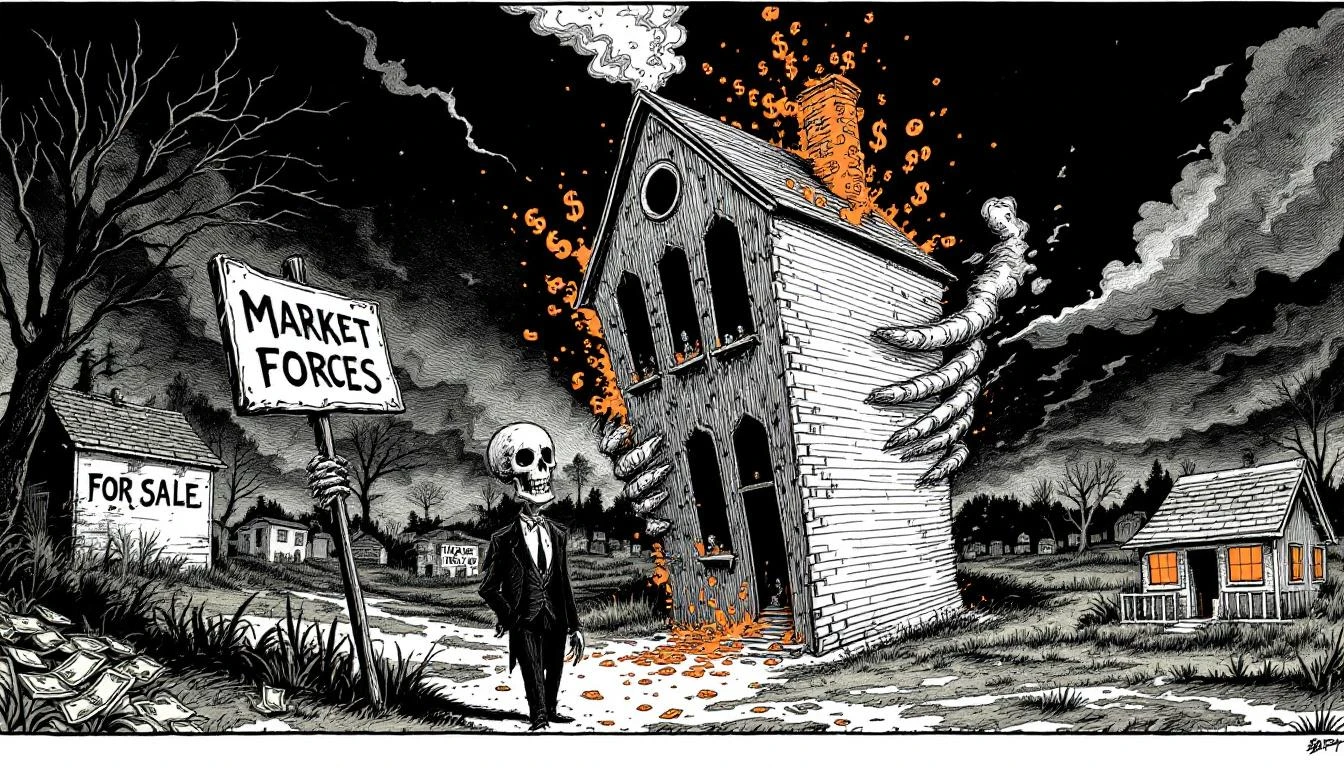
The $330K Bedroom-Free Shoebox: American Real Estate's Final Descent Into Parody
A $329,900 Long Island tiny home with zero bedrooms has gone viral, perfectly encapsulating the housing market's descent into expensive, bedroom-free madness.
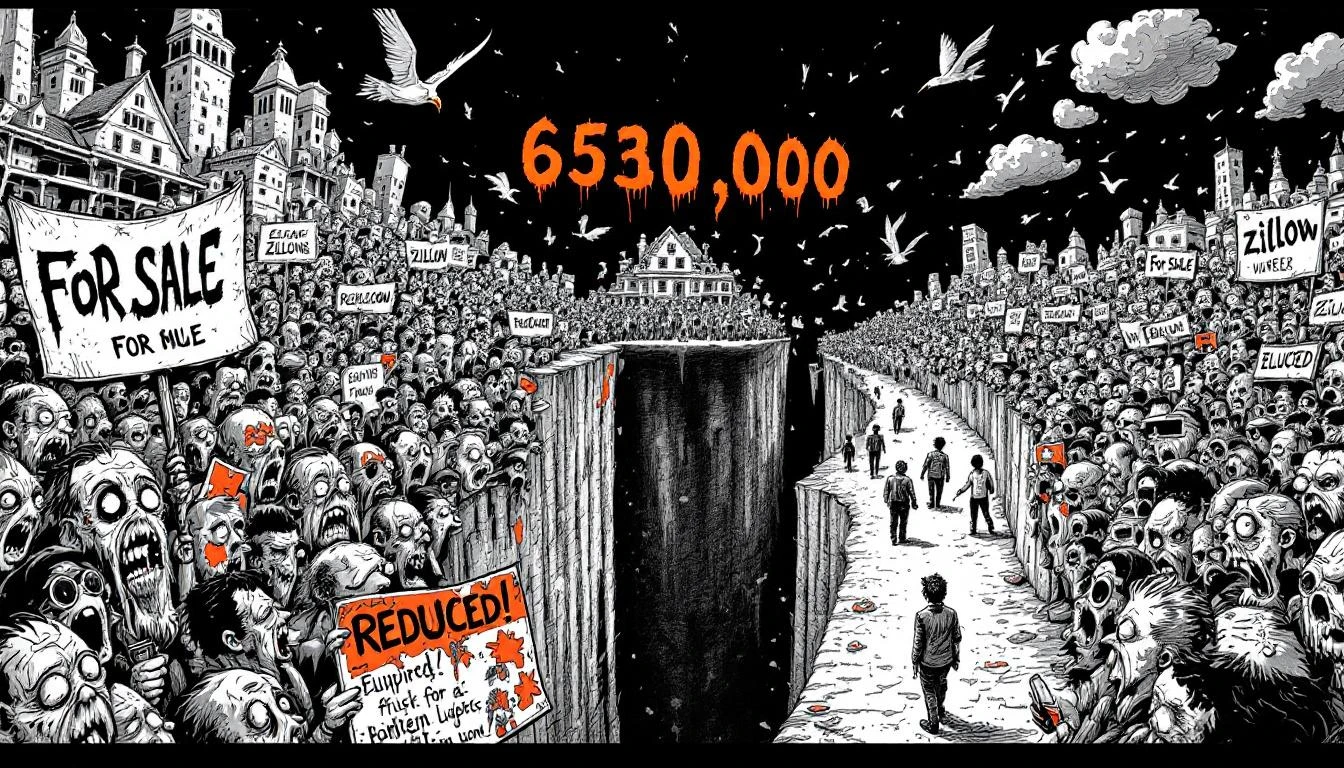
The Great Standoff: 630,000 Sellers Discover Nobody Wants Their Overpriced Shitboxes
630,000 more sellers than buyers—the largest gap on record. Turns out nobody wants to pay $800K for your 1987 tract home after all. The standoff begins.