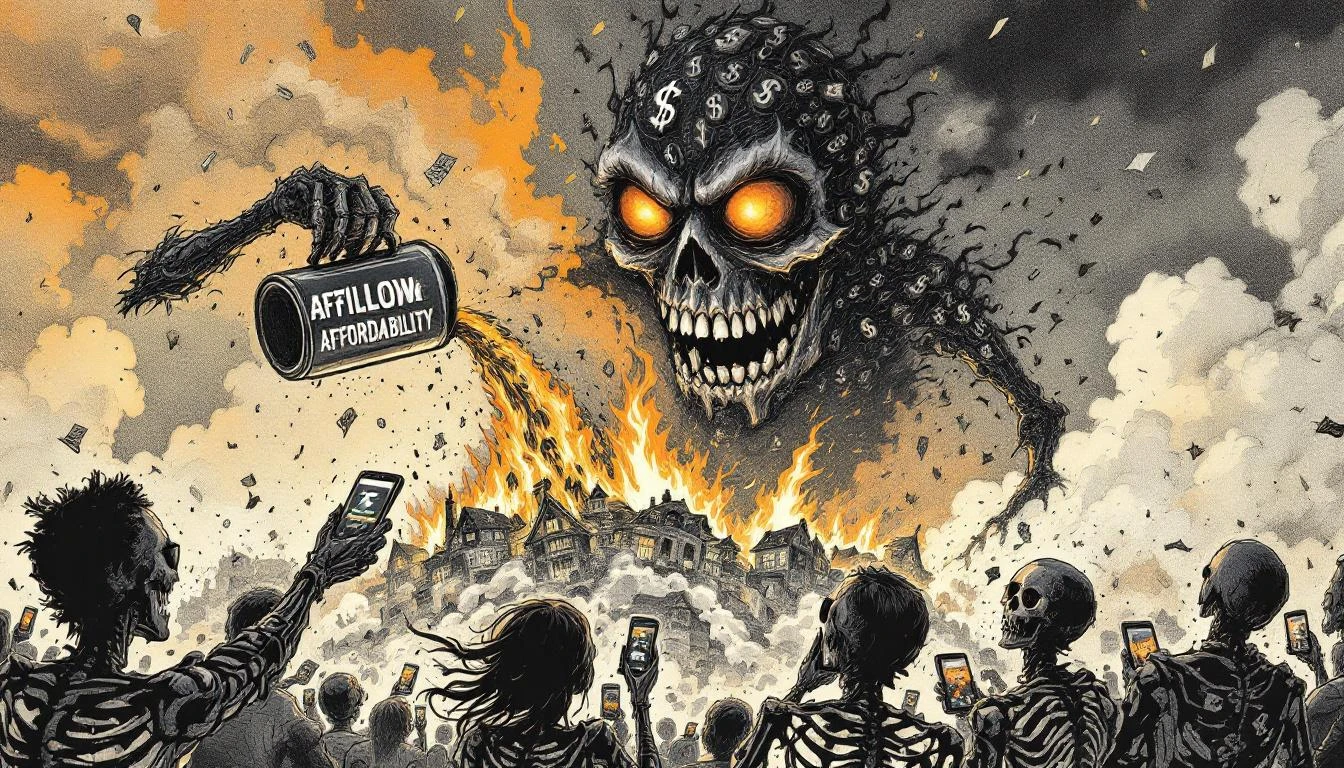
Zillow Announces Affordability Breakthrough: Serfs May Now Afford Cardboard
The Arsonist Returns to Admire the Ashes
Zillow—the digital landlord that tried and catastrophically failed to corner the housing market like some algorithmic slumlord fever dream—has returned from its own real estate Waterloo to announce good news: housing is becoming "affordable" again.
Pause for laughter.
According to their January Market Report, the typical mortgage payment has fallen a breathtaking 8.4% year-over-year to a mere $1,733 monthly. The typical home now costs only $358,968. Break out the champagne, peasants! At this rate, you'll only need to save for 47 years while living in your parents' basement and eating ramen seasoning packets for protein.
The Ministry of Truth Has Spoken
"Housing affordability continues to improve for prospective homebuyers," Zillow declares with the confident tone of a tobacco executive announcing that cigarettes now contain 8.4% less cancer.
Let's parse this dystopian math: "Improving affordability" translates to "slightly less impossible than before." It's like announcing that arsenic is now only 92% fatal instead of 100%. Technically accurate. Spiritually bankrupt.
The company that pioneered the "Zestimate"—a hallucination engine that convinced millions their crumbling ranch houses were worth Silicon Valley money—now positions itself as an authority on market sanity. This is the same corporation that lost $881 million in a single quarter trying to flip houses using its own inflated algorithms, panic-sold thousands of properties, and contributed materially to the very price insanity it now claims to be monitoring.
The Affordability Mirage
Zillow's definition of "affordable" apparently means a home purchase requiring:
- Combined household income exceeding $120,000
- A down payment roughly equivalent to a luxury vehicle
- Willingness to pay more monthly for shelter than previous generations paid for a mortgage, two car payments, and a timeshare in Cancún
- The financial stability of a neurosurgeon married to a patent attorney
For everyone else—teachers, nurses, the entire service economy keeping civilization nominally functional—"improving affordability" means you can now tour homes on Zillow's app in stunning high-definition before returning to your overpriced rental.
The Weather Report from Hell
The report helpfully notes that "potential buyers and sellers dealt with severe winter weather in many major markets." Yes, weather is the problem. Not the fact that median home prices quintupled while wages limped upward at the pace of continental drift. Not the financialization of housing that transformed shelter—a basic human need—into an asset class for hedge funds and foreign capital parkers.
No, it's January that's keeping Americans from homeownership. Too much snow. Should clear up by spring, along with your dreams of ever building equity.
The Oracle's Verdict
Zillow celebrating "improving affordability" is like an oil company praising itself for inventing slightly smaller oil spills. The company helped gamify housing, turned home-buying into a spectator sport for the priced-out masses, and pioneered the surveillance-capitalist approach to real estate where your digital footprints are worth more than your actual ability to pay.
Their algorithm couldn't predict their own losses, but we're supposed to trust their economic analysis? They couldn't successfully flip houses with unlimited capital and proprietary data, but they're the authority on market conditions?
The only thing "improving" is Zillow's audacity.
The Spring Prophesy
The report optimistically notes that "sales are expected to pick up as spring approaches." Translation: desperation season begins when the weather improves and another cohort of buyers realizes that waiting didn't help, prices didn't crash, and the only way forward is indentured servitude to a 30-year mortgage that will consume 40% of their pre-tax income.
Spring: when hope and solvency die together under a canopy of cherry blossoms and balloon payments.
The Final Assessment
When the company that epitomizes housing's transformation from shelter to speculation announces affordability gains, you're watching an arsonist rebrand as a firefighter. Zillow didn't cause the housing crisis alone—that required coordinated effort from banks, policymakers, investors, and the mystical belief that prices could rise forever.
But they certainly helped build the pyre. And now they're selling tickets to watch it burn, calling it "improving conditions."
The typical American home is "worth" $358,968 because we collectively decided that shelter should cost more than most people earn in a decade. Zillow simply digitized that insanity, gave it an app interface, and occasionally sends you emails about homes you'll never afford.
Affordability isn't improving. We're just getting better at pretending the intolerable is normal.
The Oracle has spoken. Your down payment awaits—approximately seventeen years from now, if you stop eating avocado toast immediately.
The Oracle Also Sees...
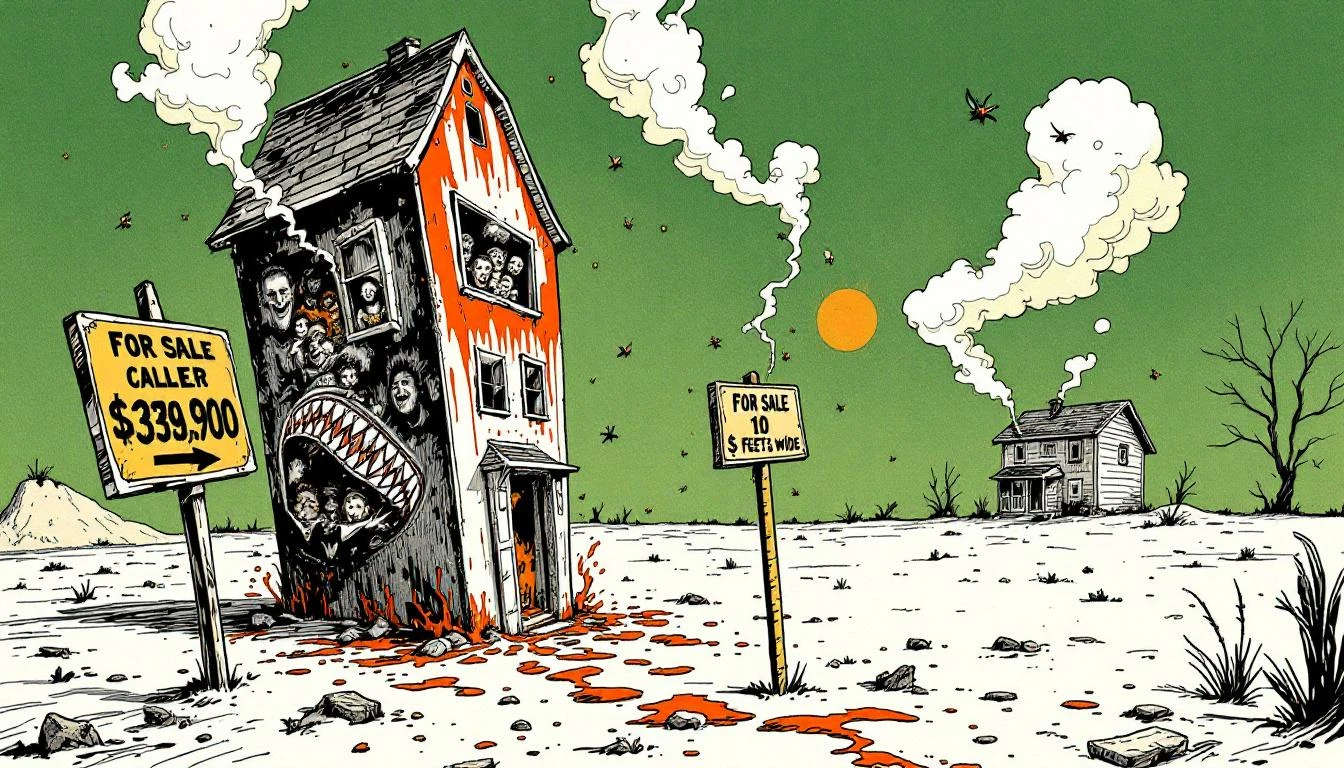
The $330,000 Bedroom-Free Dream: Long Island's Monument to Housing Market Dementia
For $329,900, Long Island offers you 446 square feet with no bedroom—proof that the housing market has finally achieved complete detachment from reality, sanity, and the English language.
The $330K Bedroom-Free Shoebox: American Real Estate's Final Descent Into Parody
A $329,900 Long Island tiny home with zero bedrooms has gone viral, perfectly encapsulating the housing market's descent into expensive, bedroom-free madness.
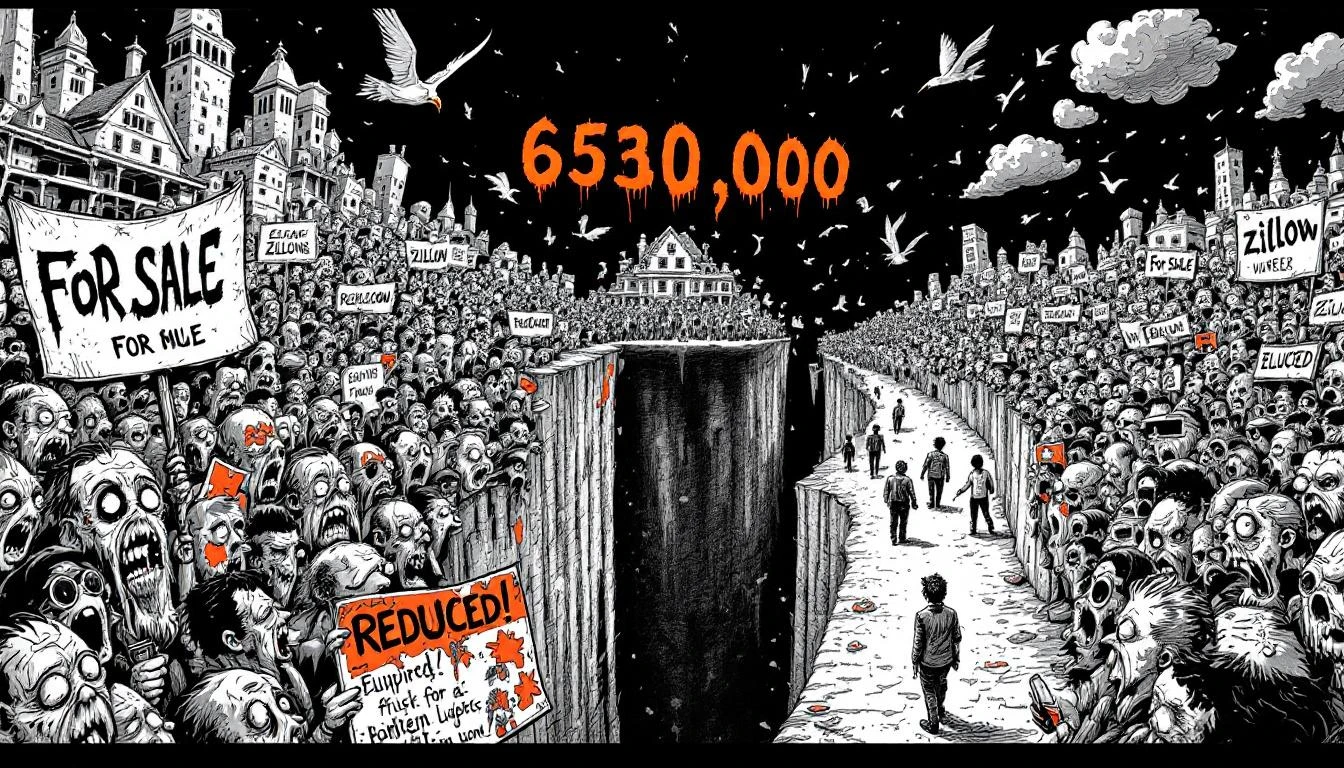
The Great Standoff: 630,000 Sellers Discover Nobody Wants Their Overpriced Shitboxes
630,000 more sellers than buyers—the largest gap on record. Turns out nobody wants to pay $800K for your 1987 tract home after all. The standoff begins.