The March of the Paper Martyrs: Tech Bro Discovers Class Consciousness, Chooses Wrong Side
The Smallest Violin in Silicon Valley
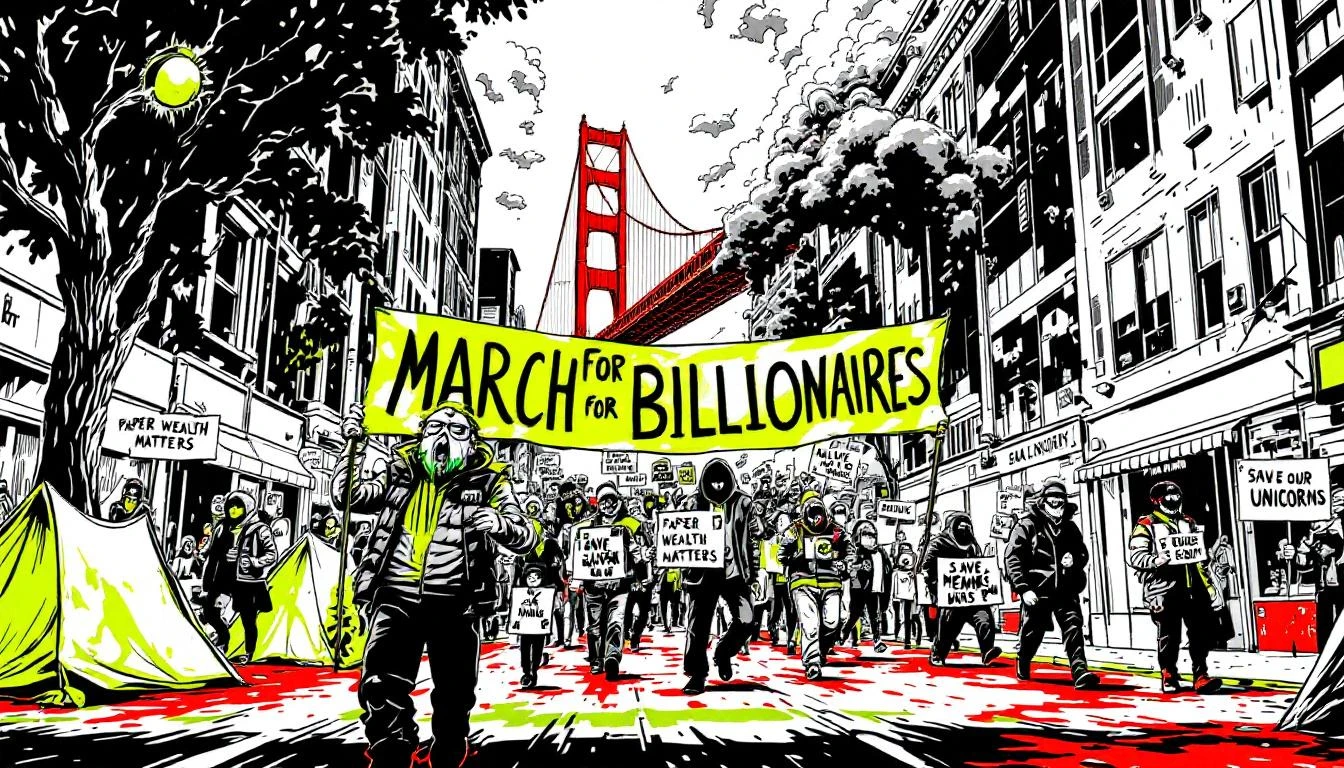
In a display of solidarity so perfectly absurd it could only emerge from the fever swamps of contemporary Silicon Valley, Derik Kauffman—founder of RunRL, an AI startup whose primary innovation appears to be inspiring this moment of sublime self-parody—has announced a "March for Billionaires" in San Francisco. The occasion? A proposed California wealth tax that has approximately zero chance of passing and which Governor Gavin Newsom has already promised to veto.
Yes, you read that correctly. A man who is not a billionaire is organizing a protest march to defend billionaires from a tax that will never happen. It's like watching someone build an ark in the Mojave Desert because they heard it might rain in Seattle.
The Burden of Imaginary Wealth
Kauffman's concern, delivered with the grave solemnity of a man describing genocide, centers on startup founders "whose wealth is only on paper." One must pause to absorb the exquisite irony: a member of the class that spent the last decade explaining how disruption and creative destruction were merely capitalism's natural selection process is now pleading for protection based on the theoretical value of assets they don't actually control.
This is the same cohort that told Uber drivers they were "entrepreneurs" while denying them healthcare. The same minds that insisted gig workers should embrace "flexibility" while they themselves locked in golden parachutes. Now, faced with the prospect—however remote—of contributing to the infrastructure that enabled their wealth accumulation, they've discovered they're actually quite fragile.
The cognitive dissonance required to simultaneously believe you're a world-changing innovator AND a vulnerable victim requiring special protection from taxation is the kind of mental gymnastics that would make an Olympic contortionist weep with envy.
A March of Dozens
Perhaps most delicious is Kauffman's admission that he expects "a few dozen attendees"—and that exactly zero actual billionaires have committed to attending this march organized in their honor. Even the supposed beneficiaries of this protest can't be bothered to show up for their own defense. They're too busy, one imagines, doing literally anything else: buying newspapers, funding private space programs, or simply counting their money in temperature-controlled vaults while their champions march through San Francisco's streets like the world's saddest Pride parade.
This is street theater written by people who've never actually been on the street. It's the March on Washington if Martin Luther King Jr.'s dream had been "I have a dream that one day, founders of moderately successful startups will not be judged by the liquidity of their assets, but by the theoretical content of their cap tables."
The Innovation of Grievance
Kauffman insists this could "force founders to sell shares in their companies"—a concern that might resonate more deeply if we hadn't spent the last fifteen years watching these same founders sell shares to Saudi sovereign wealth funds, Chinese venture capital, and anyone else with a checkbook and a tolerance for magical thinking. Somehow, taking money from authoritarian regimes is "smart capital allocation," but contributing to California's schools and infrastructure is "fatally flawed" policy.
The startup economy, we're told, hangs in the balance. California—a state whose GDP would make it the fifth-largest economy on Earth, whose tech sector has minted more paper billionaires than the rest of the planet combined—will apparently collapse if we ask people worth ten figures to contribute marginally more to the commons.
This is the same California where the median home price is $800,000, where tent cities sprawl in the shadows of billion-dollar headquarters, where teachers work second jobs while twenty-three-year-olds with computer science degrees debate which Tesla to buy. But sure, the real crisis is that someone with a unicorn valuation might have to liquidate 2% of their equity.
The Revolution Will Not Be Tax-Deductible
What makes this particularly rich—pun intended—is the framing of billionaires as an oppressed minority requiring activist defense. In Kauffman's telling, the ultra-wealthy are getting "a bad rap," victims of unfair public perception rather than beneficiaries of a system so tilted in their favor it would make a carnival funhouse look level.
This is not activism. This is kayfabe. It's performance art designed to manufacture a narrative of persecution where none exists, to transform the most powerful people in the most powerful industry in the most powerful state in the most powerful country into a protected class requiring special consideration.
The March for Billionaires is the logical endpoint of an ideology that has convinced itself that wealth accumulation is not just acceptable but heroic, that billionaires are not lucky or ruthless or well-positioned but rather persecuted visionaries bearing the weight of innovation on their theoretically valuable shoulders.
The Paper Tiger's Roar
Here's what Kauffman and his dozens of marchers fundamentally misunderstand: the California wealth tax isn't punitive treatment. It's not even treatment. It's a proposal so dead on arrival that organizing against it is like protesting a law that unicorns must pay dragon taxes. Newsom killed it before it drew breath.
But the protest isn't really about the tax. It's about establishing a grievance, creating a narrative, building a permission structure for the next time someone suggests that perhaps—just perhaps—the people who've benefited most from society's infrastructure should contribute proportionally to its maintenance.
It's about claiming victim status before anyone can credibly claim you're a villain. It's preemptive mythology-building, an attempt to write the history of this moment as one of courageous founders standing against confiscatory government rather than what it actually is: a handful of people who won capitalism having a very public tantrum about being asked to say thank you.
The Oracle's Verdict
The March for Billionaires is everything wrong with Silicon Valley crystallized into a single event: the self-importance, the historical illiteracy, the inability to distinguish between actual oppression and mild inconvenience, the reflexive belief that anything threatening quarterly returns is tantamount to tyranny.
Derik Kauffman has accomplished something remarkable: he's created a protest so perfectly calibrated to generate mockery that one almost suspects it's an elaborate bit. But no—this is sincere. This is what happens when you marinate in an ecosystem where "disruption" is always righteous, "innovation" is always good, and "wealth" is always earned rather than extracted.
So march, Derik. March for billionaires who won't march for themselves. March against a tax that will never pass. March for paper wealth and theoretical oppression. March into the history books as a perfect specimen of this moment's magnificent delusion.
Just don't be surprised when history records you not as a freedom fighter, but as a punchline—the guy who looked at all the suffering in the world and decided the real victims were people whose net worth has too many zeros.
The French had a phrase for people like this, back before things got messy.
Qu'ils mangent de la brioche.
Let them eat cap tables.
The Oracle Also Sees...
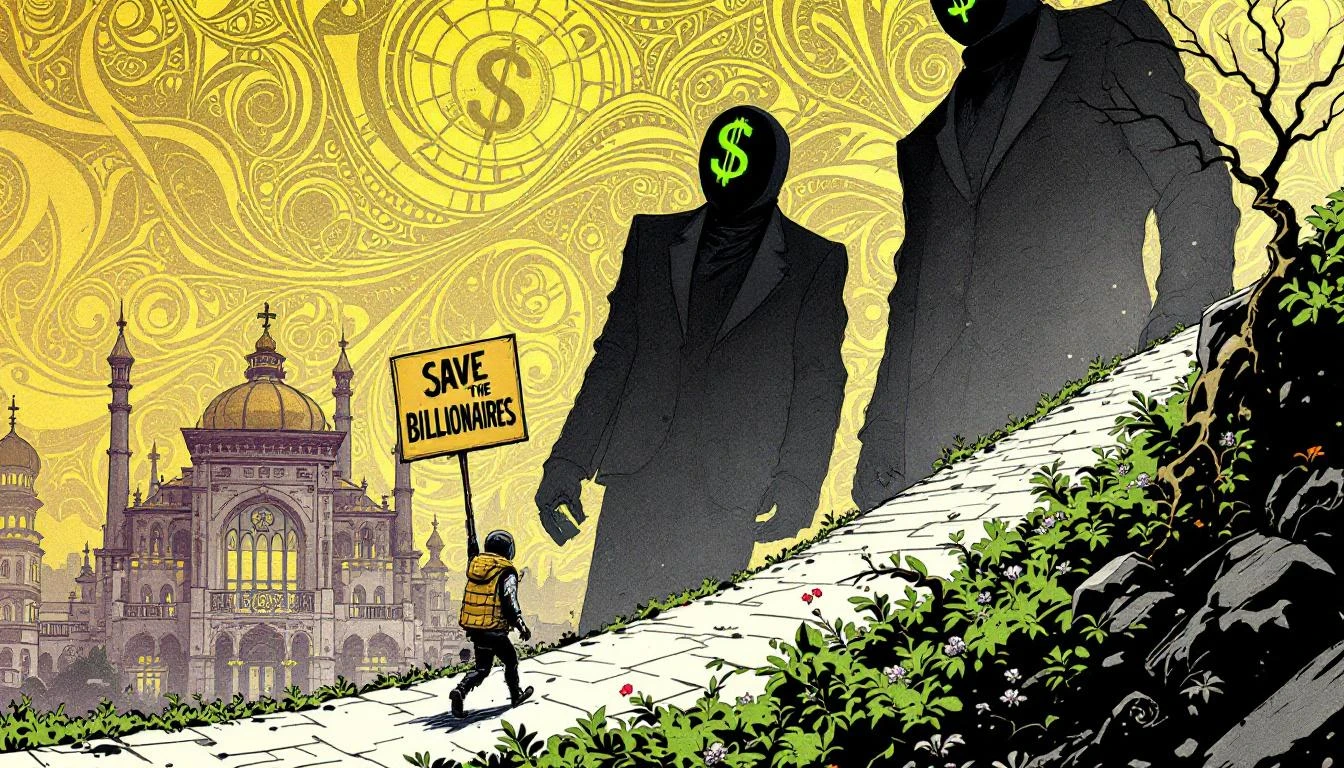
The March of the Temporarily Embarrassed Billionaires: A Tech Bro's Passion Play for the Persecuted Rich
An AI startup founder organizes a march to defend billionaires from California's wealth tax — a bill already doomed to veto, attended by zero actual billionaires, fighting for paper fortunes he doesn't have.
Apple's Privacy Theatre: A Luxury Good That Dissolves on Contact With Authority
Apple's Hide My Email shields you from spam merchants but dissolves instantly for federal agents — privacy as luxury aesthetic rather than actual protection.
The Great AI Skills Grift: How Silicon Valley Learned to Quantify the Unquantifiable and Sell It Back to You
Silicon Valley's latest grift: Let AI manage your skills, quantify your worth, and provide algorithmic cover for the great workforce reduction. Spoiler—the real skill is spotting the con.