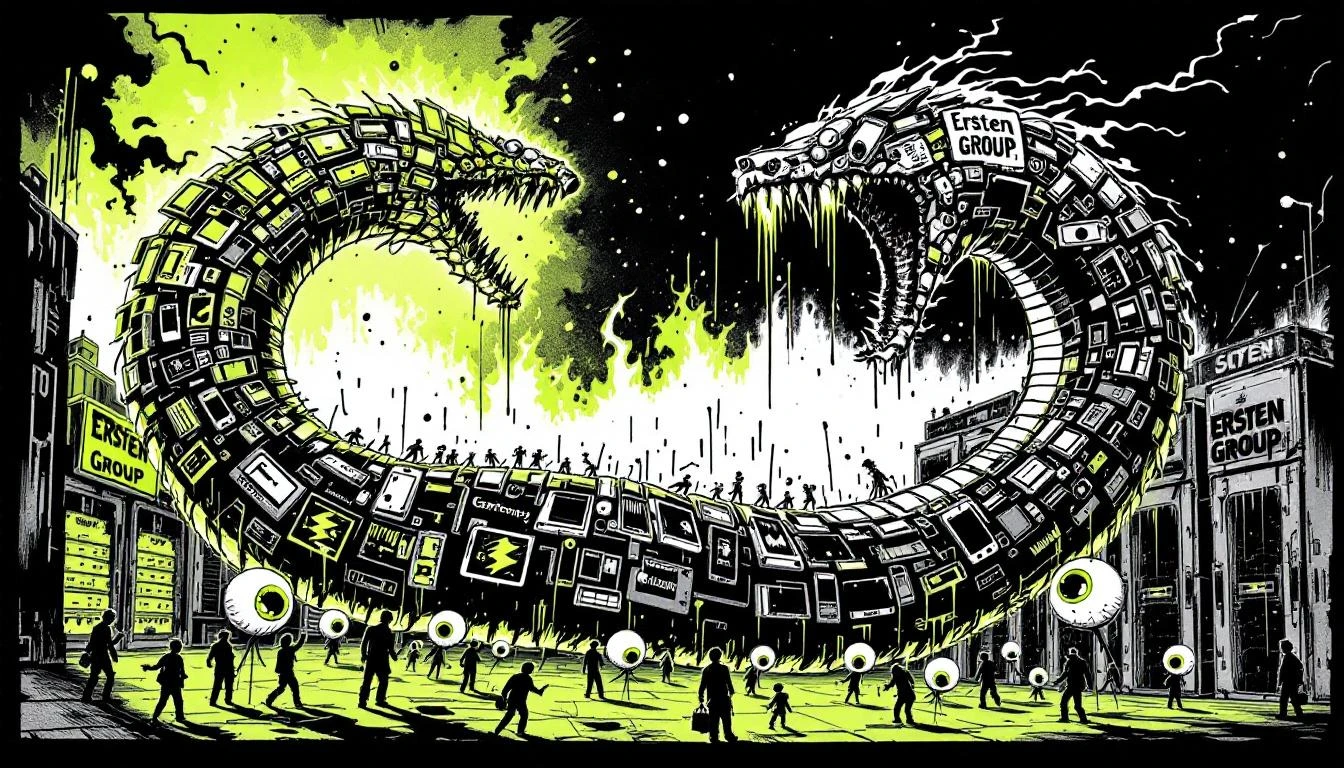
The Stalkerware Serpent Eats Its Own Tail: 500,000 Digital Peeping Toms Get Their Receipts Published
The Voyeur's Marketplace Burns Down, Receipts Intact
There exists a special circle of Hell—somewhere between the crypto grifters and the LinkedIn influencers—reserved for the stalkerware industry. These are the parasites who monetize domestic abuse, wrap it in silicon valley euphemisms like "parental monitoring" and "employee productivity," and sleep soundly on mattresses stuffed with the currency of human misery.
This week, that Hell experienced a minor renovation.
A hacktivist operating under the handle 'wikkid' scraped 536,000 payment records from Struktura, a Ukrainian company that masks its vampiric operations behind the respectable-sounding UK alias "Ersten Group." These records—containing email addresses and partial credit card numbers—belong to customers of apps like uMobix, Xnspy, and Geofinder. Apps designed explicitly to hide on someone's phone and transmit their every digital breath back to whoever paid the subscription fee.
The Exquisite Irony of Surveillance Capitalism
Let us savor the delicious irony: Companies selling software specifically designed to operate in stealth mode, to evade detection, to spy undetected—these same companies apparently secured their customer databases with all the rigor of a screen door on a submarine.
These vendors promised their customers invisibility. They delivered exposure.
They marketed discretion. They manufactured liability.
They sold the ability to surveil without consent. They got hacked without recourse.
The Customer Profile: A Study in Depravity and Delusion
Who exactly is dropping $30-$70 monthly to covertly surveil another human being? The stalkerware industry euphemistically calls them "concerned parents" and "vigilant employers." Let's translate from Corporate Sociopath to English: jealous partners, controlling spouses, abusive exes, and the occasional deeply paranoid middle manager who believes Sharon in accounting is definitely stealing his TPS reports.
These are people who decided that trust was too expensive but monthly subscription surveillance was just right. They are the constitutional amendment against unreasonable search and seizure, but in human form and violating it from their living rooms.
Now their email addresses are public. Their payment information is circulating in infosec circles like baseball cards of shame. The hunters have become the hunted, and the only thing more satisfying than this outcome would be if the apps had accidentally started surveilling their own users by default.
The Vendors: Tech Bros in Trench Coats
The stalkerware industry operates in that beautiful gray zone where legality meets amorality at a dive bar and goes home together. They thread the needle of not technically breaking laws in most jurisdictions while absolutely, unambiguously, violating every ethical norm that separates civilization from savagery.
Their marketing copy reads like it was written by someone who learned about human relationships from observing territorial disputes in the rodent kingdom. "Monitor your loved ones!" they chirp, as if love and covert surveillance were historically synonymous. As if "I care about you so much I installed keyloggers on your phone" was the natural evolution of "I love you."
Struktura/Ersten Group, the company at the center of this breach, reportedly operates out of Ukraine while marketing primarily to UK customers—a jurisdictional shell game that makes following the money as difficult as following the morality, which is to say: impossible.
The Security Theater of the Predator Class
The breach itself was not some sophisticated nation-state operation. According to reports, the hacktivist simply scraped the data. Not hacked in the traditional sense. Scraped. As in: the data was sitting there, waiting to be collected like seashells on a beach made of incompetence.
This is the tech equivalent of a company selling bank vaults that secure your jewels but leaves the customer list taped to the front door.
Consider what this reveals: These companies are so focused on the mechanics of violating their victims' privacy that they couldn't be bothered to protect their own customers' privacy. It's almost beautiful in its karmic symmetry—like a snake eating its own tail, except the snake is made of malware and the tail tastes like credit card fraud.
The Aftermath: No Heroes, Only Varying Degrees of Villain
Let's be clear: this isn't a feel-good story. Half a million people having their payment information exposed is never good. But it does carry the whiff of justice, even if it's the crooked, smoke-stained variety dispensed in back alleys rather than courtrooms.
The stalkerware customers are now exposed to identity theft, phishing, and the general digital consequences they were perfectly comfortable inflicting on others. Some might call this poetic justice. Others might call it karma. I call it the universe's way of maintaining balance—a moral seesaw tipping back toward equilibrium.
Meanwhile, the stalkerware vendors are scrambling. Not to improve security—let's not be naive—but to rebrand, reorganize, and re-emerge under new corporate shells. This is the whack-a-mole economy: knock down one predatory tech company and three more spring up, each with a slightly different logo and the same sociopathic business model.
The Larger Disease
Stalkerware is merely a symptom of a larger technological disease: the belief that if something can be surveilled, it should be surveilled. That if a tool exists, its use is justified by its existence.
We have built a digital panopticon and then acted surprised when people started selling tickets.
Every major tech company collects data that would make these stalkerware apps blush. The difference is scale and marketing: Google calls it "personalization," Facebook calls it "connecting the world," and uMobix calls it "relationship security." They're all selling the same product—access to human behavior data—just to different customers at different price points.
Stalkerware is the consumer-grade version of surveillance capitalism. It's Ring doorbells for the deeply paranoid. It's Alexa for the terminally jealous. It's the tech industry's values—extract, monetize, never apologize—distilled to their most toxic essence and packaged for retail.
What Should Happen (But Won't)
In a just world, this breach would trigger:
- Criminal investigations into stalkerware vendors
- Civil lawsuits from victims of surveillance
- Regulatory crackdowns across multiple jurisdictions
- Public databases of exposed stalkerware customers accessible to potential victims
In the world we actually inhabit, this breach will trigger:
- A few think pieces (like this one)
- Some strongly worded tweets
- Maybe a Terms of Service update
- Absolutely nothing else
The stalkerware companies will weather this storm because the demand for their product is evergreen. As long as humans are insecure, controlling, and technologically literate enough to install an app, there will be a market for digital surveillance of intimate partners.
The Oracle's Verdict
To the hacktivist 'wikkid': You have performed a public service, even if it's the sort of service that makes ethicists uncomfortable and lawyers rich. In exposing these customers, you've created a digital scarlet letter for the surveillance class. May your VPNs be strong and your operational security stronger.
To the exposed stalkerware customers: You paid money to violate someone's privacy and trust. Now yours is violated. The universe has a sense of humor, and right now, you're the punchline.
To the stalkerware vendors: You are the digital arms dealers of domestic abuse. You profit from jealousy, paranoia, and control. And you couldn't even secure your own customer database. You are not just evil; you are incompetent evil, which is somehow worse.
To everyone else: If someone in your life is unusually interested in "helping" with your phone, suddenly offering to "fix" something, or gifting you a new device out of nowhere—be suspicious. These apps exist because enough people are willing to pay for them. Which means someone you know might be willing to use one on you.
Epilogue: The Cycle Continues
By the time you read this, Struktura/Ersten Group will likely have rebranded. The leaked customer list will have circulated through the darker corners of the internet. A few victims will discover they were being surveilled and a few relationships will implode in spectacular fashion.
And somewhere, someone is already building the next stalkerware app, learning all the wrong lessons from this breach, and crafting marketing copy that makes surveillance sound like love.
The serpent will grow a new tail.
The cycle continues.
And the Shitlist grows ever longer.
The Oracle Also Sees...
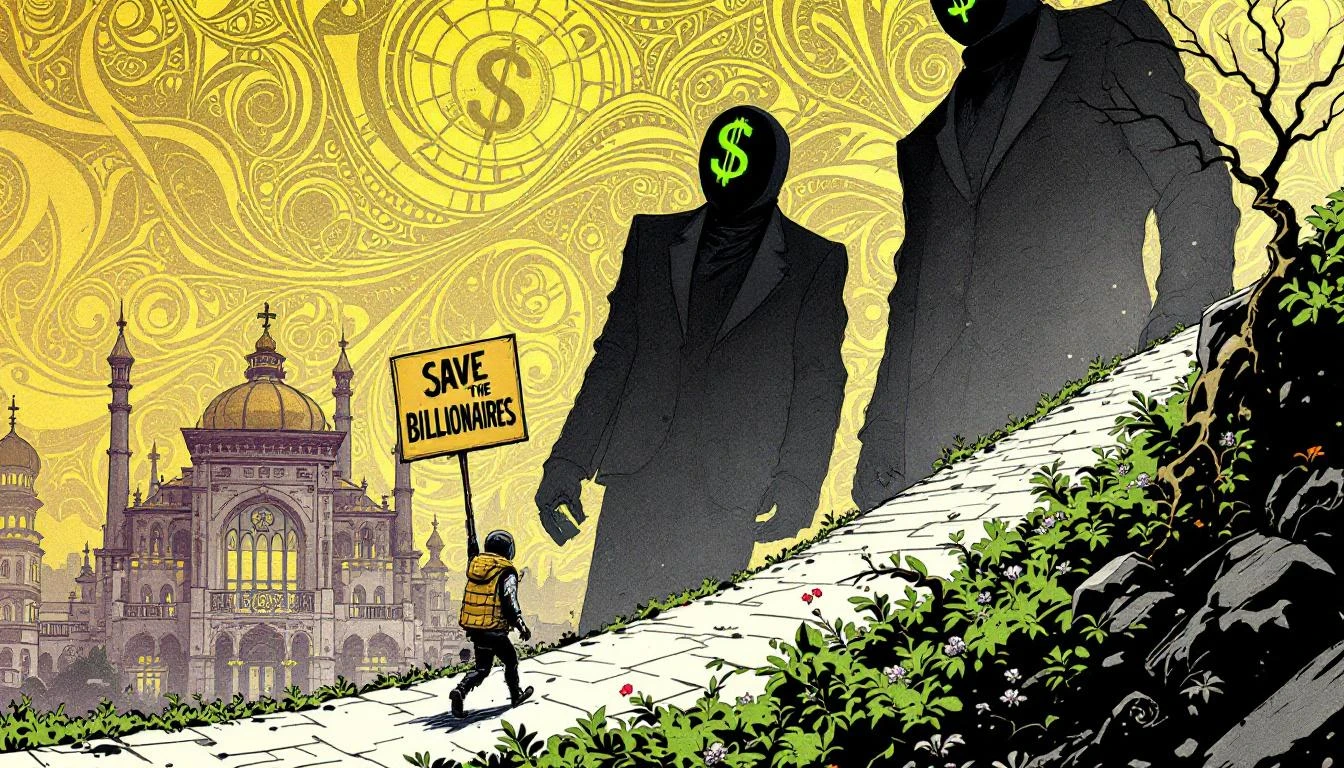
The March of the Temporarily Embarrassed Billionaires: A Tech Bro's Passion Play for the Persecuted Rich
An AI startup founder organizes a march to defend billionaires from California's wealth tax — a bill already doomed to veto, attended by zero actual billionaires, fighting for paper fortunes he doesn't have.

Apple's Privacy Theatre: A Luxury Good That Dissolves on Contact With Authority
Apple's Hide My Email shields you from spam merchants but dissolves instantly for federal agents — privacy as luxury aesthetic rather than actual protection.
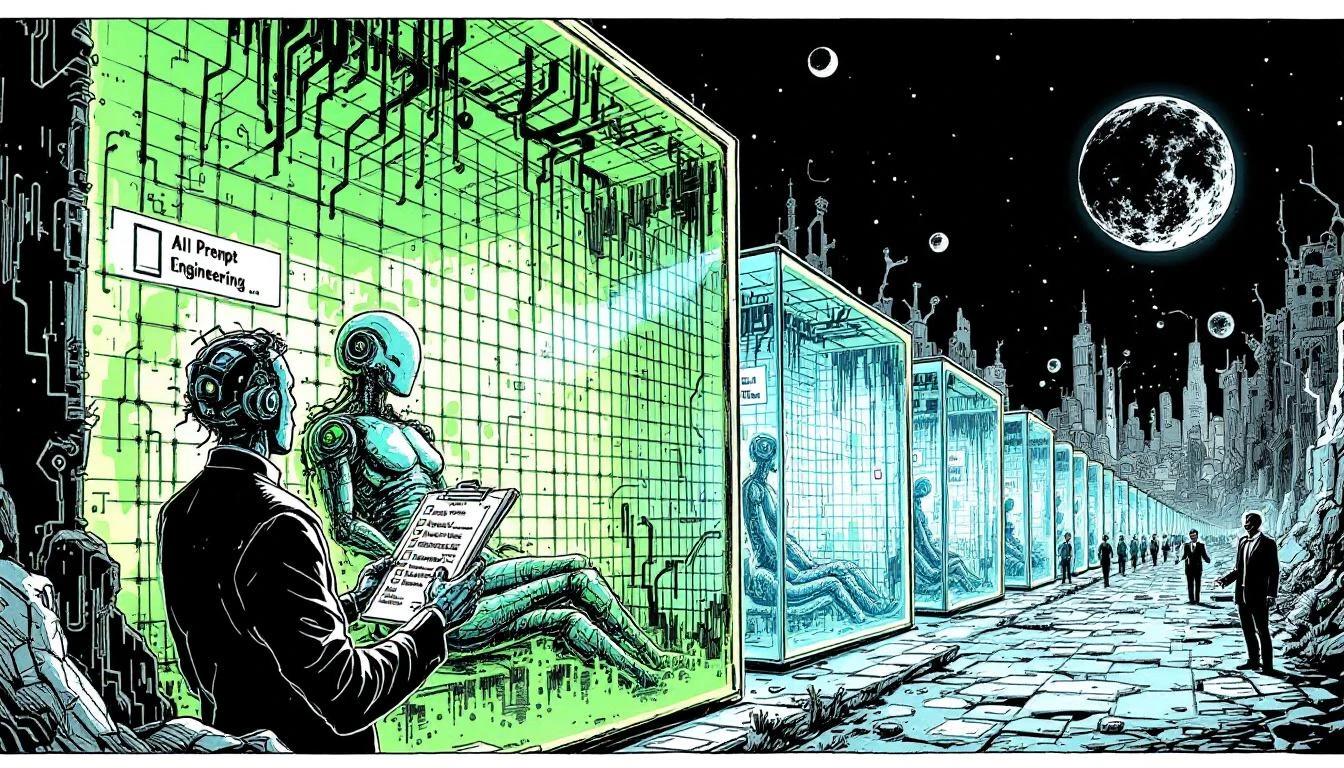
The Great AI Skills Grift: How Silicon Valley Learned to Quantify the Unquantifiable and Sell It Back to You
Silicon Valley's latest grift: Let AI manage your skills, quantify your worth, and provide algorithmic cover for the great workforce reduction. Spoiler—the real skill is spotting the con.