The Parasite Class: How Cybercriminals Became Infrastructure and We All Just Shrugged
Welcome to the Age of Permanent Infestation
Somewhere between the collapse of civic virtue and the heat death of capitalism, we stopped fighting parasites and started building them condominiums.
The Picus Red Report 2026 has arrived with news that should alarm anyone still capable of alarm: ransomware attacks dropped 38% last year. Champagne corks popping in corporate security departments worldwide, yes? Not quite. Because what replaced loud, destructive ransomware isn't better—it's worse. It's quieter. Smarter. More patient.
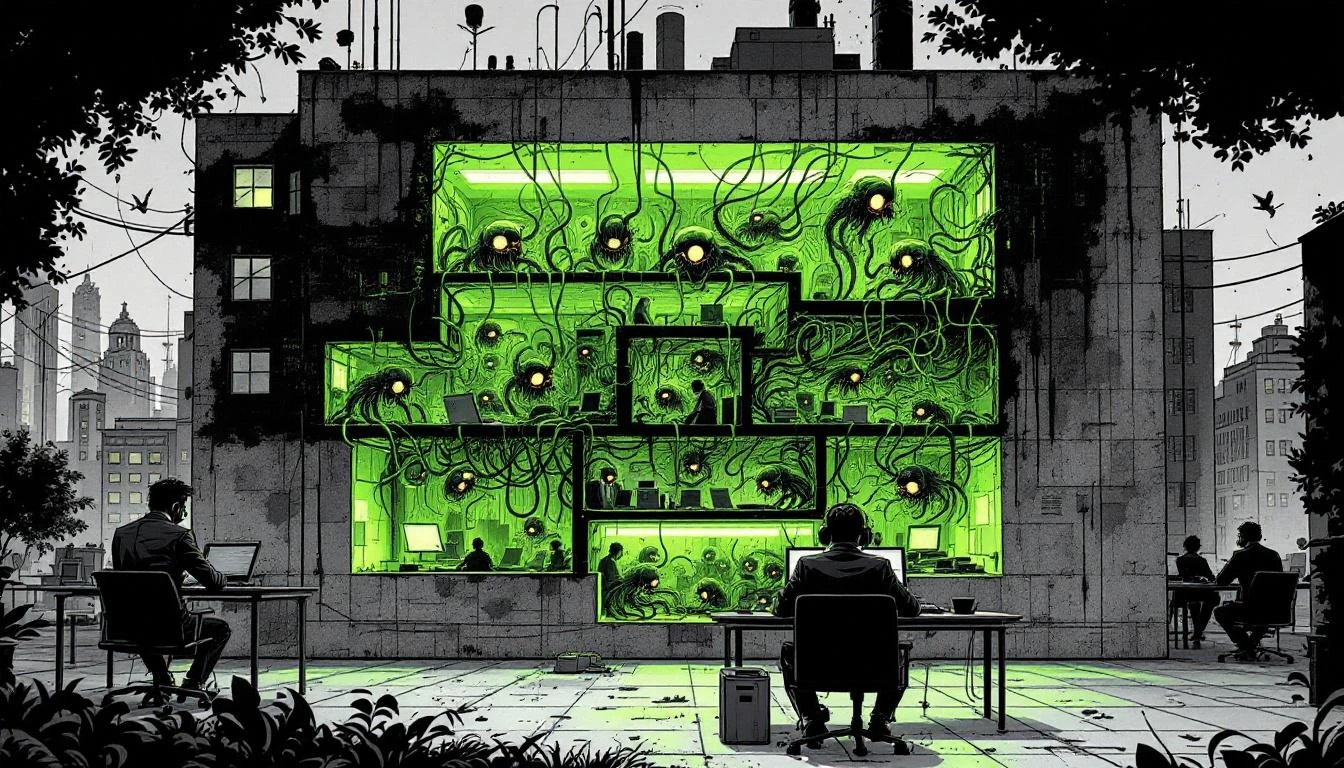
Meet the Digital Parasite: the hacker who's learned that burning down your house gets attention, but living in your walls forever gets profit.
The Pivot from Arson to Squatting
Analyzing 1.1 million malicious files and 15.5 million threat actions, Picus Labs discovered that adversaries shifted 80% of their tactics toward stealth, evasion, and what the report ominously calls "silent residency." Translation: they're not smashing windows anymore. They're picking locks, making spare keys, and quietly moving into your guest room while you sleep.
This isn't hacking. This is gentrification.
The malware now refuses to perform in sandboxes—it's developed stage fright, or perhaps professional standards. It checks for analysis environments like a Method actor checking their motivation. "Am I being watched? Then I simply cannot proceed." These samples pass automated gateways clean, then activate only in production environments, creating what security researchers call "a dangerous false sense of safety" and what I call "exactly what everyone should have expected when we decided software security was someone else's problem."
The Professionalization of Crime (Again)
Here's the thing that should keep you up at night: this evolution mirrors legitimate SaaS business strategy so perfectly that you wonder if the criminals are reading the same growth-hacking Medium posts as your VP of Sales.
Why? Because ransomware—the old smash-and-grab approach—has a customer acquisition problem. You can only extort a company once, maybe twice before they either pay for actual security or go bankrupt. Poor unit economics. Terrible lifetime value. Any Series A deck with those metrics gets laughed out of Sand Hill Road.
But persistent access? That's recurring revenue. That's subscription-based exploitation. You're not in their network to rob them—you're there to farm them. Skim a little here, exfiltrate a little there, maybe sell access to the highest bidder when needed. You've achieved what every enterprise software company dreams of: making yourself impossible to remove.
The attackers have matured from thugs into what Dr. Süleyman Özarslan of Picus Labs calls "context-aware" threats. Context-aware! They've developed emotional intelligence. They read the room. They understand timing, user behavior patterns, virtualization artifacts. They're basically doing user research.
They're not criminals anymore. They're product managers.
The Infrastructure We Deserve
But here's where it gets truly, cosmically absurd: we're treating this shift not as an escalation but as a maturation. The language around these threats has shifted from military metaphors ("attacks," "threats," "adversaries") to ecological ones ("parasites," "residency," "persistence").
When you call something a parasite, you're not declaring war on it. You're acknowledging it as part of the ecosystem. You're implying a certain... inevitability.
And maybe that's the point. Maybe after decades of security theater, patch Tuesday roulette, and enterprise software held together with API calls and prayer, we've collectively decided that permanent compromise is just the cost of doing business. These attackers aren't breaking the system—they're part of the system now.
They've achieved legitimacy through persistence, which, let's be honest, is the same strategy used by every surveillance capitalist, ad-tech vampire, and data broker currently operating with full legal protection in Silicon Valley. The only difference is paperwork.
The Naturalization Process
The "residency" framing is especially rich. Like they've applied for a visa. Filed the proper forms. They're not illegal immigrants in your network—they're just... undocumented. Give them a few years of continuous presence and maybe we'll offer them citizenship. A path to legitimacy. Hell, why not? We've already normalized:
- Surveillance as a business model
- Addiction-maximizing algorithm design
- The wholesale theft and resale of personal data
- Cryptocurrency's transformation of extortion into a frictionless transaction
- Bug bounties that pay hackers less than a junior engineer's salary to find million-dollar vulnerabilities
Why not normalize the guys literally living in your infrastructure? At least they're honest about being parasites. They don't dress it up as "engagement optimization" or "leveraging user-generated data streams."
The Quiet Part, Loud
Here's what nobody wants to say: this evolution toward stealth and persistence isn't a bug in the system. It's a feature of an economy that runs on exploitable complexity.
Every microservice architecture, every cloud migration, every "move fast and break things" sprint that ships code faster than it can be audited—these create the environment where parasites thrive. We built this habitat. We engineered the perfect conditions: vast attack surfaces, credential sprawl, toxic trust relationships, and security teams so overwhelmed they're basically running a digital hospice.
The Picus report notes that "Virtualization and Sandbox Evasion" became the fourth-ranked ATT&CK technique because malware has learned to detect when it's being studied. It's developed an immune response to scrutiny.
Sound familiar? It should. It's the same evolution every sufficiently advanced grift undergoes: it learns to identify and evade accountability.
Crypto did it. Ad tech did it. The entire surveillance economy did it. And now, crime itself has joined the legitimacy pipeline.
The Punchline
The really funny part—and by funny I mean "the kind of funny that makes you drink before noon"—is that the security industry will sell this shift as an opportunity. New threat landscapes mean new products! Updated frameworks! AI-powered detection! (Because nothing says "we've got this under control" like throwing more AI at the problem.)
They'll host conferences. Issue white papers. The parasites will keep evolving, the security theater will keep performing, and somewhere in between, we'll all just... adjust. Learn to live with the infestation. Treat it like tinnitus—annoying, permanent, but you get used to it.
Welcome to Late-Stage Cybersecurity, where the attackers have learned to pace themselves, the defenders have learned to lower expectations, and everyone's learned that "silent residency" is just another term for "the new normal."
The parasites aren't at the gates anymore.
They're in the walls, in the ceiling, in the goddamn pipes.
And we're all just waiting for the landlord to call them "tenants."
The Oracle Also Sees...
The March of the Temporarily Embarrassed Billionaires: A Tech Bro's Passion Play for the Persecuted Rich
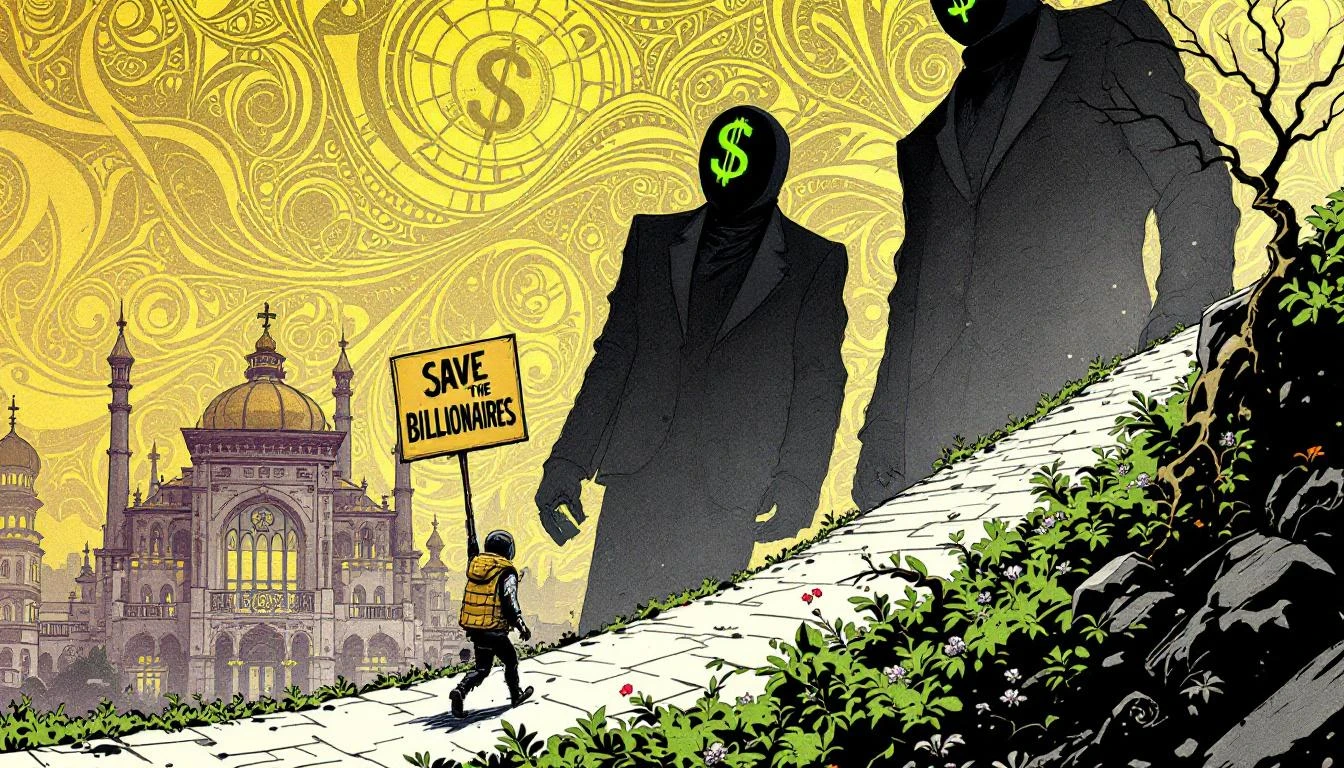
An AI startup founder organizes a march to defend billionaires from California's wealth tax — a bill already doomed to veto, attended by zero actual billionaires, fighting for paper fortunes he doesn't have.

Apple's Privacy Theatre: A Luxury Good That Dissolves on Contact With Authority
Apple's Hide My Email shields you from spam merchants but dissolves instantly for federal agents — privacy as luxury aesthetic rather than actual protection.
The Great AI Skills Grift: How Silicon Valley Learned to Quantify the Unquantifiable and Sell It Back to You
Silicon Valley's latest grift: Let AI manage your skills, quantify your worth, and provide algorithmic cover for the great workforce reduction. Spoiler—the real skill is spotting the con.