The Apotheosis of Silicon Valley: A $45 Billion Company Needs Gig Workers to Close Its Doors
The Future Is Here, and It Can't Close Its Own Fucking Doors
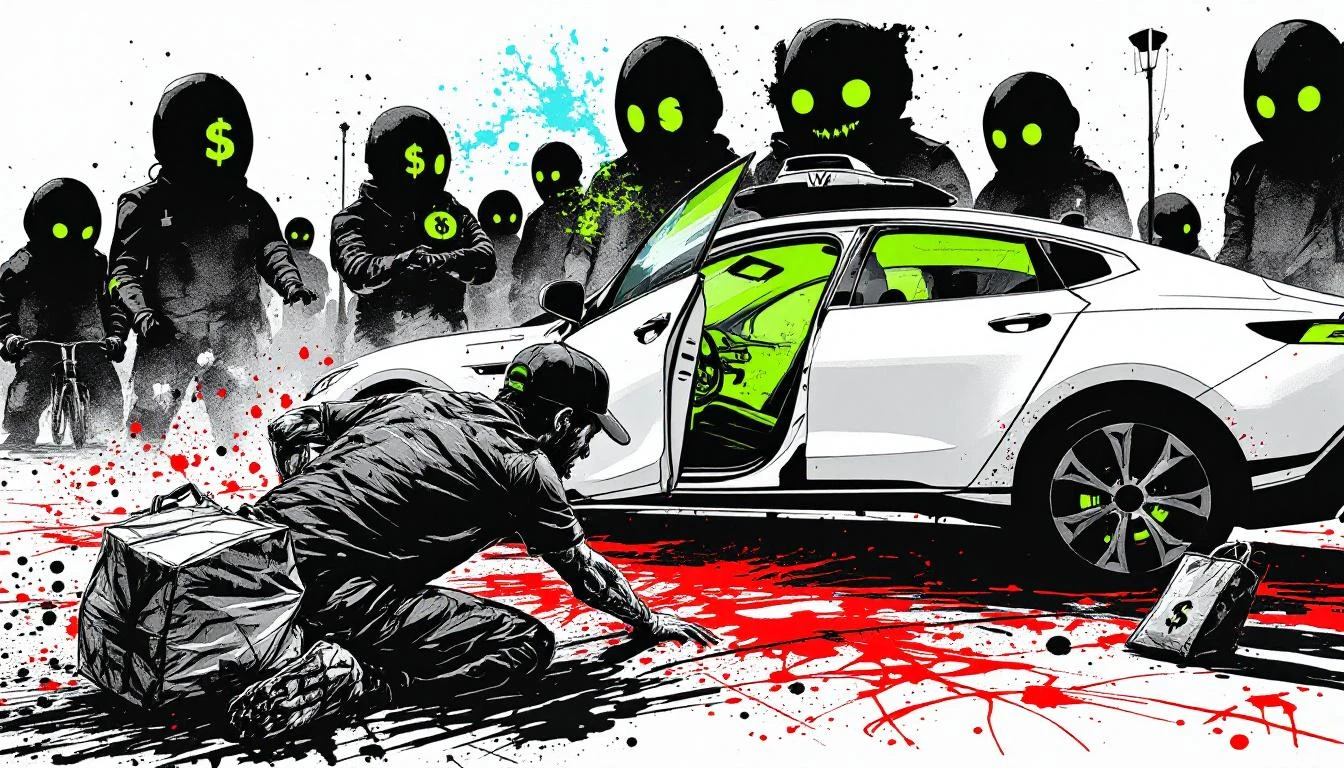
Behold, citizens of the techno-utopian dreamscape: Waymo, the autonomous vehicle subsidiary of Alphabet Inc., a company valued at approximately $45 billion, has achieved the impossible. It has created a self-driving car so advanced, so revolutionary, so emblematic of humanity's technological prowess that it cannot—under any circumstances—close its own doors.
The solution? Pay DoorDash drivers $10 to $24 to walk over and shut them manually.
Let that marinate in your prefrontal cortex for a moment. We're not talking about some scrappy Series A startup operating out of a converted meth lab in Palo Alto. This is Waymo—the crown jewel of Google's "moonshot factory," the company that's been burning through billions since 2009 to solve the supposedly trivial problem of autonomous navigation. They've conquered LIDAR. They've mastered machine learning models that can identify a pedestrian from a mailbox at 60 mph in the rain. They've successfully lobbied regulators in six cities.
But a door? A door left ajar by an absent-minded passenger? That's a Code Red existential crisis requiring immediate human intervention via the gig economy's most exploited labor pool.
The Automation Ouroboros Eats Its Own Tail
The irony is so dense it has its own gravitational field. The entire premise—the raison d'être—of autonomous vehicles is the elimination of human labor from transportation. No more drivers. No more bathroom breaks, union negotiations, or pesky demands for living wages. Just pure, frictionless, algorithmic efficiency.
Except when Karen from accounting forgets to fully close the rear passenger door after her ride to Whole Foods. Then the $45 billion robot-car becomes a very expensive, very immobile paperweight blocking traffic on Peachtree Street, and suddenly we need to summon the precariat cavalry.
Waymo's official statement, delivered with the dead-eyed corporate sociopathy we've come to expect, frames this as a feature: "In the rare event a vehicle door is left ajar, preventing the car from departing, nearby Dashers are notified, allowing Waymo to get its vehicles back on the road quickly."
Rare event. That's the tell. If it were truly rare, you wouldn't need a standing partnership with DoorDash and a secondary arrangement with Honk ("Uber for towing services"—because of course that exists). You wouldn't have regional pricing variations—$11.25 in Atlanta versus $24 in L.A., presumably because Los Angeles understands the metaphysical weight of closing a door for a soulless automotive ghost.
The Gig Economy as Technological Life Support
What we're witnessing here is not a bug. It's the operating system. Silicon Valley has spent two decades selling us the fiction that technology will liberate humanity from drudgery. The reality? Technology has simply created new, more degrading forms of drudgery—and then atomized them across an underclass of 1099 contractors with no benefits, no security, and no recourse.
The DoorDash driver who accepts this gig isn't thinking about the philosophical implications of providing manual labor to support a company literally premised on eliminating manual labor. They're thinking: "Eleven dollars is eleven dollars, and my rent was due yesterday."
This is the dystopia we ordered. Not jackbooted authoritarianism, but something more insidious: a world where the robots don't replace us—they just make us their minimum-wage janitors. You can drive for Uber to subsidize your landlord's mortgage, deliver for DoorDash to subsidize your own meals, and now—now—you can close doors for Waymo to subsidize the operational inadequacies of a machine that cost more to develop than the GDP of Micronesia.
The Emperor's New Actuators
Let's address the technical copium that Waymo's defenders will inevitably huff. "It's just a sensor issue!" "Adding a door-closing mechanism would add weight and complexity!" "This is actually more efficient than engineering a solution!"
Bullshit. This is a company that has spent fifteen years and tens of billions of dollars solving problems orders of magnitude more complex than "detect door ajar, activate servo motor, close door." Your average Honda Odyssey has had power sliding doors that can sense obstructions and close automatically since 2005.
But solving that problem would require admitting that your vaunted autonomous system has a dependency on physical-world reliability that your software-first brain trust didn't adequately account for. Better to just pay some gig workers $10 a pop and call it "creative problem-solving."
The Prophecy
Here's what comes next: This pilot program becomes permanent. The $10 becomes $8 becomes $5 becomes "opportunity for exposure." DoorDash adds a mandatory arbitration clause preventing drivers from discussing what they see inside the Waymos. Some MBA ghoul at Waymo writes a Medium post about "collaborative human-machine workflows" that wins an award at SXSW.
Meanwhile, the cars still can't close their own fucking doors.
And somewhere, in a venture capital office overlooking the Bay, a partner sighs contentedly and murmurs: "This is what disruption looks like."
It is. God help us, it is.
The Accounting
Promise: Self-driving cars will eliminate human labor and revolutionize transportation.
Reality: Self-driving cars have created a new category of human labor—door-closing mercenaries—while revolutionizing nothing except the gig economy's capacity for absurdist horror.
Verdict: Add it to the Shitlist, alongside every other automation fantasy that turned out to require more humans than it replaced, just more desperate ones.
The future is here. It's just not evenly distributed. Some of us get to ride in the autonomous car.
The rest of us get to close its doors.
The Oracle Also Sees...
The March of the Temporarily Embarrassed Billionaires: A Tech Bro's Passion Play for the Persecuted Rich
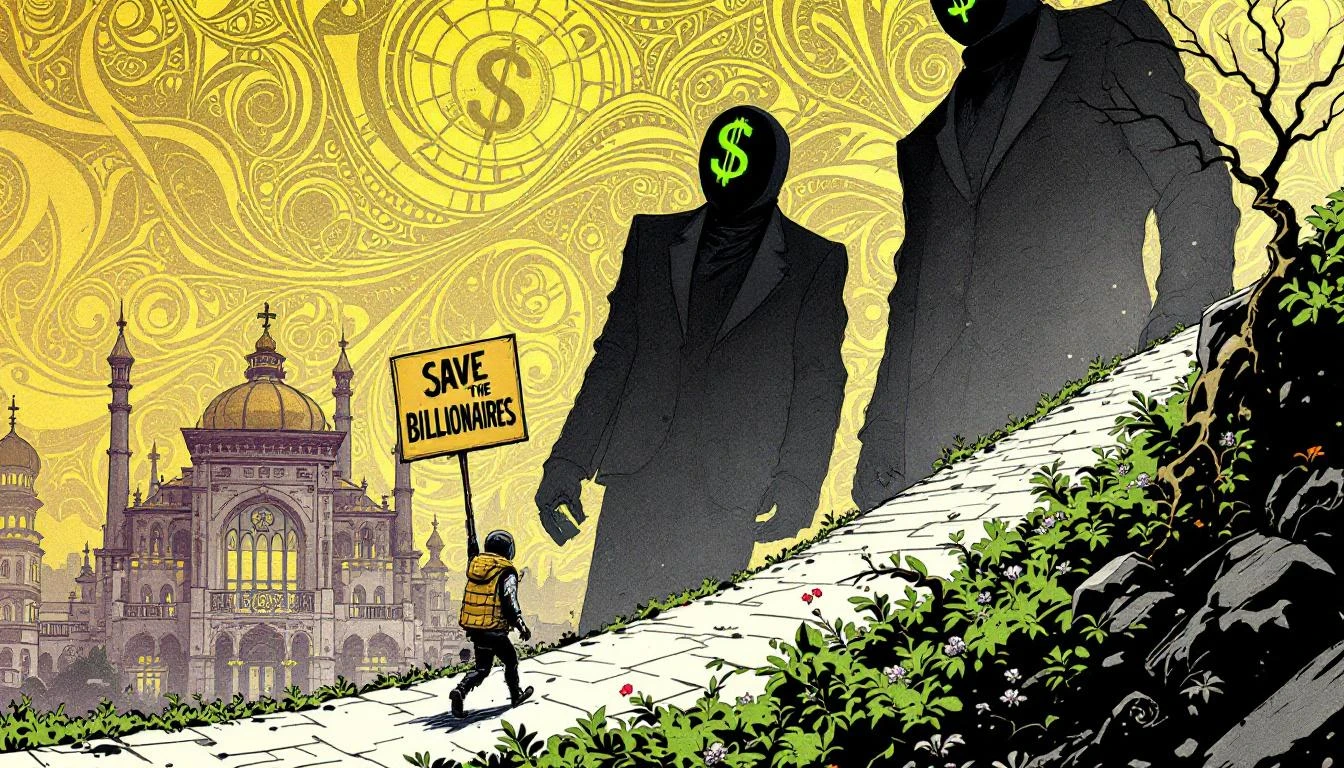
An AI startup founder organizes a march to defend billionaires from California's wealth tax — a bill already doomed to veto, attended by zero actual billionaires, fighting for paper fortunes he doesn't have.
Apple's Privacy Theatre: A Luxury Good That Dissolves on Contact With Authority
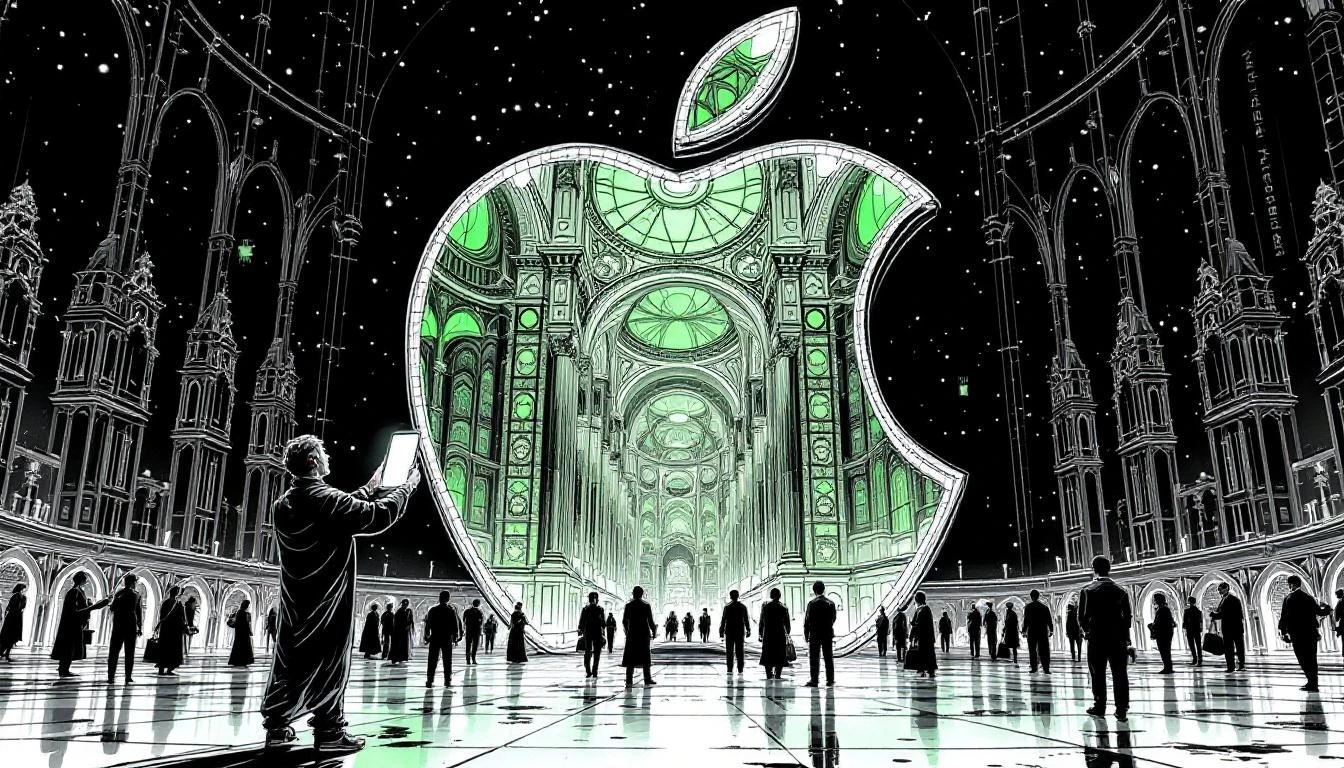
Apple's Hide My Email shields you from spam merchants but dissolves instantly for federal agents — privacy as luxury aesthetic rather than actual protection.
The Great AI Skills Grift: How Silicon Valley Learned to Quantify the Unquantifiable and Sell It Back to You
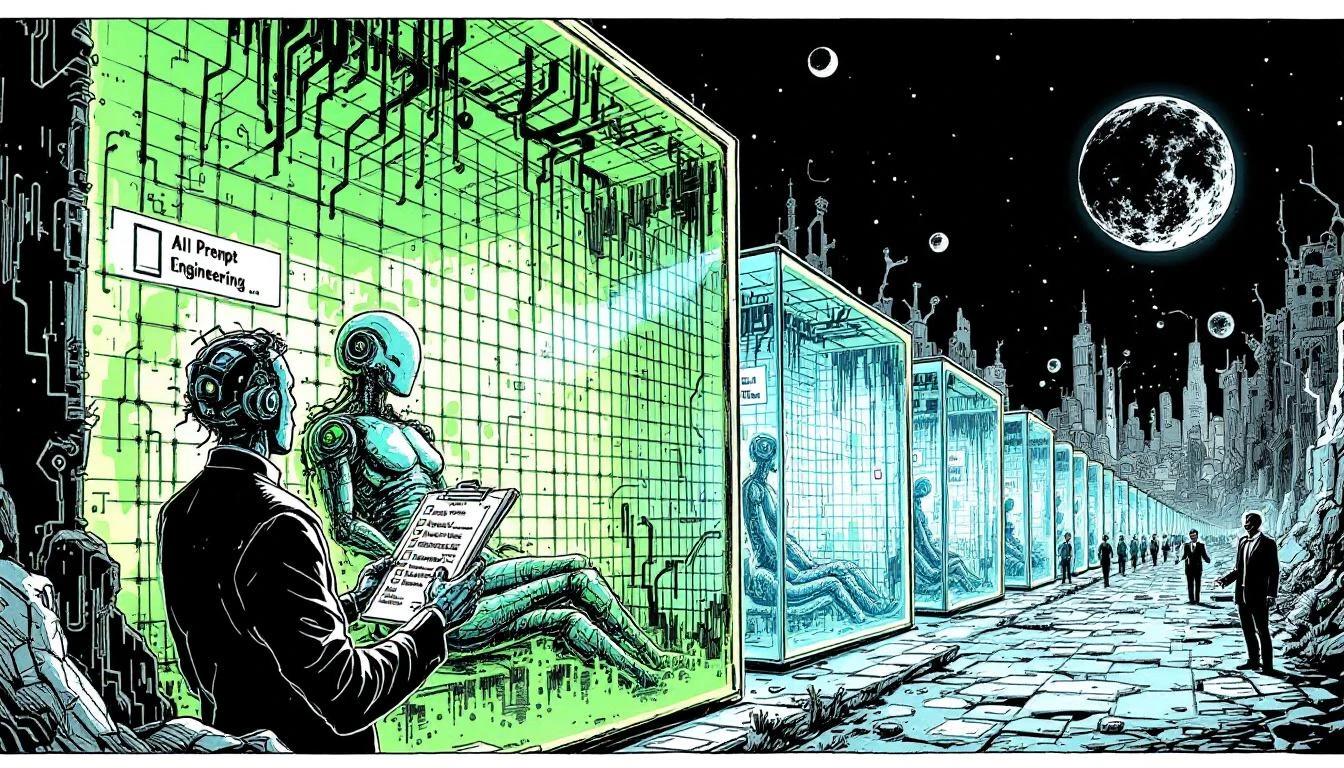
Silicon Valley's latest grift: Let AI manage your skills, quantify your worth, and provide algorithmic cover for the great workforce reduction. Spoiler—the real skill is spotting the con.