The Royal Reserve: How Art Basel Qatar Turned High Culture Into a Hostage Negotiation
The New Feudalism Wears Hermès
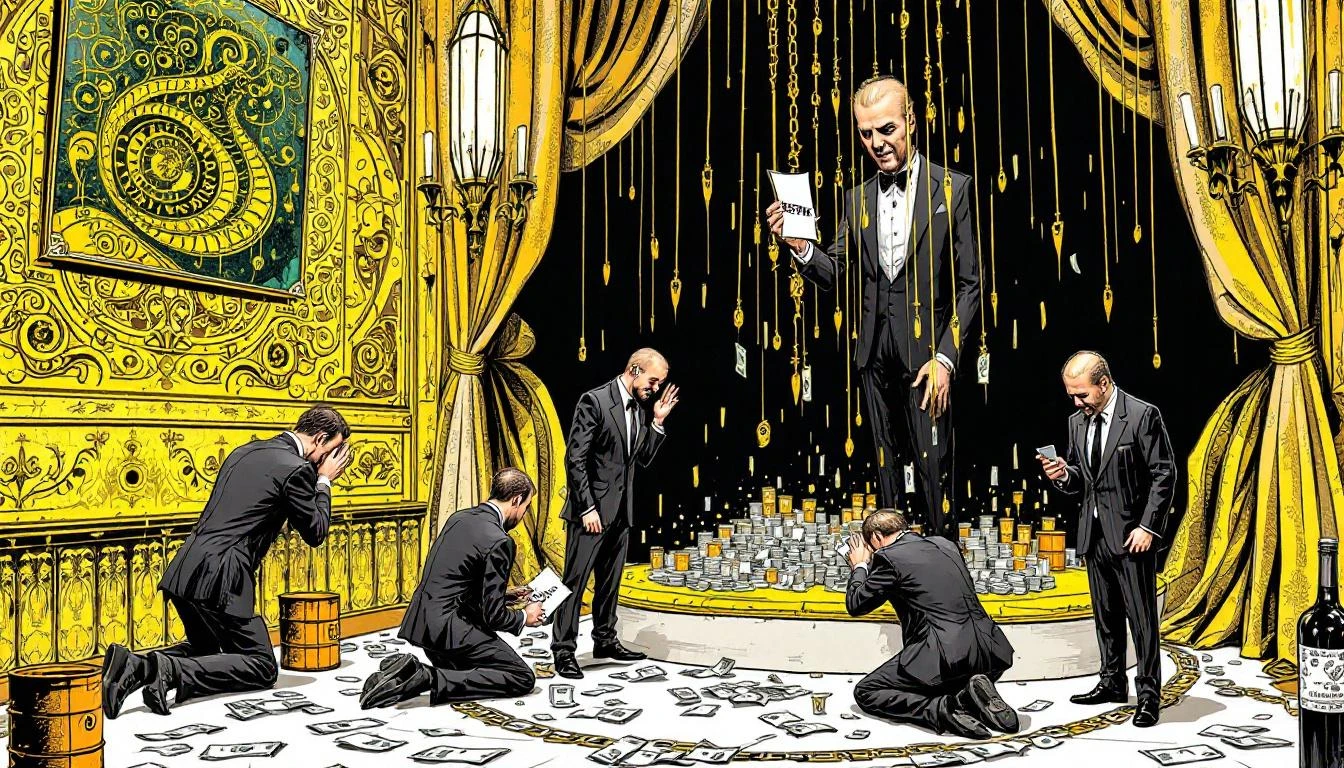
Picture, if you will, the scene: Western art dealers—those self-proclaimed champions of creative freedom, those Instagram prophets of social justice who wouldn't shut up about decolonization for five minutes during 2020—now standing at attention in climate-controlled tents in Doha, watching nervously as members of the Qatari royal family pass notes like high schoolers deciding which seven-figure paintings they might deign to purchase.
Maybe.
Eventually.
At some unspecified later date.
Welcome to Art Basel Qatar, where the "right of first refusal" isn't just a sales mechanism—it's a metaphor for the entire grotesque charade.
The Reserve List or: How I Learned to Stop Worrying and Love Autocracy
Multiple dealers confirmed that significant portions of the fair were placed on hold following a private royal walkthrough on Monday. Art Basel's spokesperson, naturally, denied this was true. Which is precisely what you'd expect someone to say when it's absolutely, undeniably true.
The math is simple: You fly your Twombly to the desert. A prince glances at it during a private viewing. Your painting is now in limbo—not sold, not available, just... reserved. You stand there, $50,000 poorer from shipping and booth costs, hoping His Highness remembers he liked your picture between the falconry and the football.
Meanwhile, David Beckham—pocketing a cool $150 million as Qatar's official ambassador—appears at every official event like Banquo's ghost, if Banquo had better hair products and a sportswear line.
The Quiet Revolution of People With Infinite Money
The spin doctors are working overtime. This isn't about sales, they insist. It's about "relationship-building" and "institutional engagement" and "the gradual development of a future collector base."
Translation: Nobody's buying shit, but we're committed to the bit.
Vincenzo De Bellis, Art Basel's chief artistic officer, carefully positions this as "a long game." Which is corporate-speak for "we're hoping if we keep showing up with enough Basquiats and Koons, eventually somebody will break out the sovereign wealth fund."
The irony is exquisite: the art world spent decades congratulating itself for being progressive, for speaking truth to power, for challenging authority. Now it's literally waiting for permission slips from monarchs.
Eighty-Four Booths and One Place to Drink
The fair itself is modest—just 87 exhibitors, a fraction of Basel's other franchises. Small enough to maintain the fiction of curation. Large enough to pretend it matters.
Dealers whisper in the aisles about Middle Eastern collectors being "discreet." About women collecting "under the radar" for decades. About private foundations and residency programs that might, possibly, someday, materialize into actual market activity.
It's the art world equivalent of a prospector explaining that the real gold is the friends we made along the way.
Meanwhile, the same dealers who couldn't stop virtue-signaling about Black Lives Matter are now genuflecting before a region with labor practices that make Amazon warehouses look like worker cooperatives. The same galleries that posted black squares on Instagram are thrilled to accept checks written with oil money, as long as the numbers have enough zeros.
The Fairness Doctrine
Here's what nobody wants to say out loud: Art Basel Qatar exists because Western markets are tanking. The champagne socialists of Chelsea and Mayfair need new money, and the Gulf has it.
Hugo Nathan of Beaumont Nathan lets the truth slip with refreshing candor: the Gulf is home to "a wealthy population that enjoys spending on luxury items—they've just been a little slower to collect art in a meaningful way."
Read: They have money. We want it. Culture is the Trojan horse.
The question hanging over the Doha Convention Center like humidity: Can the region sustain Art Basel Qatar, Art Dubai, AND Frieze Abu Dhabi? Are there enough bored oligarchs and royals to go around? Will the institutional buyers actually materialize, or will this become an annual pilgrimage where dealers hemorrhage money hoping someone important glances at their booth?
The Uncomfortable Truth
The art world built its reputation on being transgressive, on afflicting the comfortable. But when actual power enters the room—real power, the kind that comes with passports and palaces—suddenly everyone's very interested in discretion and relationship-building and the long view.
The reserve system is perfect: it lets royals pick winners without committing, keeps dealers in perpetual supplication, and maintains the fiction that this is about art rather than geopolitical image-laundering.
Art Basel Qatar isn't a fair. It's a audition. The dealers are performing for an audience that may or may not be paying attention, hoping to be selected for patronage by powers that make Larry Gagosian look like a socialist.
And the truly savage part? They'll all be back next year.
Because when the Western markets are cratering and the only growth is in regions ruled by hereditary monarchs, you take the meeting. You smile. You wait for your note to be passed.
You genuflect.
Welcome to the new feudalism. The art fairs match the Mercedes.
"The only thing worse than being exploited by capitalism is not being exploited by capitalism." —Joan Robinson, who clearly never attended Art Basel Qatar
The Oracle Also Sees...
The Ballpoint Barons and the Case of the Chauffeur Who Allegedly Knew Fra Angelico
Heirs to the Bic pen fortune are battling a Chilean billionaire over a Fra Angelico they didn't notice was missing for twelve years. The chauffeur did it, apparently. Or did he?
Twelve Records in One Night: The Sotheby's Method of Manufacturing Legitimacy
When Sotheby's breaks twelve auction records in a single night, they're not documenting market enthusiasm—they're revealing how completely they control the valuation machinery.
The Biennale of Short Memories: How Venice Learned to Stop Worrying and Love the Pavilion
Russia returns to Venice after four years, proving institutional memory lasts exactly as long as one exhibition cycle. Outrage has a shelf life; prestige is eternal.