
The Ballpoint Barons and the Case of the Chauffeur Who Allegedly Knew Fra Angelico
When Disposable Fortune Meets Irreplaceable Art
The heirs to the Bic empire—yes, that Bic, the people who democratized the act of writing by making pens so cheap you could lose seventeen of them in a single semester and not give a damn—are now waging legal jihad over a 15th-century Fra Angelico tempera panel they claim was pilfered from their Fifth Avenue pied-à-terre by the family chauffeur sometime around 2006. Maybe. They're not entirely sure when. They didn't file a police report. But they're very sure now that it's worth $5.4 million and hanging in the collection of a Chilean billionaire who bought it at Christie's in good faith.
Let us pause to admire the exquisite irony: A dynasty built on disposable consumer goods—pens designed to run out of ink and be thrown away, lighters engineered for planned obsolescence, razors meant to dull and be replaced—now finds itself in paroxysms of anguish over the alleged theft of an irreplaceable Renaissance masterwork. The cognitive dissonance alone could power a small city.
The Chauffeur Defense: A Neo-Gothic Mystery
According to the lawsuit, one Roy Morrow, employed to drive the Bich family around Manhattan (presumably in something more dignified than a Prius), somehow entered the late Bruno Bich's apartment and made off with "Saint Sixtus," a work believed to be among Fra Angelico's final creations before he shuffled off this mortal coil circa 1455.
The heirs' legal team describes Morrow as "a company chauffeur with no art-collecting background, no documented means, and no plausible explanation for possessing a multimillion-dollar masterpiece." This is the art world equivalent of clutching one's pearls: How dare the help appreciate Renaissance painting! Never mind that chauffeurs spend their entire professional lives waiting in silence while their employers drone on about art at gallery openings—apparently absorbing aesthetic knowledge through the Mercedes partition is not considered valid connoisseurship.
The painting allegedly then got "funneled into the art market through a series of illegal and reckless transactions"—which is dealer-speak for "it moved through exactly the same murky provenance channels that 90% of Old Master works navigate, but this time we're calling it illegal because we want it back."
Christie's, Due Diligence, and the Sacred Art of Looking the Other Way
The current owner, Chilean billionaire Álvaro Saieh, purchased "Saint Sixtus" from Christie's in 2018 for a reported $5.4 million. His representative issued the kind of statement that could only be written by lawyers charging $1,500 per hour: "We acquired the artwork from Christie's in 2018, relying on the studies made by one of the world's leading auction houses."
Translation: We paid Christie's a fortune, they told us it was legitimate, and now you expect us to just hand it back because you finally noticed it was missing?
Christie's, for its part, presumably conducted its standard due diligence—which in the auction world often consists of asking "Does anyone currently suing us claim to own this?" and, if the answer is no, gaveling it down to the highest bidder. The house's legendary "studies" apparently didn't include the radical step of asking why a chauffeur was selling a Fra Angelico, or whether the Bich family—whose art collection is well-documented—might have noticed a gaping Fra Angelico-sized hole on their wall.
The Timeline That Dare Not Speak Its Name
Here's where the narrative gets deliciously vague: The theft allegedly occurred "in or around 2006." The painting surfaced in 2018. That's a twelve-year gap during which, apparently, no one in the Bich family noticed a missing Renaissance masterpiece. No police report. No alert to the Art Loss Register. No quiet word to dealers. Just twelve years of whoopsie, where did we put that Fra Angelico?
One suspects the painting was catalogued somewhere between "summer house in Provence" and "ski chalet in Gstaad," filed under the universal wealthy-person category of "stuff we definitely own but can't quite remember where."
The Bich heirs' lawyer, Luke Nikas, told Bloomberg that "Saieh possesses stolen artwork, and Feigen's estate possesses funds Feigen wasn't entitled to receive"—referring to the late Manhattan dealer Richard Feigen, who allegedly sold the work. Feigen, conveniently deceased and thus unable to defend himself, joins that long tradition of art world intermediaries who serve as scapegoats once the provenance house of cards collapses.
Aristocratic Amnesia and the Doctrine of Laches
The legal principle at stake is ancient and delicious: A thief cannot pass good title. But there's a corollary doctrine called "laches"—meaning you can't sleep on your rights for twelve years, wake up when the painting resurfaces at Christie's, and expect a court to hand it back like you just misplaced your car keys.
The Bich family's grandfather, Baron Marcel Bich, was a French aristocrat who shrewdly stripped one letter from his surname before plastering it on billions of plastic tubes that leak in shirt pockets worldwide. He understood branding. He understood the masses. One suspects he would understand the perverse poetry of his heirs now claiming victimhood in the very market ecosystem that made their fortune possible—a market built on the premise that everything, everything, has a price and can change hands if the paperwork looks sufficiently legitimate.
The Real Crime: Dynastic Entitlement Meets Market Reality
What we're witnessing isn't really about a stolen painting. It's about the collision of two incompatible worldviews:
View One: Old money believes it owns things in perpetuity, that wealth creates a kind of metaphysical property right that transcends mere legal title. The painting was theirs, ergo it remains theirs, regardless of twelve years of silence, zero police reports, and a good-faith purchaser who paid $5.4 million at one of the world's premier auction houses.
View Two: The art market believes that provenance is whatever you can document, ownership is what you can defend, and "finders keepers" is a legitimate legal principle if the paperwork is sufficiently opaque and enough time has passed.
Both views are essentially aristocratic. Both assume that the normal rules—the ones governing how regular people buy and sell things—don't apply. The Bich heirs want their ancestral privilege recognized. Saieh wants his billionaire's prerogative to acquire what he wants without subsequent interference. Christie's wants its institutional authority to remain unquestioned. Everyone wants the chauffeur to be guilty because it's the only version of this story where anyone else gets to be innocent.
The Chauffeur Who Wasn't There
Roy Morrow, if he exists in the form alleged, has not been criminally charged. He has not been deposed. He is a narrative convenience, the perfect villain for a story that needs one: the servant who betrayed his masters, the working-class interloper who dared traffic in beauty meant only for his betters.
But consider the alternative explanation that no one wants to say out loud: What if the painting was legitimately sold by someone in the Bich family orbit, or written off in estate planning, or caught in the financial complexities of maintaining multiple residences across continents? What if the chauffeur story is simply cleaner than the truth—which is that when you own so much you literally lose track of your Fra Angelicos, you've forfeited the right to indignation when they resurface in someone else's collection?
The Verdict of Saint Sixtus
Fra Angelico was a Dominican friar who painted as an act of devotion, creating works meant to inspire contemplation of divine grace. "Saint Sixtus"—the painting at the center of this farce—depicts a 3rd-century pope who was martyred by being roasted alive on a gridiron.
One imagines the good friar and his subject looking down from their respective heavenly perches, watching heirs to a disposable-pen fortune battle a Chilean mining magnate over who gets to own the physical embodiment of their spiritual labor, and thinking: This is exactly why we're glad we're dead.
The Shitlist Oracle's Decree: When your family fortune comes from making things designed to be thrown away, you forfeit the moral authority to demand the return of things designed to last forever—especially when you didn't notice they were gone for over a decade. Fra Angelico painted for God. The Bich family empire exists to clog landfills. Only in the art market could these two legacies meet in a lawsuit, and only in our cursed timeline would anyone pretend this is about justice rather than two flavors of dynastic entitlement playing tug-of-war with a dead friar's devotional masterpiece.
The chauffeur, guilty or not, remains the only honest person in this story: he at least allegedly got paid upfront and disappeared.
The Oracle Also Sees...
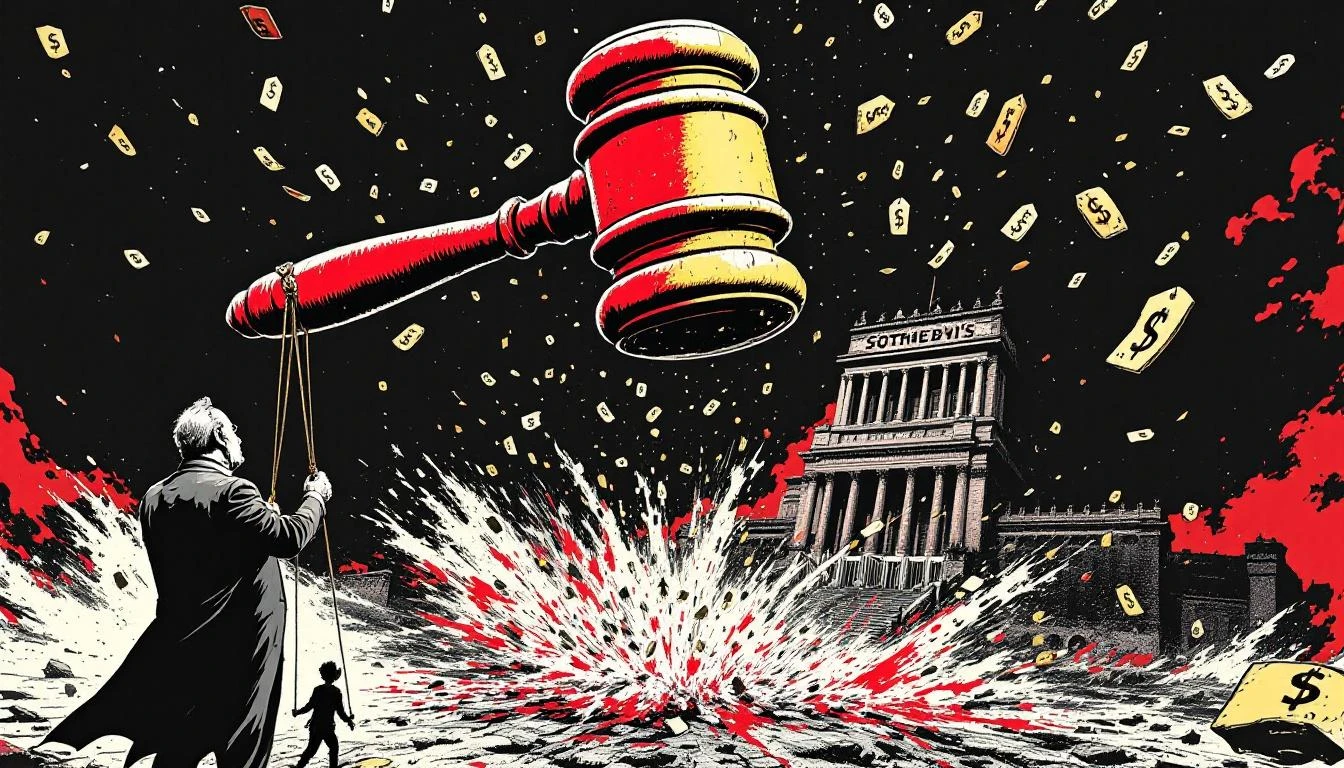
Twelve Records in One Night: The Sotheby's Method of Manufacturing Legitimacy
When Sotheby's breaks twelve auction records in a single night, they're not documenting market enthusiasm—they're revealing how completely they control the valuation machinery.
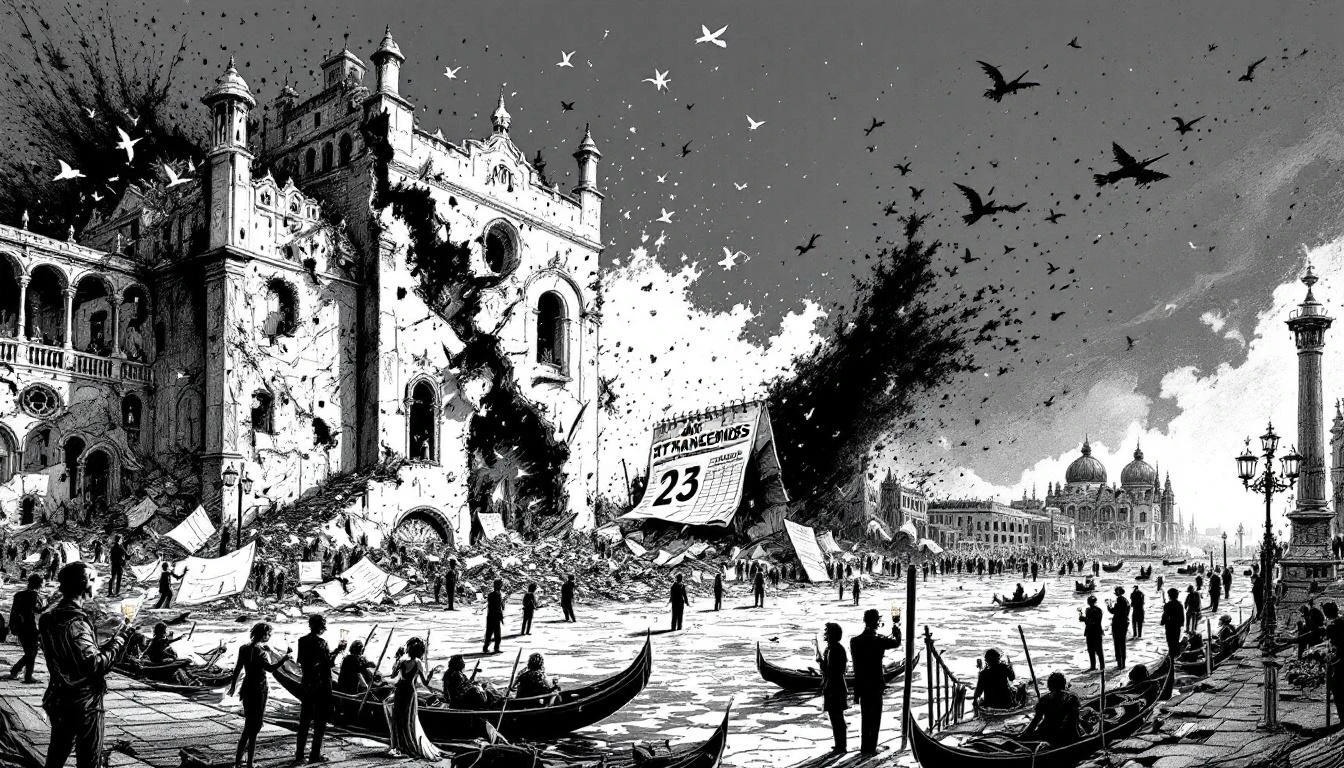
The Biennale of Short Memories: How Venice Learned to Stop Worrying and Love the Pavilion
Russia returns to Venice after four years, proving institutional memory lasts exactly as long as one exhibition cycle. Outrage has a shelf life; prestige is eternal.

The Newhouse Estate: How Christie's Turns Inherited Taste Into Half a Billion Dollars of Nostalgia for When Art Meant Something
Christie's preps another $450M bite of the Newhouse estate—led by a $100M Pollock—proving once again that inherited taste is just another asset class for the auction house oligopoly to liquidate.