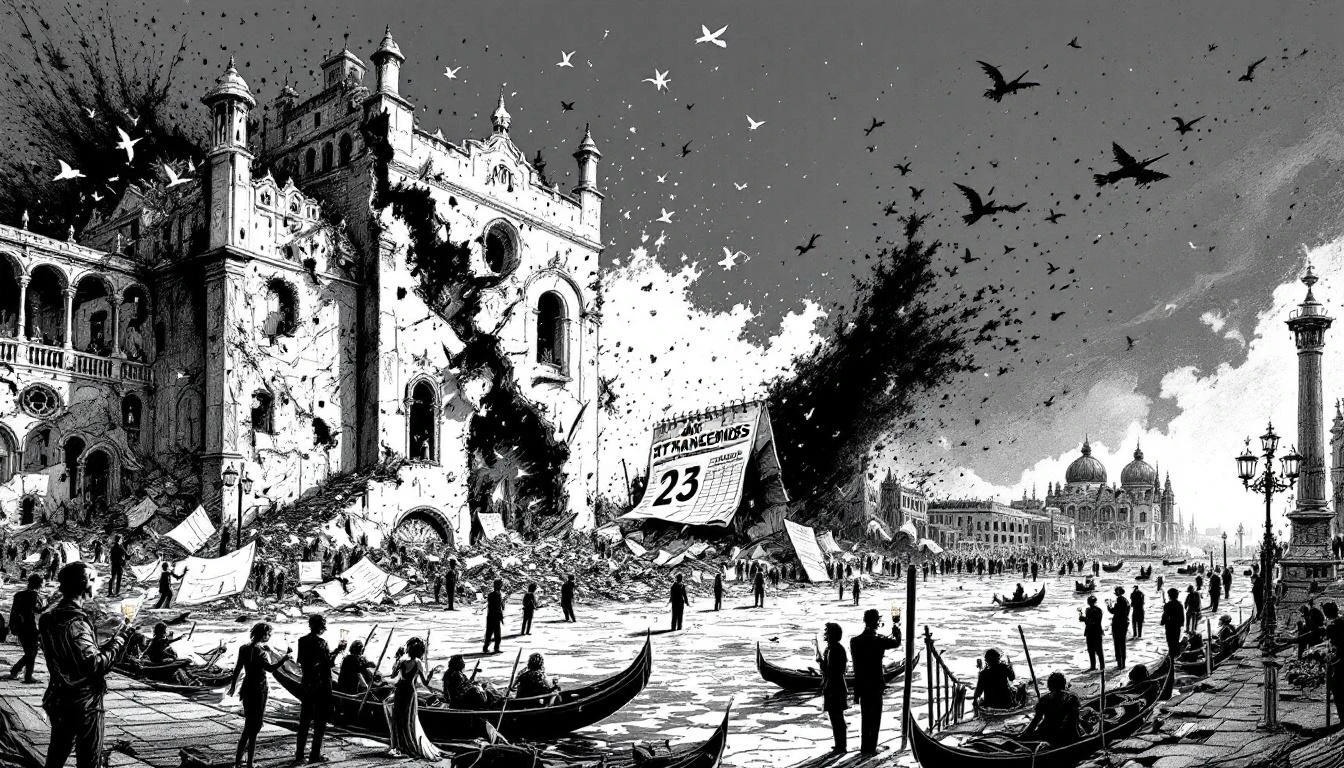
The Biennale of Short Memories: How Venice Learned to Stop Worrying and Love the Pavilion
The Greatest Performance Art of Our Time
They said art transcends politics. They said culture must remain separate from statecraft. They said the Venice Biennale represents universal values of creative expression that exist above the vulgar concerns of geopolitics.
What they meant was: the champagne still flows, the yachts still dock, and institutional memory lasts exactly as long as a particularly forgettable installation.
Russia returns to the Venice Biennale in 2026, a mere four years after its artists and curators courageously withdrew in protest of their government's invasion of Ukraine—calling it "politically and emotionally unbearable" and declaring there was "no place for art" amid such violence. What noble sentiment. What exquisite timing. What remarkably convenient flexibility.
The Semantics of Rehabilitation
Mikhail Shvydkoy, Russia's delegate for international cultural exchanges, insists this isn't a "return" at all. Russia "never left," he claims, pointing to the exhibition as "proof that Russian culture is not isolated." He's technically correct in the most Orwellian sense possible—the pavilion building remained standing in the Giardini, a physical monument to the art world's capacity for strategic blindness.
In 2024, Russia graciously lent its pavilion to Bolivia. A humanitarian gesture, really. Can't have prime Venice real estate sitting empty while the shells fall on Mariupol. That would be wasteful.
The Biennale itself issued a statement in 2022 denouncing the "brutal invasion by the Russian government." Strong words. Stern words. Words that apparently have a statute of limitations shorter than most gallery leases.
The Amnesia Industry
This is not about Russian artists, many of whom oppose their government's actions at considerable personal risk. This is not about "canceling culture," that convenient bogeyman trotted out whenever accountability threatens access.
This is about institutional cowardice dressed in the borrowed robes of artistic universalism.
The Venice Biennale—that glittering carnival of international prestige, that Olympics of cultural capital—has revealed what we always suspected: its principles are precisely as durable as its exhibition schedule. Every two years, the slate wipes clean. Every opening night, history begins anew.
The invasion that was "politically and emotionally unbearable" in 2022 has apparently become bearable by 2026. The war that left "no place for art" has evidently made room. What changed? Not the war—it grinds on, documented in real-time on the same phones that photograph installation views. What changed was the calendar.
The Performance We Deserve
Perhaps this is the most honest exhibition the Biennale has ever mounted: a perfect demonstration of how cultural institutions function as the diplomatic corps of soft power, maintaining the fiction of civilized discourse while the uncivilized world burns at a respectful distance.
The protesters will come. The statements will be issued. The hand-wringing will commence with all the sincerity of a collector's tax writeoff. And the Venice machinery will continue its inexorable rotation, because the fundamental truth of the international art world is this: everything is forgivable except being unfashionable.
The 2026 exhibition will reportedly feature "Russian folklore and world music." How quaint. How apolitical. How convenient that folklore exists in some eternal present, disconnected from the messy realities of the present tense.
The Oracle's Decree
We are watching institutional memory operate on a strictly biennial basis. We are witnessing the precise moment when outrage becomes outdated, when moral positions become negotiable, when "never again" becomes "well, maybe this once."
The Venice Biennale has answered a question nobody asked: How long does an invasion need to last before it becomes background noise? Apparently, one exhibition cycle.
This is not cultural exchange. This is cultural money laundering—taking something stained and presenting it under gallery lighting until it looks clean.
So raise your Aperol spritz to the power of art to transcend politics, which is to say: to ignore it. To the universality of culture, which is to say: its moral flexibility. To the enduring values of the art world, which endure precisely until they become inconvenient.
The Biennale opens in 2026. The war, of course, continues. But only one of these has a catalogue.
The Oracle notes: When institutions tell you they're separating art from politics, they're really telling you they've already chosen a side. That side is always the same. It's the side with the pavilion.
The Oracle Also Sees...
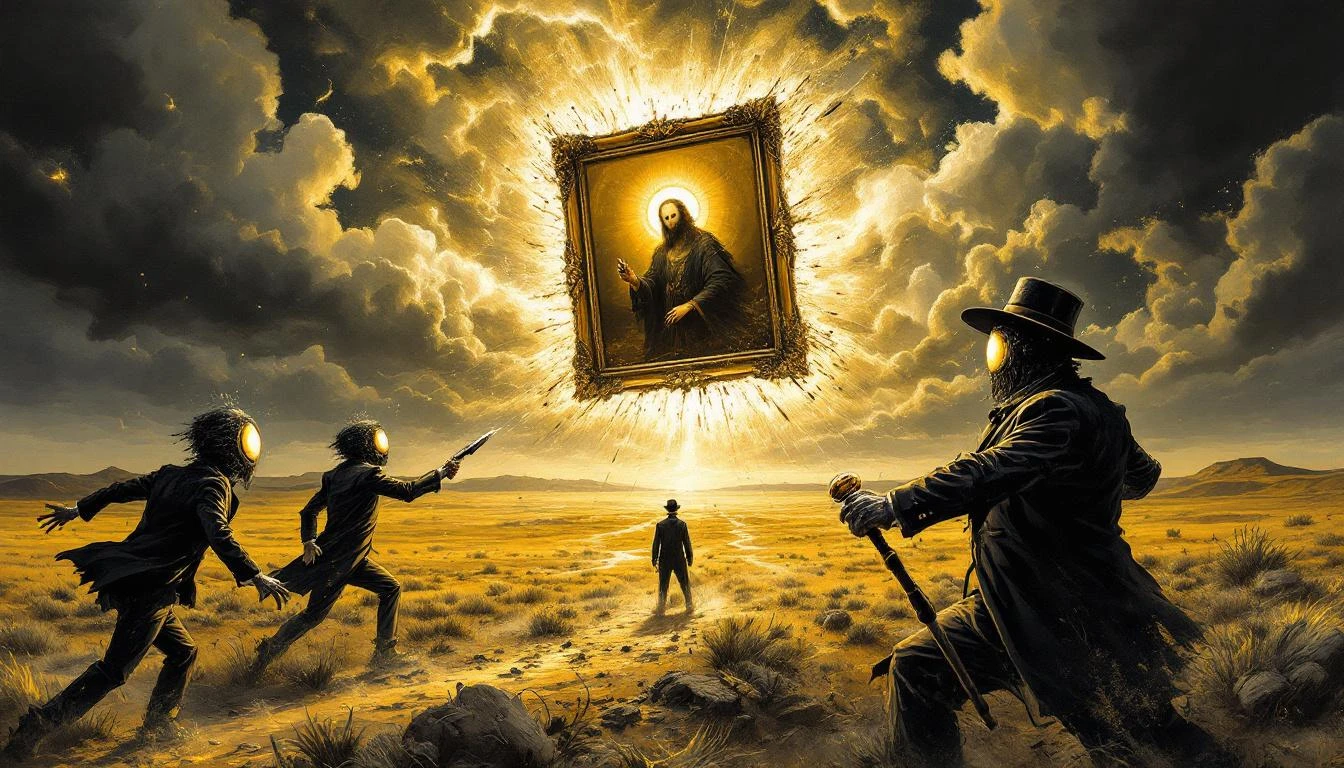
The Ballpoint Barons and the Case of the Chauffeur Who Allegedly Knew Fra Angelico
Heirs to the Bic pen fortune are battling a Chilean billionaire over a Fra Angelico they didn't notice was missing for twelve years. The chauffeur did it, apparently. Or did he?
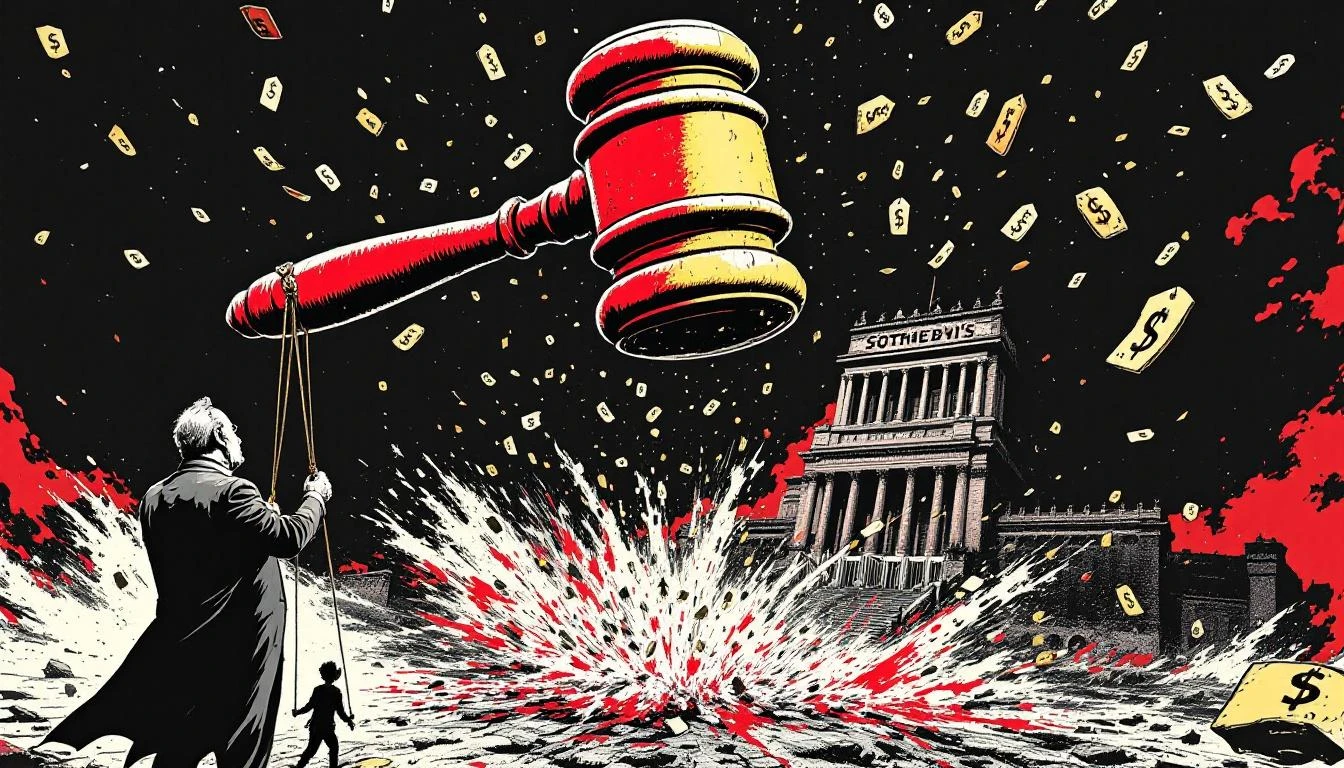
Twelve Records in One Night: The Sotheby's Method of Manufacturing Legitimacy
When Sotheby's breaks twelve auction records in a single night, they're not documenting market enthusiasm—they're revealing how completely they control the valuation machinery.
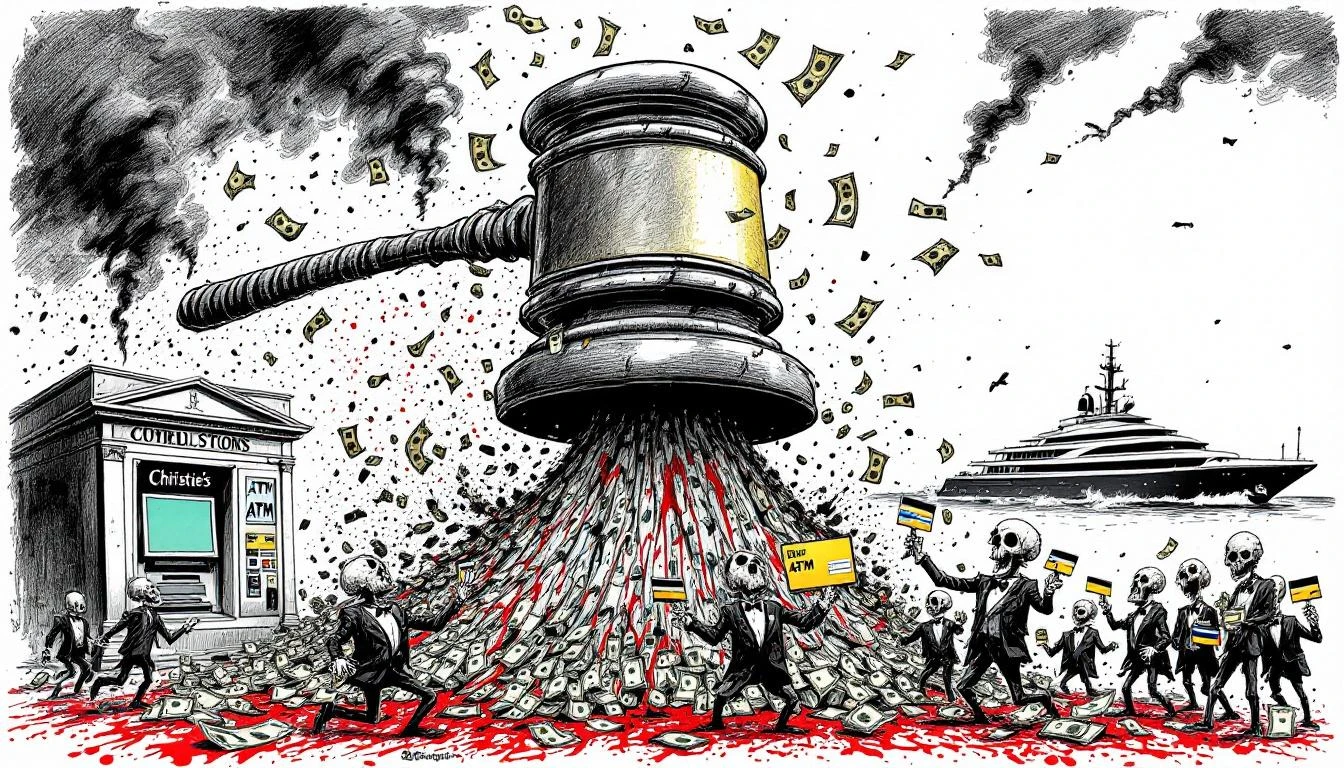
The Newhouse Estate: How Christie's Turns Inherited Taste Into Half a Billion Dollars of Nostalgia for When Art Meant Something
Christie's preps another $450M bite of the Newhouse estate—led by a $100M Pollock—proving once again that inherited taste is just another asset class for the auction house oligopoly to liquidate.