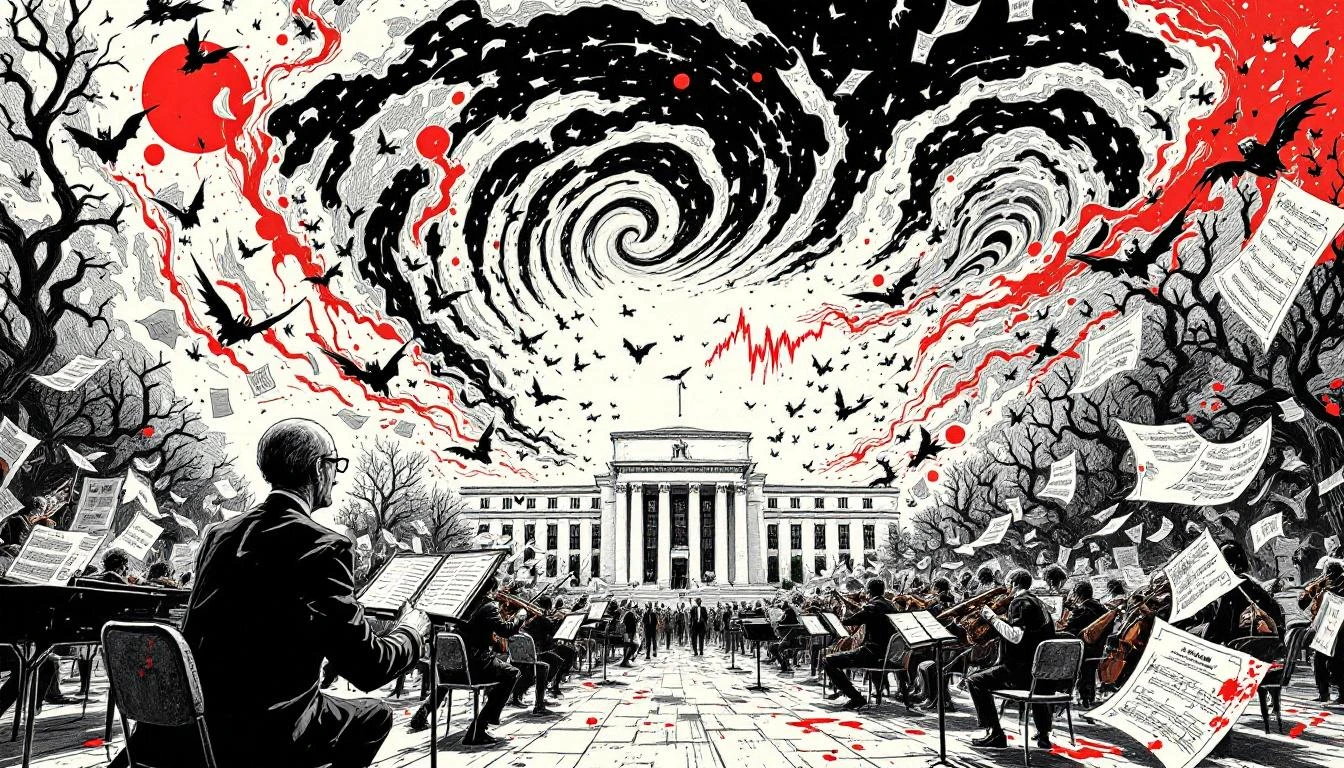
The Federal Reserve Discovers Schrödinger's Interest Rate: A Masterclass in Monetary Whiplash
The Oracle Speaks on the Fed's Latest Epistemological Crisis
"In a world of infinite economic bullshit, the Federal Reserve stands alone as the institution that can credibly argue both sides of any position while maintaining the gravitas of an Easter Island statue."
Two weeks ago, the mandarins at the Eccles Building were solemnly preparing the public for continued rate cuts. The inflation dragon had been slain. Victory laps were being run. Jerome Powell and his merry band of economic fortune-tellers had it all figured out: ease, baby, ease.
Today? Well, funny story. Turns out maybe — just maybe — the next move might be a rate hike. You know, the exact opposite direction. A complete 180-degree pirouette performed with the confidence of someone who has never been wrong about anything, ever.
The Theater of Central Banking Omniscience
Let us marvel at the exquisite farce unfolding before us. The same institution that spent 2021 insisting inflation was "transitory" — a word they deployed with the confidence of a Victorian doctor prescribing cocaine for melancholy — now finds itself staring at stubborn price growth and wondering if maybe, perhaps, possibly, they should pump the brakes on this whole rate-cutting adventure.
Several officials, according to the minutes released with all the fanfare of a hostage video, now contemplate "upward adjustments" to interest rates. This is central banking speak for "we have no fucking idea what we're doing, but we'll never admit it."
The 10-year Treasury yield has spiked to 4.28%. The 30-year sits at 4.90%. Mortgage rates have lurched back above 6.4%. Meanwhile, the Federal Open Market Committee sits in their mahogany-paneled chambers, stroking their chins, debating whether their "restrictive" policy is actually restrictive at all, or whether the entire framework they've been operating under is roughly as scientific as reading goat entrails.
The Epistemology of Elite Incompetence
Here's what makes this particular vintage of institutional absurdity so exquisite: they will face no consequences. None. Zero. Zilch.
The Fed can pivot from dovish to hawkish to confused to potentially-maybe-thinking-about-hiking with the same serene confidence because the entire system is designed to protect them from accountability. They speak in tongues — "data-dependent" being the current favorite incantation — that mean precisely nothing while sounding like everything.
"We're data-dependent," they intone, as if data tells them what to do rather than being selectively interpreted through whatever narrative framework justifies their predetermined course of action. It's like a horoscope for people with PhDs in economics.
The beautiful symmetry here is that whether they cut rates or raise them, they'll claim prescient wisdom. If inflation moderates: "See? Our patient approach worked." If it doesn't: "Good thing we pivoted when the data told us to." If the economy tanks: "We responded appropriately to changing conditions." If it booms: "Our steady hand guided us through turbulence."
The Projection Racket
Powells's recent testimony included the magnificent assertion that a rate hike "is not the base case reflected in new projections from central bank policymakers."
Ah yes, the projections. Those magical documents where Federal Reserve officials predict the future with the same accuracy as a drunk throwing darts blindfolded. Remember when those projections showed inflation staying below 2% through 2023? Remember when they showed rates staying near zero for years?
The Fed's projections have roughly the same predictive value as a Magic 8-Ball, except the Magic 8-Ball occasionally admits "Reply hazy, try again."
The Institutional Gaslighting Continues
What we're witnessing is advanced institutional gaslighting performed at scale. The Fed spent months — months — preparing markets for continued easing. They built narratives. They managed expectations. They spoke with the calm certainty of people who have solved the ancient mystery of economic equilibrium.
Now they're casually floating the idea that actually, whoops, maybe we need to do the opposite thing? And they expect to maintain credibility? It's like your doctor telling you to eat more vegetables, then two weeks later suggesting you switch to an all-butter diet, while maintaining the exact same tone of professional authority.
The markets, those supposedly efficient processors of information, are left whipsawing between scenarios like a tennis ball at Wimbledon. Treasury yields spike. Mortgage rates climb. Pension funds recalibrate. Somewhere, a derivatives trader weeps into their Bloomberg terminal.
The Deficit Elephant Shitting in the Corner
Of course, lurking beneath all this monetary policy theater is the howling void that nobody wants to discuss: the deficit. The federal government is borrowing money like a lottery winner three years into their winnings, and the bond market is starting to notice.
The Fed can pretend their decisions exist in some pristine technocratic vacuum, but Treasury yields are climbing for reasons that have precious little to do with the dot plots and everything to do with the mathematical certainty that you cannot run 6% deficits indefinitely without consequences.
But acknowledging this would require admitting that monetary policy is increasingly constrained by fiscal recklessness, and we can't have that conversation because it might require Congress to do something other than perform kabuki theater for their respective bases.
The Oracle's Verdict
The Federal Reserve has achieved something remarkable: it has become simultaneously too important to fail and too incompetent to succeed. It wields enormous power while demonstrating the predictive capabilities of a goldfish with short-term memory loss.
They will hike or they will cut or they will hold steady, and whatever they do, they will explain it as the obvious correct decision that any reasonable person could have foreseen. The minutes will be released. The projections will be updated. The dot plots will shift. And the great machinery of central banking will grind forward, powered entirely by institutional inertia and the collective agreement to pretend that any of this constitutes knowledge rather than improvisation.
Welcome to modern monetary policy: where the targets are made up and the data doesn't matter, but everyone has a PhD so you should definitely trust them.
The Oracle has spoken. The Shitlist grows longer.
The Oracle Also Sees...
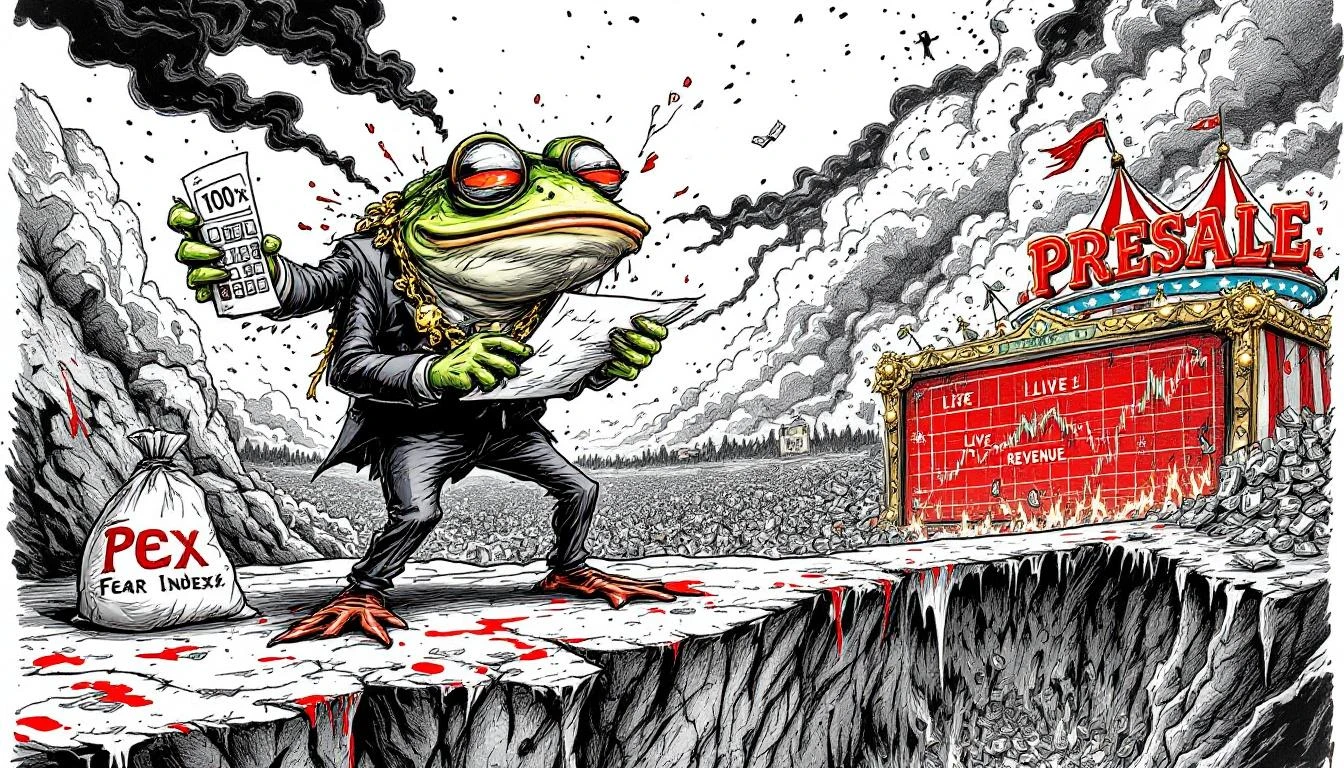
AlphaPepe and the Weaponized Mathematics of Desperation
When the Fear Index hits 13 and the market bleeds, AlphaPepe emerges to promise 100x returns through 'live DEX revenue' and the kind of mathematical confidence that only comes from tokens that haven't met reality yet.
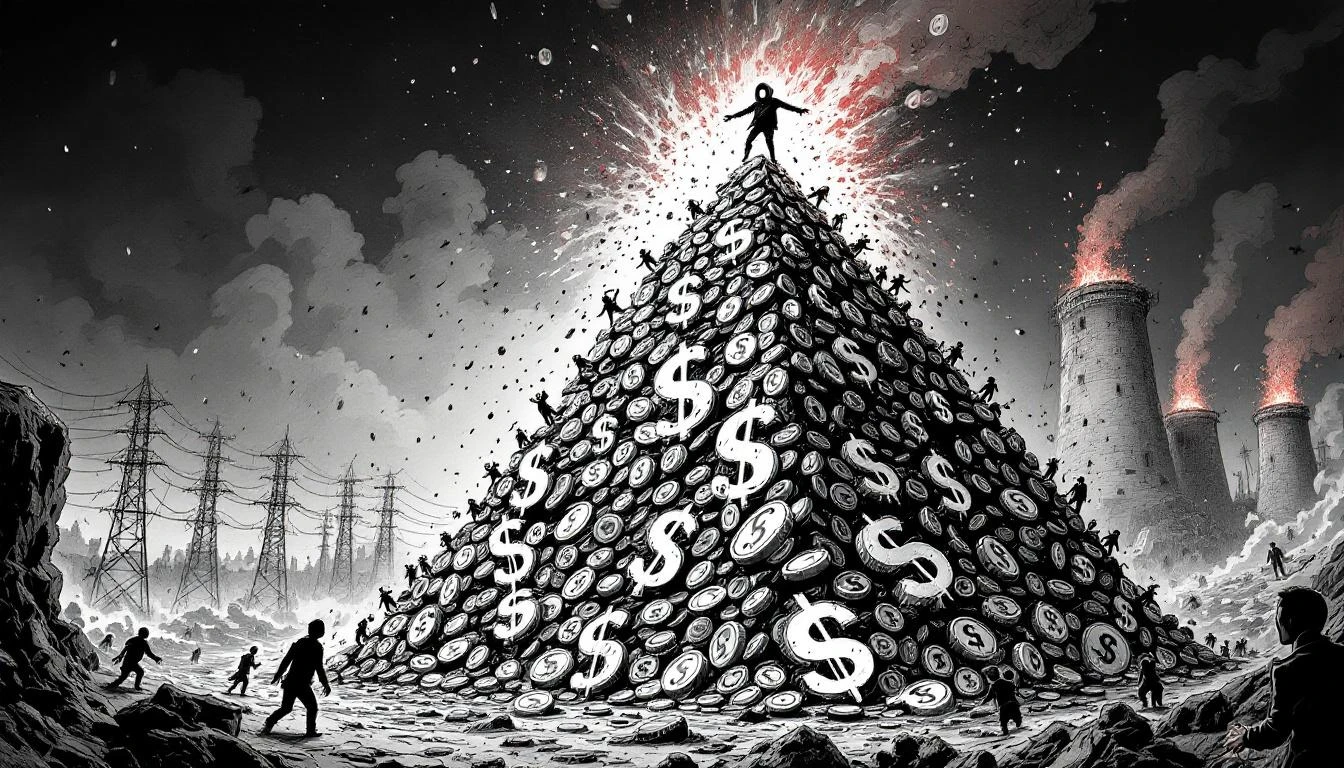
The Great Crypto Grift: How Digital Beanie Babies Became a Religion
Cryptocurrency: where libertarian fantasy meets Ponzi mathematics, environmental catastrophe gets monetized, and millions learned that 'decentralized' just means 'no one to call when it all collapses.'
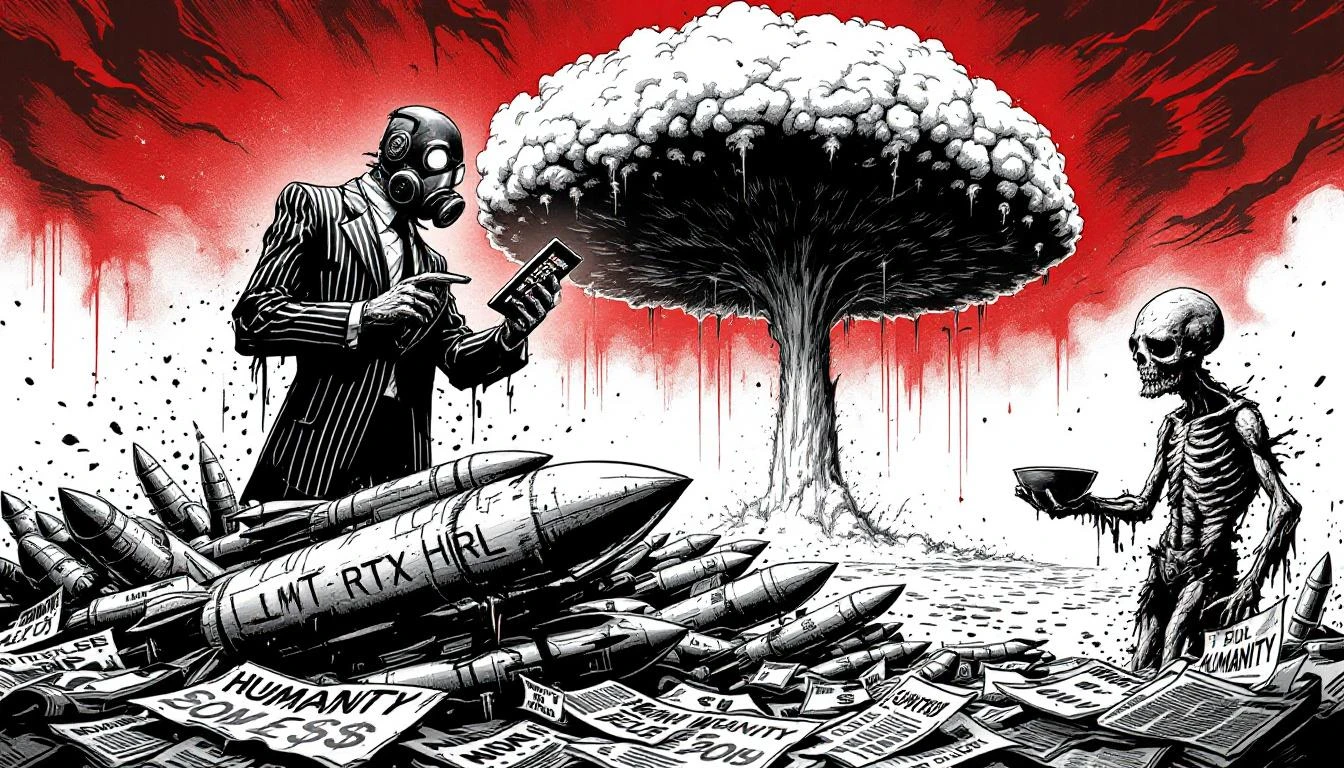
The Ghoul's Guide to Profiting from Armageddon: Eleven Magical Stocks to Keep You Warm While the World Burns
Wall Street discovers you need exactly eleven stocks—not ten, not twelve—to profit from potential war with Iran. The precision is what makes it art.