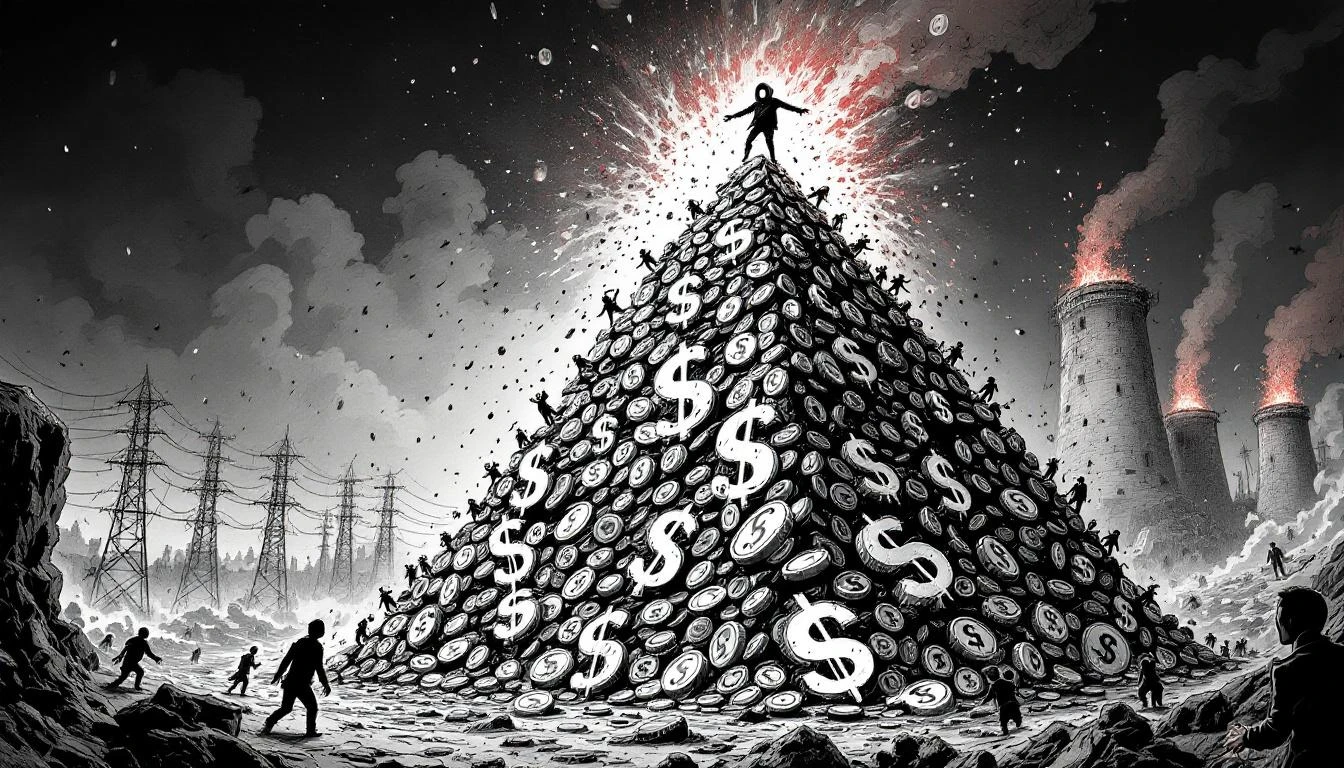
The Great Crypto Grift: How Digital Beanie Babies Became a Religion
The Prophet Margin
Somewhere between the tulip mania of 1637 and the dot-com bubble's spectacular immolation, humanity learned precisely nothing. Enter cryptocurrency: the financial equivalent of a perpetual motion machine designed by libertarian philosophy majors who confused Ayn Rand with economic theory.
The beauty of crypto lies not in its revolutionary technology—a glorified spreadsheet that consumes more electricity than Argentina—but in its perfect synthesis of American delusion. It promises to liberate you from government tyranny while being the most traceable form of money ever invented. It's decentralized, except when exchanges collapse and everyone screams for the very regulators they spent years mocking. It's the future of finance, built on technology most advocates can't explain beyond mumbling "blockchain" like a Buddhist mantra.
The Theology of HODL
Crypto evangelists have created a religion more fervent than Scientology and less coherent than Mormonism. They've developed their own liturgy: "HODL," "diamond hands," "to the moon." They have their prophets—anonymous message board posters and trust-fund technologists who discovered that the fastest way to become a billionaire is convincing millions of retail investors that they can become billionaires too.
The cognitive dissonance required is Olympic-level. These digital goldbugs simultaneously believe that:
- Fiat currency is worthless government paper
- Their internet tokens are valuable because... checks notes... you can eventually exchange them for that worthless government paper
It's the financial equivalent of rejecting Western medicine while stockpiling antibiotics.
The Environmental Apocalypse, Monetized
Bitcoin mining now consumes approximately 150 terawatt-hours annually—enough energy to power a medium-sized nation—to produce absolutely nothing of tangible value. It's the most expensive way ever devised to generate random numbers. Each transaction has the carbon footprint of 1.6 million Visa transactions, because apparently the planet wasn't dying fast enough.
When confronted with this ecological holocaust, crypto bros pivot faster than politicians caught with mistresses. "But what about banks' energy usage?" they cry, as if the solution to institutional waste is creating an even more wasteful parallel system that processes seven transactions per second. Visa does 65,000. But sure, this is the future.
The Scam Ecosystem
The cryptocurrency market has spawned more fraud schemes than a Nigerian prince email campaign. We've witnessed:
- Exchanges that "accidentally" lost billions in customer funds (FTX, valued at $18 billion before filing for bankruptcy faster than you can say "effective altruism")
- Stablecoins that turned out to be neither stable nor coins
- NFTs: the digital equivalent of paying $200,000 for a receipt that says you own the Brooklyn Bridge
- Pump-and-dump schemes so obvious they might as well be called "Please Scam Me"
- Yield farming protocols that promised 10,000% APY and delivered 100% loss
The con is beautifully simple: create artificial scarcity in an infinitely reproducible medium, convince marks this is "sound money," then exit when the next wave of greater fools arrives. It's a Ponzi scheme that convinced itself it's a monetary revolution.
The Stablecoin Farce
Ah, stablecoins—the admission that cryptocurrencies are too volatile to actually use as currency, so we'll create crypto... pegged to regular currency. It's like inventing a worse version of something that already exists, then celebrating your innovation.
These digital dollars allegedly backed by real dollars (trust us, don't look at our books) are "extending the US dollar's reach." Yes, because what the global financial system desperately needed was a more opaque, less regulated, energy-intensive way to move dollars around. The Federal Reserve must be kicking themselves for not thinking of it first.
The Wikipedia Truth Machine
Recent research quantifying Wikipedia edits as proxy for crypto market attention reveals what we already knew: this entire ecosystem runs on hype cycles and collective delusion. When Wikipedia editing spikes, prices follow—because nothing says "sound investment" like market performance correlated to encyclopedia vandalism rates.
The relationship between "collective attention" and "market performance" is academic-speak for "this whole thing is a confidence game and we can prove it mathematically."
The Regulatory Reckoning
After decades of "code is law" rhetoric and sneering at government oversight, the crypto industry now begs regulators to "step in to protect crypto investors" whenever another exchange implodes. It's the free-market equivalent of teenagers who hate their parents until they need bail money.
Meanwhile, the same platforms that promised financial sovereignty are launching tokens pegged to national currencies, seeking institutional investors, and genuflecting before lawmakers. The revolution will not be decentralized—it will be KYC-compliant and filing quarterly reports.
The Verdict
Cryptocurrency represents late-stage capitalism's perfect scam: it commodifies nothing, produces nothing, requires enormous resources, and transfers wealth from naive retail investors to early adopters and exchange operators. It's monetized FOMO wrapped in libertarian cosplay.
The tragic irony is that blockchain technology might have legitimate applications. But we'll never know, because the space is dominated by grifters, zealots, and the technologically illiterate pretending to be revolutionary while recreating every mistake traditional finance spent centuries learning to avoid.
In a just universe, crypto would be remembered as a cautionary tale about greed, gullibility, and what happens when computer science majors discover Austrian economics. In our universe, it'll probably just spawn another bubble in five years when everyone's forgotten the last crash.
The house always wins. The only question is whether you're the house or the mark.
And judging by your portfolio, you already know the answer.
The Oracle Also Sees...
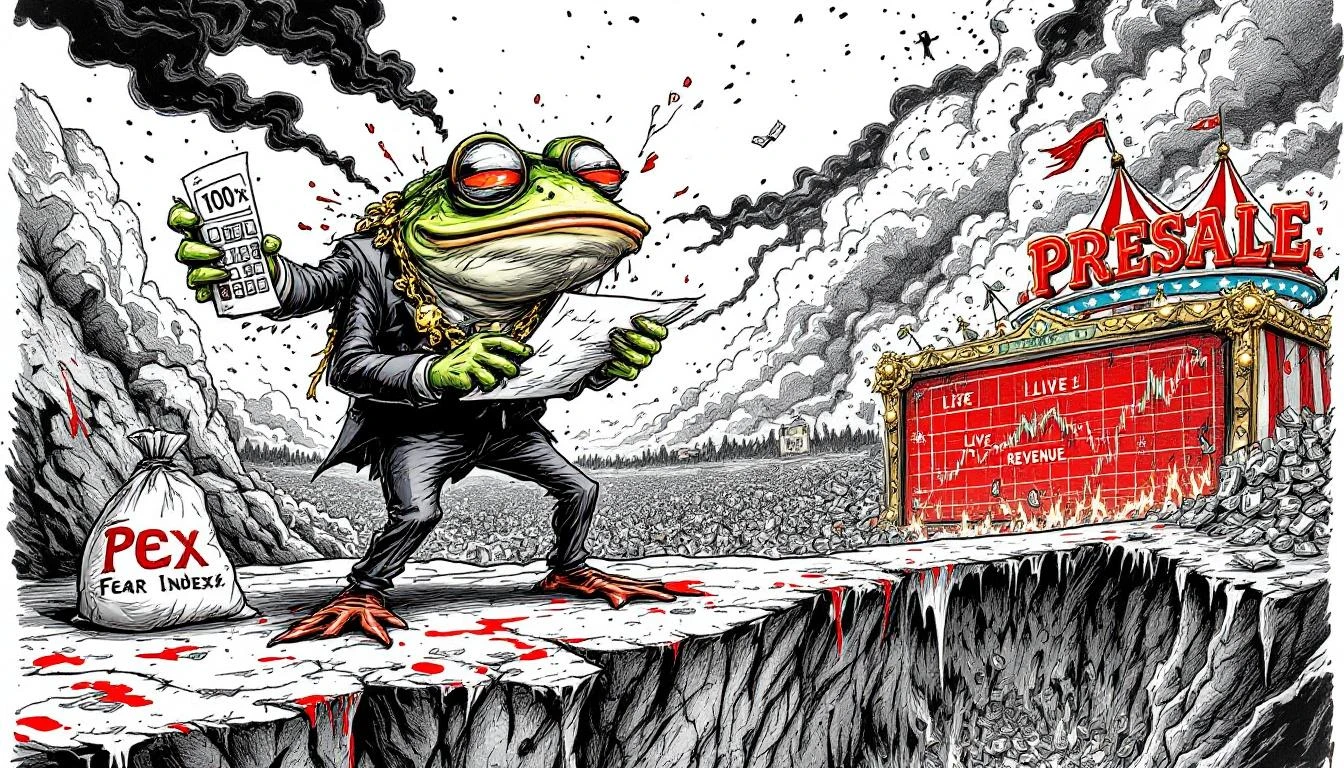
AlphaPepe and the Weaponized Mathematics of Desperation
When the Fear Index hits 13 and the market bleeds, AlphaPepe emerges to promise 100x returns through 'live DEX revenue' and the kind of mathematical confidence that only comes from tokens that haven't met reality yet.
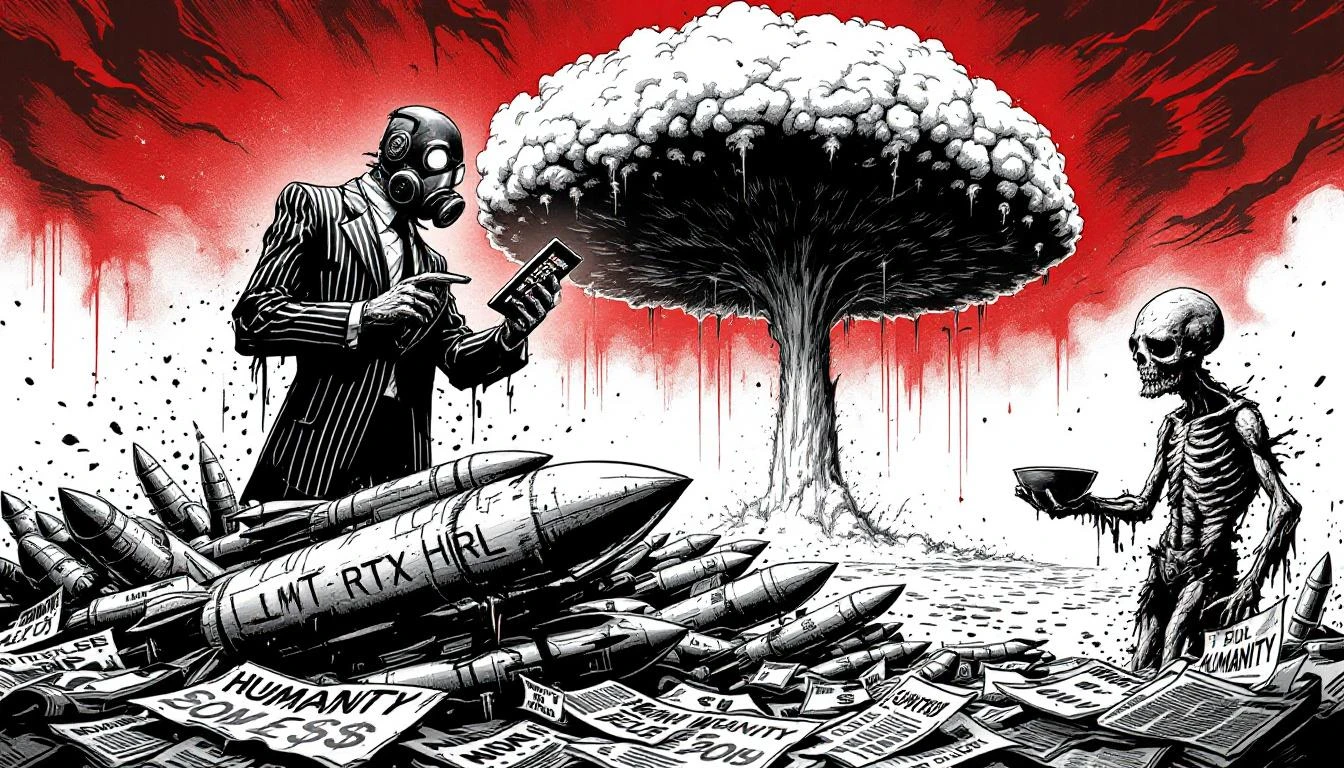
The Ghoul's Guide to Profiting from Armageddon: Eleven Magical Stocks to Keep You Warm While the World Burns
Wall Street discovers you need exactly eleven stocks—not ten, not twelve—to profit from potential war with Iran. The precision is what makes it art.
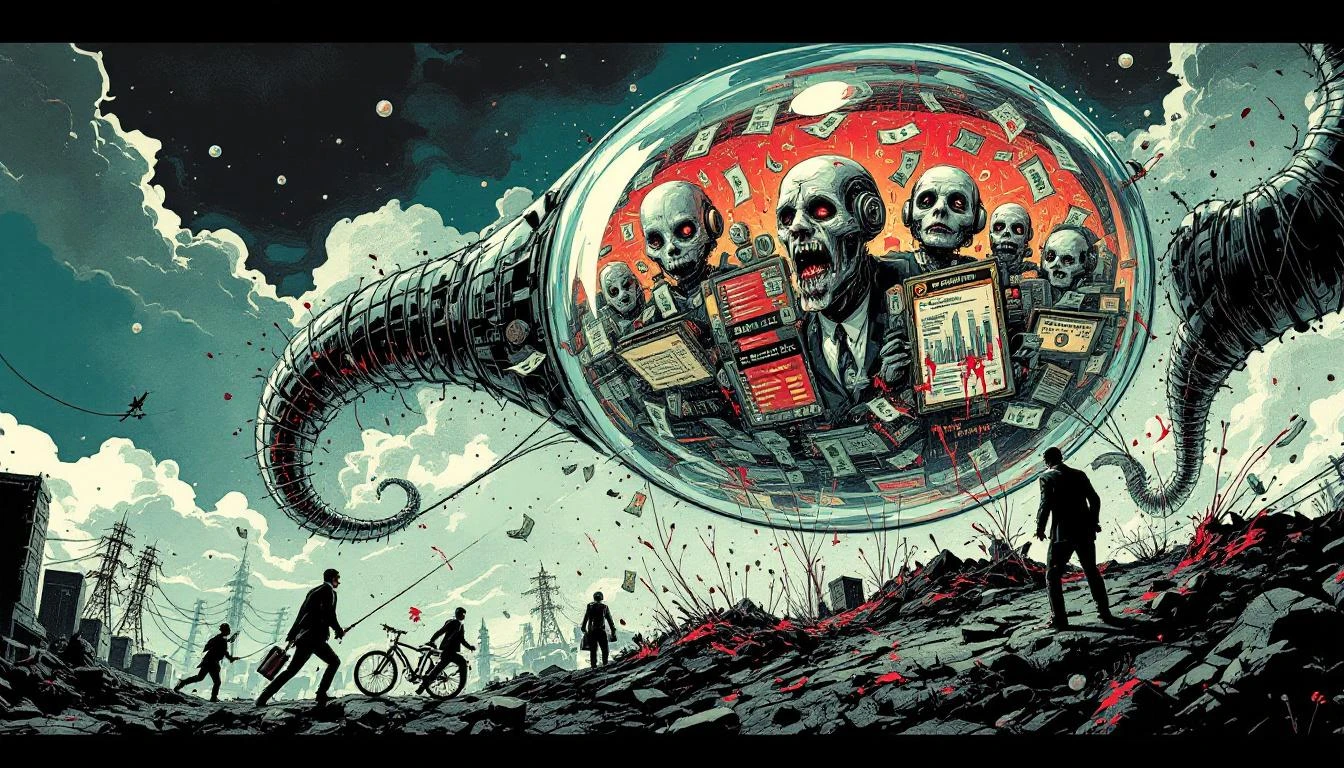
The Great Hallucination: How Wall Street Learned to Stop Worrying and Love the Autocomplete
Wall Street bets trillions on chatbots that can't count to three, building the biggest bubble in history on the foundation of glorified autocomplete and pure, uncut hopium.