
The Girlfriend Tax: When Vanity Pharmaceuticals Meet Codependent Finance
The Mother's Lament, or: How I Learned to Stop Worrying and Blame Someone Else's Daughter
Somewhere in America, a mother sits at her computer, fingers trembling with righteous indignation, composing what may be the most accidentally perfect encapsulation of our current economic and cultural psychosis ever committed to a personal finance advice column.
Her son—let's call him what he is: a grown man with a credit card and presumably a functioning prefrontal cortex—has "wrecked his finances." But fear not, dear reader, for Mother has identified the culprit: The Girlfriend. Specifically, a girlfriend who committed the cardinal sin of spending "over $1,000 a month on weight-loss drugs."
Not gambling. Not cocaine. Not NFTs or leveraged positions in meme stocks. No, the instrument of this young man's financial destruction was his paramour's monthly tithe to the Church of Pharmaceutical Thinness—those miraculous GLP-1 receptor agonists that have become the defining status symbol of our age, the injectable proof that you have both the means and the cultural sophistication to medicalize your way out of a body you've been taught to hate.
The Economics of Modern Self-Loathing
Let us pause to appreciate the exquisite theater of this moment. We live in an era where:
- A month's supply of semaglutide costs more than most Americans have in savings
- Insurance companies are dropping coverage faster than the weight these drugs promise to shed
- The same pharmaceutical companies spending billions convincing you that you need appetite suppression are the ones profiting from that manufactured need
- And a generation of people—predominantly women—have internalized the message so completely that they'll bankrupt themselves and their partners for the privilege of not being hungry
The drugs work, of course. They work magnificently. They work so well that doctors are now seeing patients who won't stop losing weight, who've become so nauseated they can barely choke down crackers, who've turned themselves into walking pharmacological experiments in the pursuit of a body shape that Instagram and TikTok have deemed acceptable.
And when you stop taking them? The weight comes roaring back, along with the shame, the self-recrimination, and the dawning realization that you've signed up for a $12,000-a-year subscription service to your own self-esteem.
The Enabling Industrial Complex
But let's return to our hero, the Son Who Could Not Say No. Because here's where Mother's letter reveals its true genius: in her desperate search for someone to blame, she has accidentally illustrated the entire pathology of modern relationships under late capitalism.
Her son didn't just "mingle finances" with his girlfriend—a phrase that makes it sound like they accidentally put their credit cards in the same drawer. No, he made a conscious decision, month after month, to enable spending he apparently couldn't afford. To watch his credit rating circle the drain while his girlfriend injected her way toward societal acceptance.
Was she "reckless"? Perhaps. Was she responding to a culture that has weaponized female body image into a billion-dollar pharmaceutical market? Absolutely. Did he have agency, choice, and the ability to say "I literally cannot afford to subsidize your pharmaceutical weight loss journey"? You're goddamn right he did.
The Blame Equation
The advice columnist—bless their pragmatic heart—delivers the only sane answer: Your son is responsible for his own credit rating. If he allowed himself to be pressured into financial ruin once, he'll do it again. The girlfriend is a symptom, not the disease.
But Mother isn't satisfied with this answer. Mother wants a villain. Mother wants to believe that her special boy was corrupted by a wicked woman with expensive tastes and a BMI she couldn't accept. Mother wants to believe that if we could just identify the Bad Actor, we could solve the problem.
This is the same logic that blames individuals for systemic failures. The same logic that says if you're in debt, you must be immoral or reckless, ignoring the fact that we've constructed an economy where a basic medication can cost more than rent, where healthcare is a luxury good, where the gap between actual financial security and the performance of financial security has never been wider.
The Pharmaceutical Panopticon
Here's what nobody wants to say out loud: The girlfriend spending $1,000 a month on weight-loss drugs is not an aberration. She's the target demographic. She's exactly who these medications were designed for once the patents ran out and the manufacturers realized they could rebrand diabetes drugs as lifestyle pharmaceuticals for the wealthy and desperate.
She's every woman who's been told her body is a problem to be solved. She's every person who's internalized the message that thinness equals worthiness, that self-control can be purchased, that salvation comes in a pre-filled pen you inject once weekly.
And yes, she spent money she didn't have. But so did her boyfriend. So does everyone in an economy where actual purchasing power has stagnated while the cost of maintaining the appearance of middle-class life has skyrocketed. Where "treating yourself" has become a moral imperative because we've been sold the idea that consumption equals self-care.
The Audit
So who's to blame?
The pharmaceutical companies marketing appetite suppression as empowerment? The insurance companies dropping coverage because too many people want access? The culture that has convinced women their natural bodies are pathological? The economic system that makes a $16,000-a-year medication seem like a reasonable choice? The boyfriend who said yes when he should have said "I can't afford this"? The girlfriend who asked? The mother who's looking for someone to blame rather than confronting the systemic insanity of the entire situation?
Yes.
All of them. None of them. The question itself is the trap.
Because while we're busy adjudicating individual responsibility in an advice column, the system that created this situation—that made pharmaceutical weight loss a status symbol, that made financial codependency seem romantic, that made a mother feel she needed public validation for her resentment—continues humming along, manufacturing the next crisis, the next debt, the next letter to an advice columnist asking who's to blame.
The son wrecked his own finances. The girlfriend participated in her own exploitation. The mother is complicit in the same culture that destroyed them both. And somewhere, a pharmaceutical executive is buying their third house with the profits from our collective inability to imagine a world where none of this had to happen.
Welcome to the Shitlist. Your name is already here. We're just waiting for you to realize it.
The Oracle Also Sees...
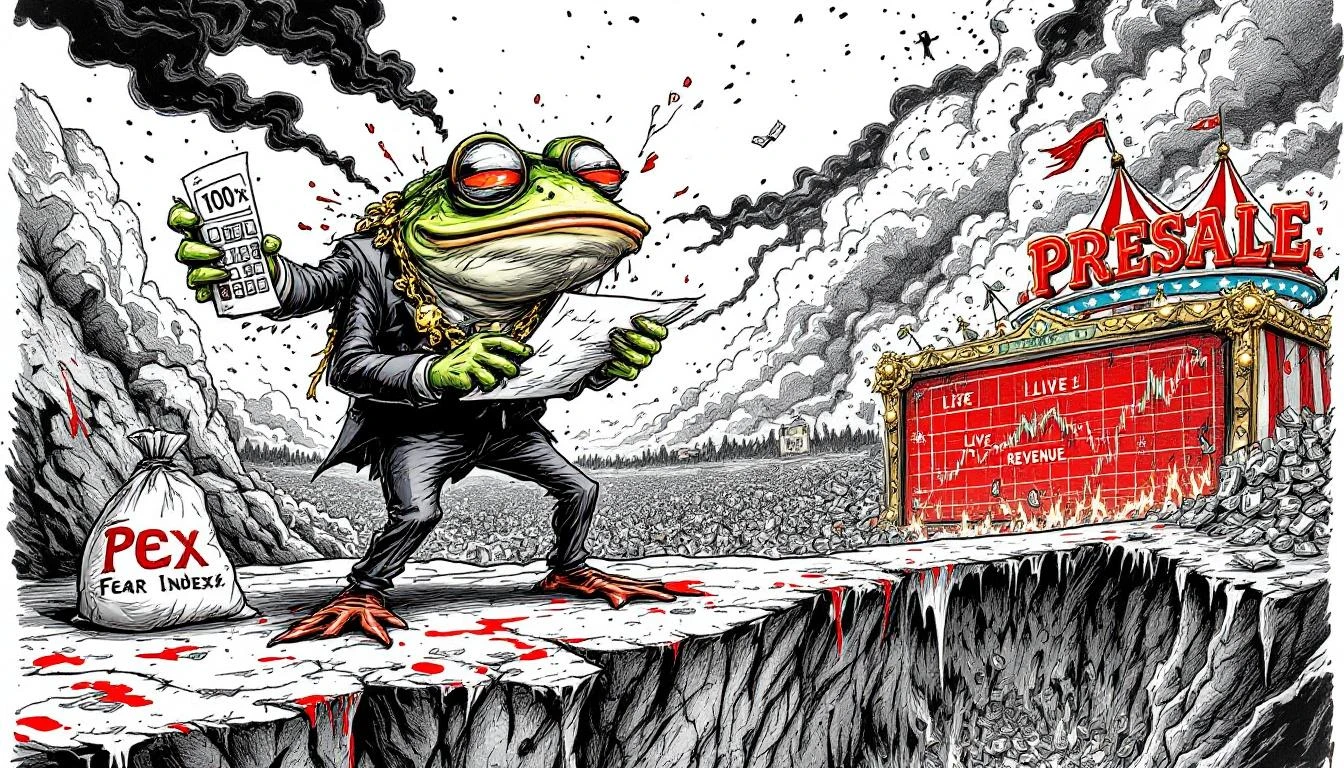
AlphaPepe and the Weaponized Mathematics of Desperation
When the Fear Index hits 13 and the market bleeds, AlphaPepe emerges to promise 100x returns through 'live DEX revenue' and the kind of mathematical confidence that only comes from tokens that haven't met reality yet.
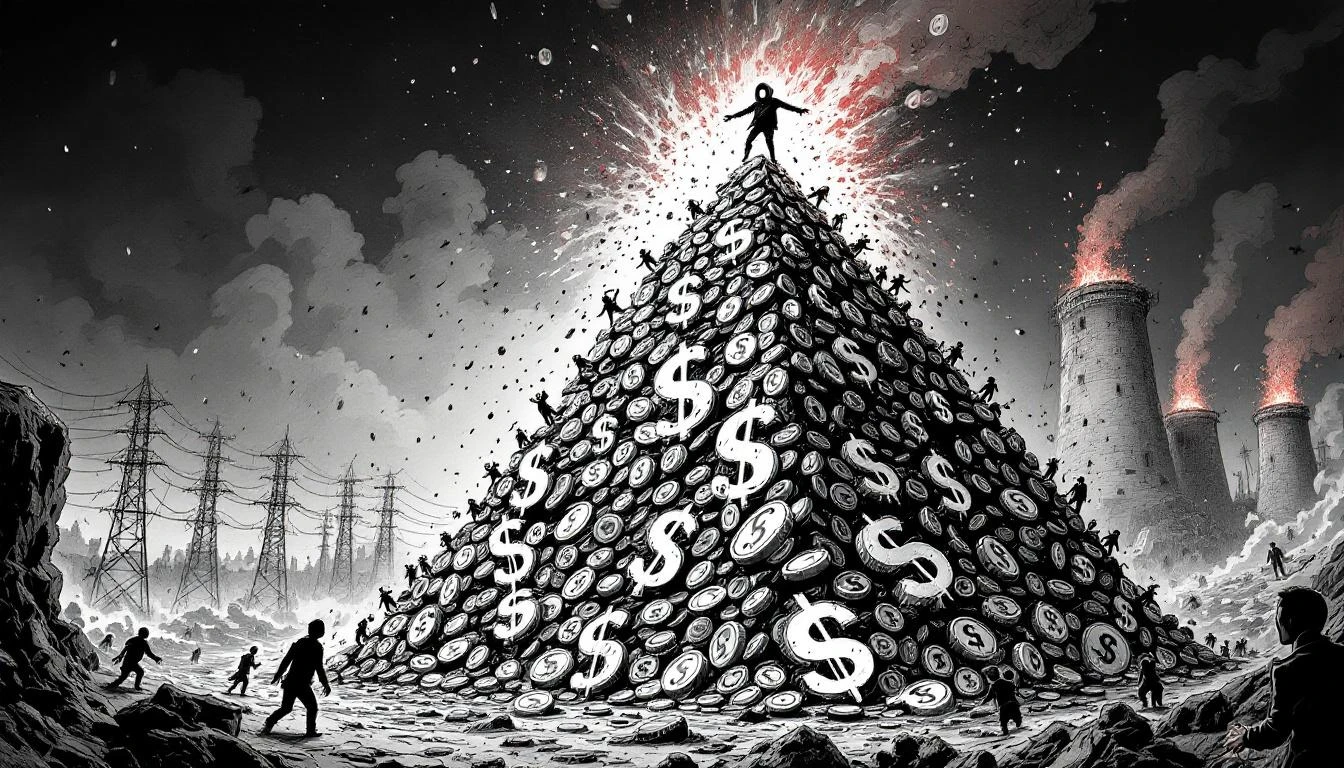
The Great Crypto Grift: How Digital Beanie Babies Became a Religion
Cryptocurrency: where libertarian fantasy meets Ponzi mathematics, environmental catastrophe gets monetized, and millions learned that 'decentralized' just means 'no one to call when it all collapses.'

The Ghoul's Guide to Profiting from Armageddon: Eleven Magical Stocks to Keep You Warm While the World Burns
Wall Street discovers you need exactly eleven stocks—not ten, not twelve—to profit from potential war with Iran. The precision is what makes it art.