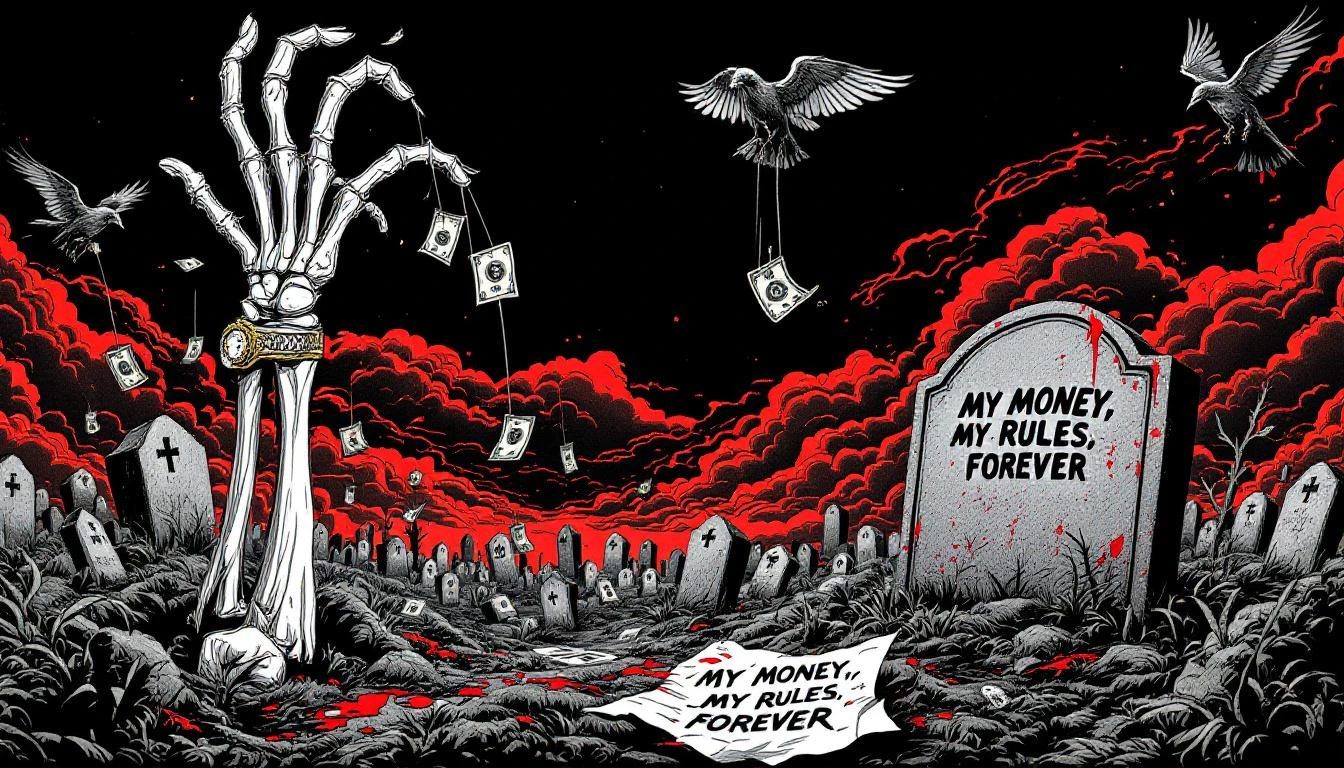
The Last Tyranny: When Corpses Try to Vote With Your Money
The Eternal Grip of the Dead Hand
Somewhere in America, a parent lies awake at night, haunted not by their mortality but by a far more existential terror: the possibility that their adult children might use their inheritance to fund causes that would make them spin in their grave. Which raises an obvious question: if you're already spinning, what's the problem?
Welcome to the final frontier of control-freakery, where Boomers who spent decades lecturing their kids about "financial responsibility" and "making your own way" are now constructing legal Rube Goldberg machines to govern their children's choices from beyond the veil. It's posthumous helicopter parenting, and the rotor blades are made of trusts, stipulations, and the pathological inability to let go.
The Question That Launched a Thousand Eye-Rolls
"It's a life-changing sum," our protagonist tells MarketWatch, with the kind of self-importance that only comes from confusing net worth with wisdom. "Can I stop my kids from using their inheritance to support political causes I vehemently oppose?"
Let's parse this exquisite anxiety. This isn't about fiscal prudence or preventing waste. This is about a parent so desperate to maintain ideological purity that they want to program their descendants like some sort of capitalist Manchurian Candidate, unable to spend a dime without hearing daddy's voice whispering: "Not like that, you ungrateful communist."
The irony is so thick you could spread it on toast. Here we have someone who presumably champions free markets, individual liberty, and personal responsibility — the whole bootstrap mythology — now pleading with estate lawyers to help them build an ideological prison with dollar-bill bars.
The Dead Hand's Grip
Estate planners have a term for this: the "dead hand" problem. It's the legal and philosophical conundrum of letting corpses make decisions for the living. In medieval England, nobles tried to control their estates in perpetuity, binding their heirs to conditions that would govern generations yet unborn. Parliament eventually said enough, passing the Rule Against Perpetuities to prevent the past from strangling the future indefinitely.
But where there's anxiety and money, there are lawyers willing to try. And oh, how they'll try.
"They want control from the grave," one estate planner observed with the weary tone of someone who has seen this psychological opera performed a thousand times. She's witnessed parents demanding veto power over political donations, marriage partners, career choices, and geographic locations. The trust becomes less a gift and more a haunting — a spectral hand reaching up through the earth to yank the wheel whenever the kids start driving in a direction that offends the decomposing.
The Psychology of the Clutch
What drives this final grasp at control? It's not generosity. Generosity involves letting go. This is something else entirely — a toxic cocktail of ego, fear, and the desperate belief that wealth confers the right to script other people's lives like some sort of financial Ouija board.
Consider the revealing phrase: "life-changing sum." Not life-destroying. Not ruin-inviting. Life-changing. Which means we're not talking about protecting heirs from their own profligacy. We're talking about preventing them from having the resources to make choices the parent wouldn't approve.
This isn't estate planning. It's ideological taxidermy.
The Conditions
So what do these post-mortem control schemes look like? The usual menu of parental paranoia:
- No donations to political organizations the testator opposed (which, given the binary nature of American politics, effectively means: "You can only support my team, forever")
- Mandatory ideological loyalty oaths before disbursement
- Trustee oversight of "acceptable" expenditures
- Gradual distribution schemes designed less to teach patience than to maintain leverage
- "Morality clauses" that would make a 1950s studio contract blush
One particularly inventive parent apparently wanted their children to submit annual reports justifying their charitable giving, complete with ideological screening by a trustee. It's like creating a one-family theocracy with yourself as the eternal Pope.
The Market for Conditional Love
Naturally, there's an entire industry ready to facilitate this necro-tyranny. Estate attorneys who speak in hushed tones about "protecting your legacy" and "ensuring your values endure." Wealth managers who nod sympathetically while calculating their fees on assets they'll manage for decades.
They'll set up elaborate trust structures: spendthrift trusts, generation-skipping trusts, charitable remainder trusts with conditions that would make Kafka weep. They'll charge handsomely for the privilege of turning family bonds into contractual obligations.
The pitch is always the same: "You worked hard for this money. Don't you want to make sure it's used the right way?" As if there's something noble about maintaining an iron grip on resources you literally cannot take with you.
The Kids Are All Right (And Probably Rolling Their Eyes)
Meanwhile, the children in question — presumably adults, since we're discussing inheritance — are living their lives, forming their own values, and occasionally wondering if their parents' money is worth the psychological price tag.
Polling data reveals a generational shift that would give our control-freak protagonist night sweats: 51% of Gen Z supports increased inheritance taxes to combat inequality. They're not just unimpressed by intergenerational wealth transfer; they're actively skeptical of it.
Which raises a delicious possibility: What if the kids don't want the poisoned chalice? What if they'd rather make their own way than live under the dead hand's conditions? What if — and stay with me here — they've absorbed those lectures about self-reliance and decided to actually practice them?
The Unasked Question
But let's address the elephant decomposing in the room: Why does this person care?
Once you're dead, your opinion about politics becomes refreshingly irrelevant. You won't know if your kids donate to causes you despised. You won't experience the satisfaction of blocking them. You'll be busy being dead, which is a full-time occupation requiring no cognitive load whatsoever.
The only people who experience the consequences of these conditional inheritances are the living. The parent gets to feel smugly powerful in their final years, secure in the knowledge that their will contains enough trip wires to govern their children into middle age. Meanwhile, the children get to navigate a relationship forever tainted by the knowledge that love came with terms and conditions.
The Freedom to Squander
There's a perverse honesty to parents who simply burn through their estates on cruises, motorcycles, and increasingly expensive hobbies. At least they're not pretending their consumption is somehow more virtuous than their children's would be. At least they're not dressing up control as wisdom.
"Spend their inheritance now," one financial advisor suggested, and you can hear the liberation in it. Not as a punishment, but as a recognition that your money is for your life, not for programming your descendants like ideological sleeper agents.
Besides, there's something darkly amusing about the phrase "squandering an inheritance." Squandering on what? Travel? Education? Supporting causes they believe in? Starting businesses? Living without the constant anxiety of financial ruin?
Apparently, "squandering" is just code for "spending in ways I wouldn't approve of" — which, again, brings us back to the central pathology: the belief that wealth confers eternal veto power.
The Testament
Here's a radical thought: If you genuinely care about your children's character and judgment, demonstrate it. Give them resources without shackles. Trust that the values you instilled while alive will matter more than the conditions you impose while dead.
And if you don't trust their judgment? Well, that's rather revealing, isn't it? Decades of parenting, and you're so uncertain of the outcome that you need a legal straitjacket to prevent them from making choices you dislike.
Maybe the problem isn't the inheritance. Maybe it's the relationship.
The Oracle's Verdict
To our anxious correspondent, plotting from their deathbed to control their children's political donations: You cannot take it with you, and you shouldn't be able to govern with it from beyond the grave.
Your wealth — that "life-changing sum" — represents freedom. Freedom to make mistakes, chase dreams, support causes, and yes, even to fund political movements you would have despised. That's not a bug. That's the entire feature of being alive and autonomous.
If you want your legacy to endure, try being someone your children remember with love rather than someone they remember as the corpse with a law firm. Leave them money or leave them conditions, but understand that you're unlikely to get to do both and be remembered fondly.
Because here's the truth your estate planner won't mention while calculating their fees: Your children's relationship with their inheritance will mirror their relationship with you. If that was transactional, conditional, and controlling, congratulations — you've successfully replicated it in legal form.
And if your greatest fear is that your children will use their inheritance to build a world you wouldn't recognize? Well, perhaps that's exactly the point. Every generation's job is to disappoint their parents by being different. It's called progress.
The dead hand clutches at nothing but air. And the tighter you squeeze now, planning your posthumous puppet show, the less you actually hold.
Let. It. Go.
Or don't. But at least have the honesty to admit you're not building a legacy — you're building a cage. And the person who's trapped isn't in the future.
It's you, right now, unable to imagine that your children might know something about the world they'll inherit that you don't.
The Oracle Also Sees...
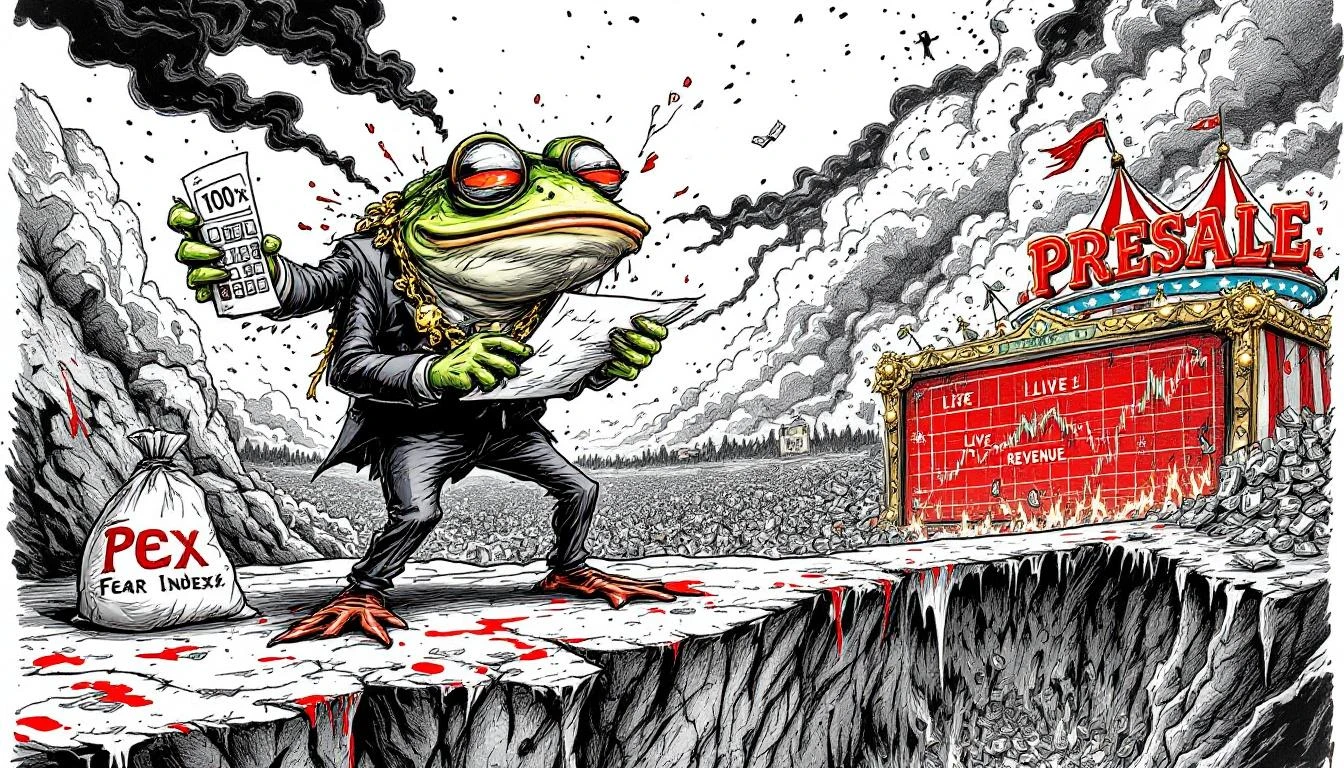
AlphaPepe and the Weaponized Mathematics of Desperation
When the Fear Index hits 13 and the market bleeds, AlphaPepe emerges to promise 100x returns through 'live DEX revenue' and the kind of mathematical confidence that only comes from tokens that haven't met reality yet.
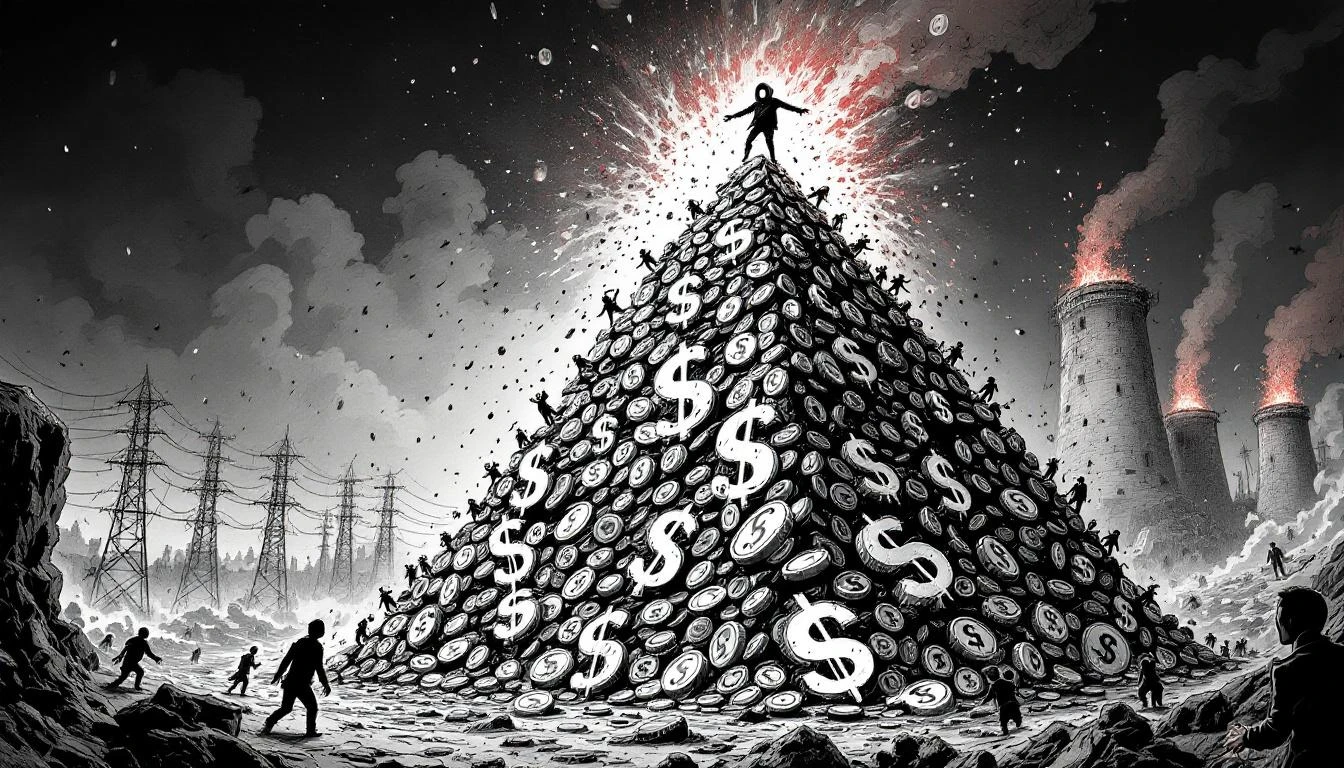
The Great Crypto Grift: How Digital Beanie Babies Became a Religion
Cryptocurrency: where libertarian fantasy meets Ponzi mathematics, environmental catastrophe gets monetized, and millions learned that 'decentralized' just means 'no one to call when it all collapses.'
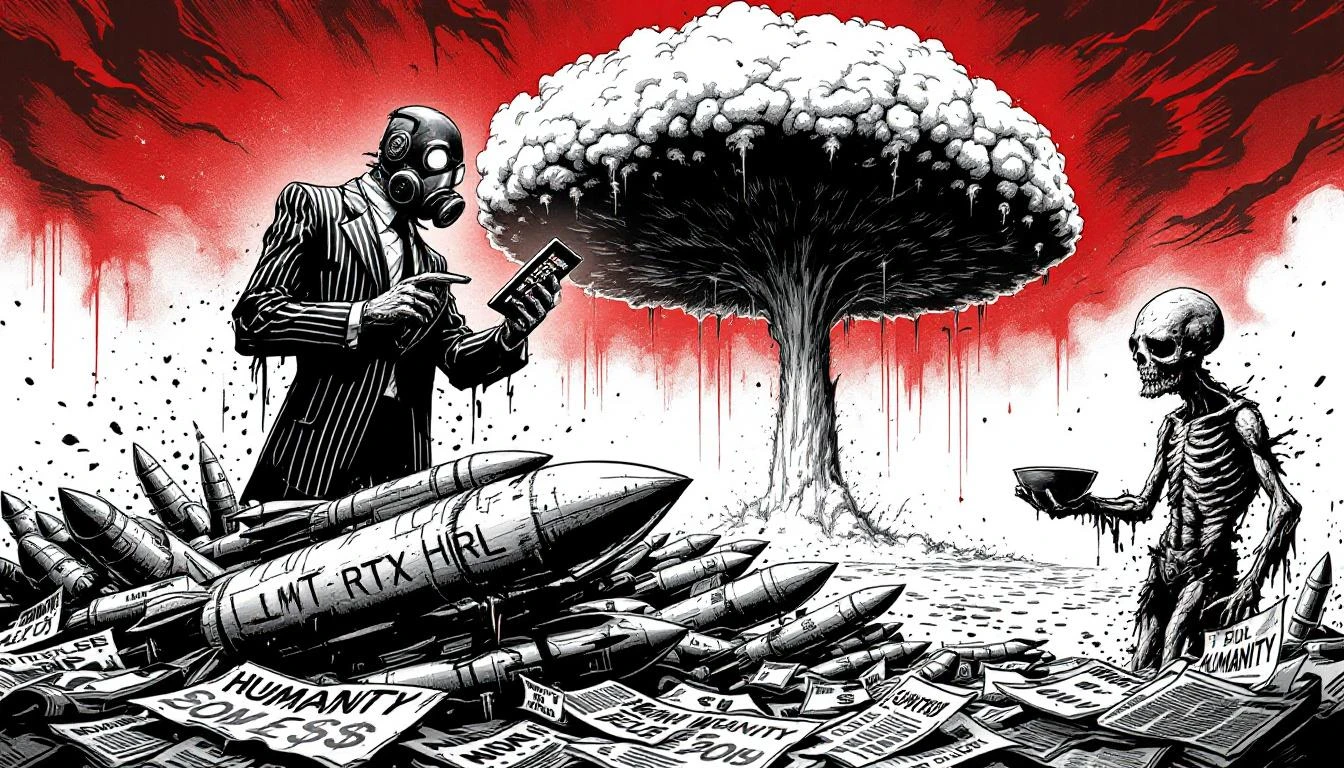
The Ghoul's Guide to Profiting from Armageddon: Eleven Magical Stocks to Keep You Warm While the World Burns
Wall Street discovers you need exactly eleven stocks—not ten, not twelve—to profit from potential war with Iran. The precision is what makes it art.