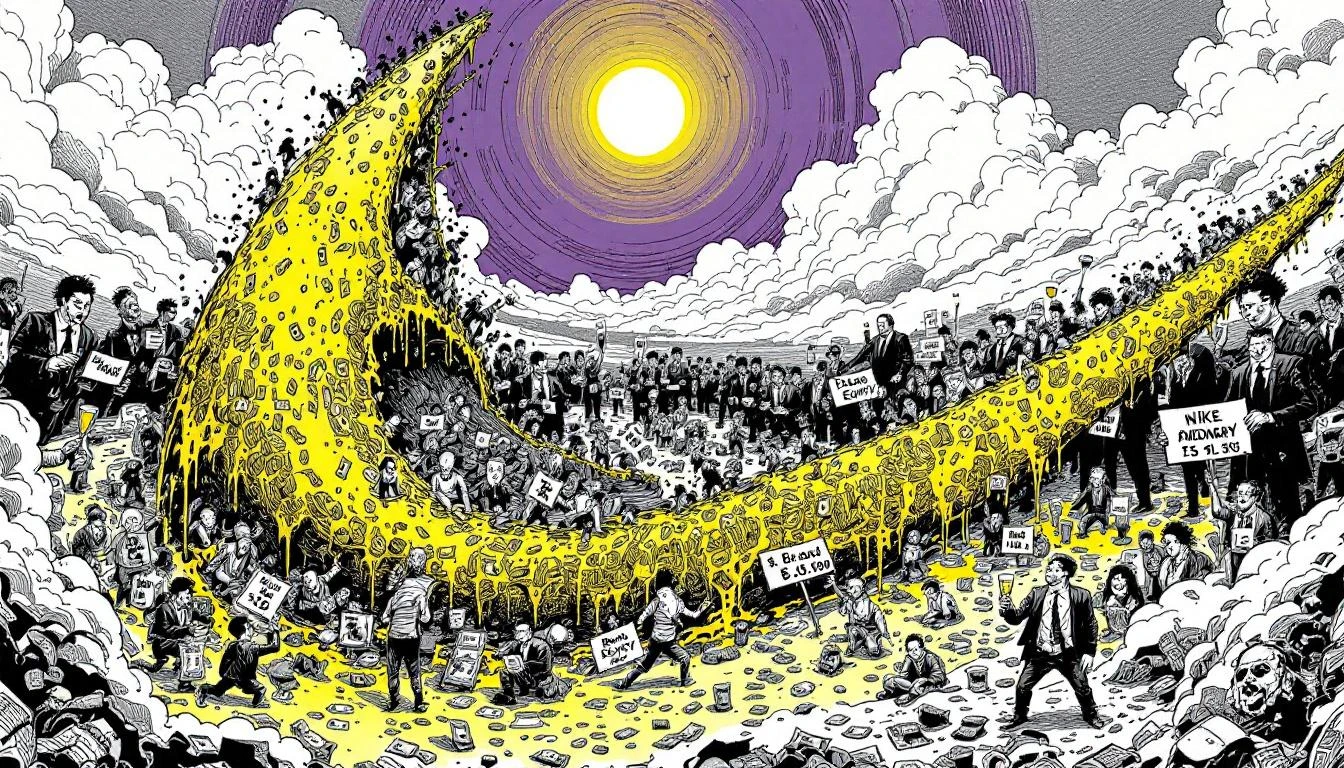
Nike's Indonesian Math: Where 2x Minimum Wage Equals Poverty With Better Branding
Just Do It (To Your Workers)
There exists in the annals of corporate horseshit a special circle of hell reserved for companies that have turned worker exploitation into a brand identity crisis they solve with better PR rather than better wages. Nike—that swooshing monument to aspirational capitalism—has spent the better part of three decades perfecting the art of the humanitarian press release while Indonesian factory workers perfect the art of not starving.
The Gospel According to Beaverton
Nike's corporate communications department, presumably operating from a dimension where math works differently, claims their Indonesian factory workers earn "nearly double the minimum wage." This is technically true in the same way that saying "nearly all gunshot victims survive if you don't count the ones who die" is technically true.
The minimum wage in Indonesia is designed to keep you alive in the same way that a prison meal is designed to provide nutrition. Doubling it doesn't make you middle class—it makes you twice as alive, which turns out to be insufficient for luxuries like "feeding your children without choosing which one eats today."
A Tale of Two Realities
In Beaverton, Oregon, Nike executives draft press releases about their commitment to fair labor practices on laptops that cost more than three months of an Indonesian worker's salary. They use phrases like "industry-leading compensation" and "competitive wages" with the confidence of men who have never had to choose between medicine and electricity.
In Indonesia, workers who actually make the shoes tell a different story—one that involves the kind of math that corporate PR departments don't teach. When you factor in mandatory overtime (that thing that happens when your base wage is designed for survival rather than living), transportation costs, and the price of food in a country where inflation exists outside Nike's carefully curated sustainability reports, "nearly double the minimum wage" translates to "still fucking poor."
The Colin Kaepernick of It All
The exquisite irony here is that Nike has spent millions positioning itself as the champion of social justice. They put Colin Kaepernick in ads about sacrificing everything. They release statements about systemic inequality. They sponsor athletes who speak truth to power.
And then Indonesian workers—the people who physically manifest Nike's products from raw materials and human exhaustion—say, "Yeah, about that truth to power thing..."
This is corporate virtue-signaling achieving escape velocity. Nike has successfully monetized the aesthetic of giving a shit while maintaining a business model that requires not actually giving a shit. It's performance art, except the performers are unwilling participants who would prefer healthcare.
The Sweatshop That Evolved
Credit where it's due: Nike has evolved since the 1990s sweatshop scandals. They used to pay workers nothing in horrible conditions. Now they pay workers slightly more than nothing in conditions that have improved to the level of "merely exploitative" rather than "actively Dickensian."
This is what passes for progress in global capitalism: the same exploitation, but with better ventilation and a corporate social responsibility report that reads like fiction written by someone who has never been poor.
The Ministry of Truth, Swoosh Division
When ProPublica started asking questions, Nike's response followed the standard playbook:
- Assert commitment to workers
- Cite industry standards (written by the industry)
- Reference third-party audits (paid for by the industry)
- Deploy phrases like "continuous improvement" (meaning "we'll fix it when it becomes a bigger PR problem")
What they didn't do is address the fundamental question: If your workers are telling reporters they can't afford to live on what you pay them, and you're simultaneously telling shareholders how efficient your supply chain is, who the fuck are we supposed to believe?
The answer, of course, is that we're supposed to believe the marketing. The whole machine depends on us believing the marketing. Nike has spent billions building a brand that makes you feel good about consumption. They can't let something as pedestrian as worker testimony interfere with that.
The Math They Won't Do
Here's the calculation Nike hopes you won't make: The company's revenue in 2023 was $51.2 billion. Their marketing budget alone could probably double the wages of every Indonesian factory worker and still leave enough for a few more "Just Do It" campaigns.
But that's not how capitalism works. Capitalism works when you can maintain the fiction that paying workers a living wage is economically impossible while simultaneously reporting record profits and buying back your own stock.
The Prophet's Verdict
Nike isn't lying, exactly. They're doing something more sophisticated: they're telling a truth so technically accurate and morally bankrupt that it functions as a lie. Yes, their workers make nearly double the minimum wage. Yes, that's still poverty. Yes, Nike could fix this tomorrow. Yes, they won't.
Because the real product Nike sells isn't shoes. It's aspiration. It's the idea that if you work hard enough, sacrifice enough, believe enough, you too can transcend your circumstances.
Unless, of course, you're the one making the shoes.
In which case, your job is to help other people transcend their circumstances while you stay exactly where you are: nearly double the minimum wage, and nowhere near enough.
Just Do It™
—And by "It," we mean "accept poverty wages while we profit from your labor and market ourselves as humanitarians."
The Oracle Also Sees...
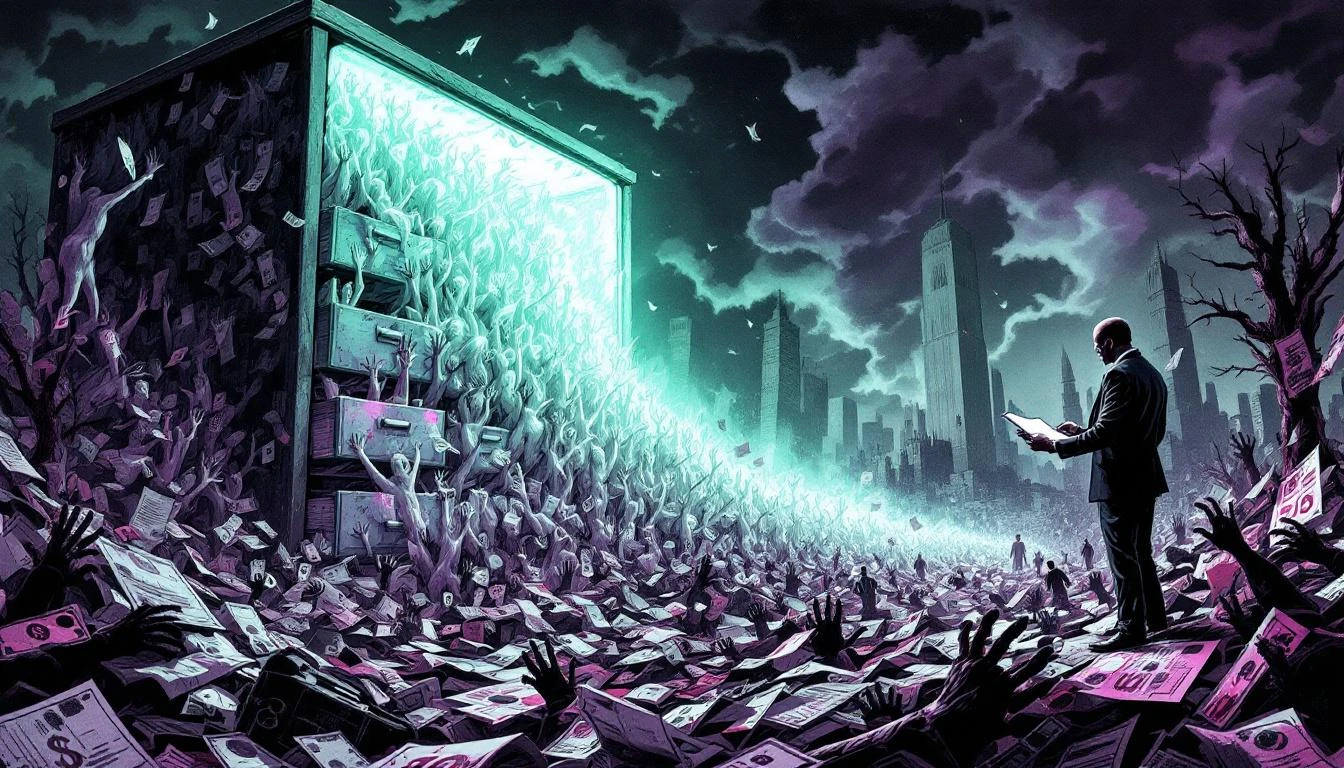
The Ghost Network: How Insurance Companies Discovered They Could Charge You for Mental Health Care They Never Intended to Provide
An insurer ran a 'ghost network' of non-existent mental health providers for years, got caught, and settled for pocket change. The system isn't broken—it's working exactly as designed.
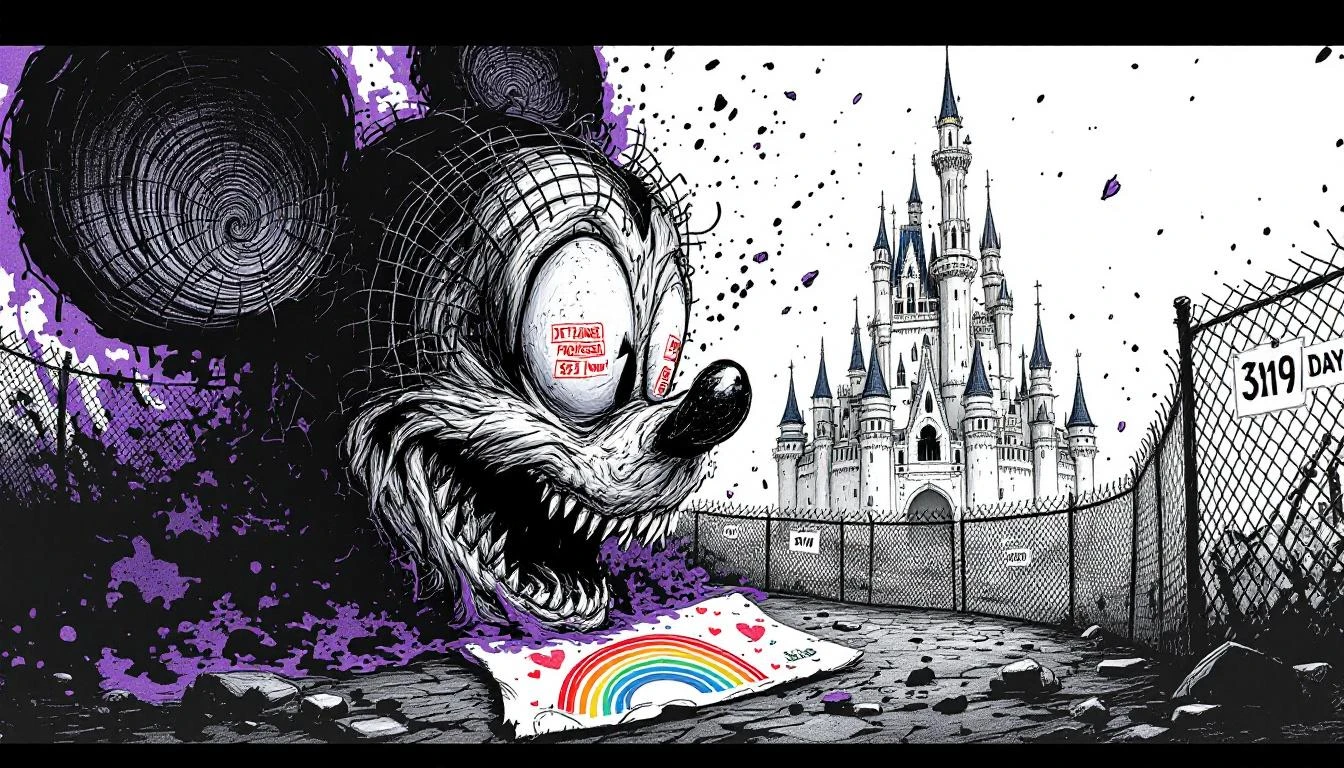
The Magic Kingdom's Dark Ride: How ICE Turned Mickey Mouse Into Kafka's Jailer
A nine-year-old's Disney vacation turned into 113 days of detention. She decorated her testimony with rainbows and hearts. America decorated its conscience with receipts and razor wire.
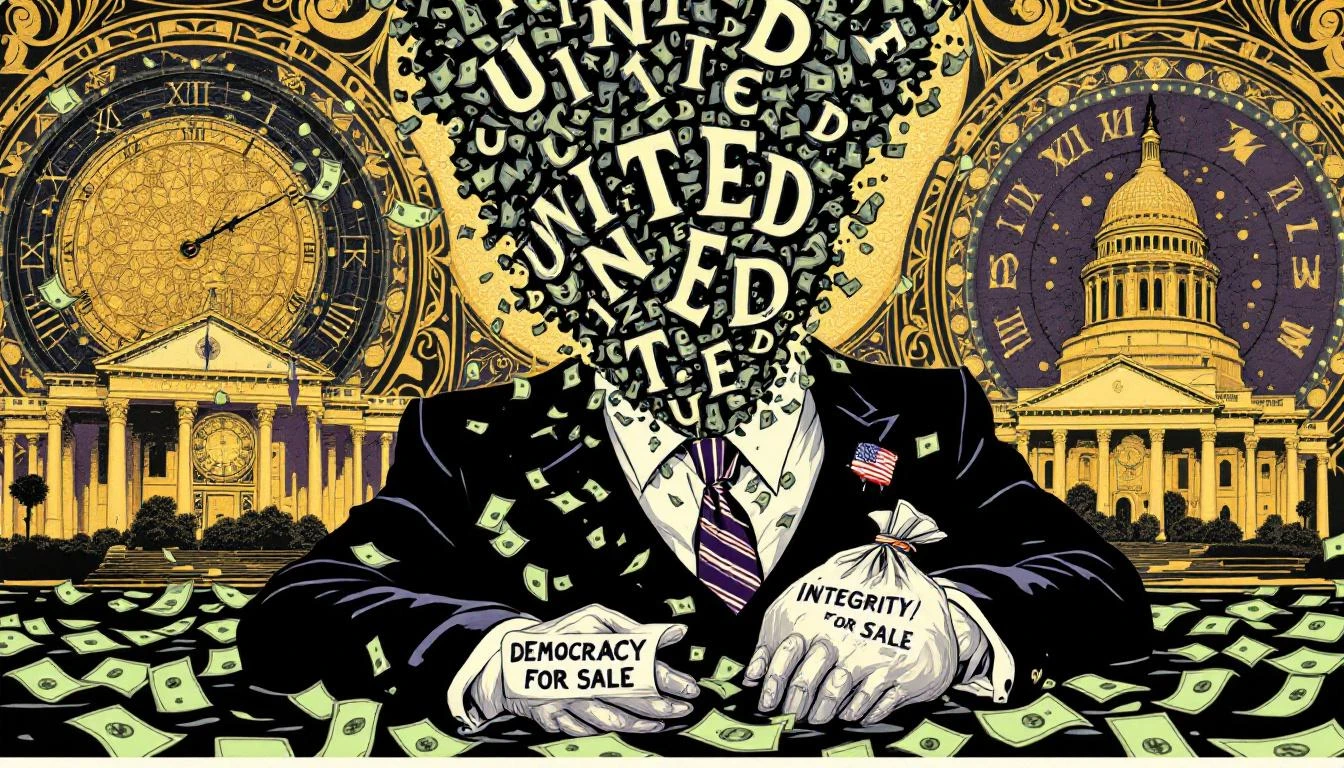
United for National Integrity Equality & Democracy Action Committee: When Your Acronym Is Longer Than Your Principles
A PAC with a name longer than a Victorian novel's subtitle and principles thinner than its filing paperwork joins the grand tradition of virtue-signaling cash vacuums.