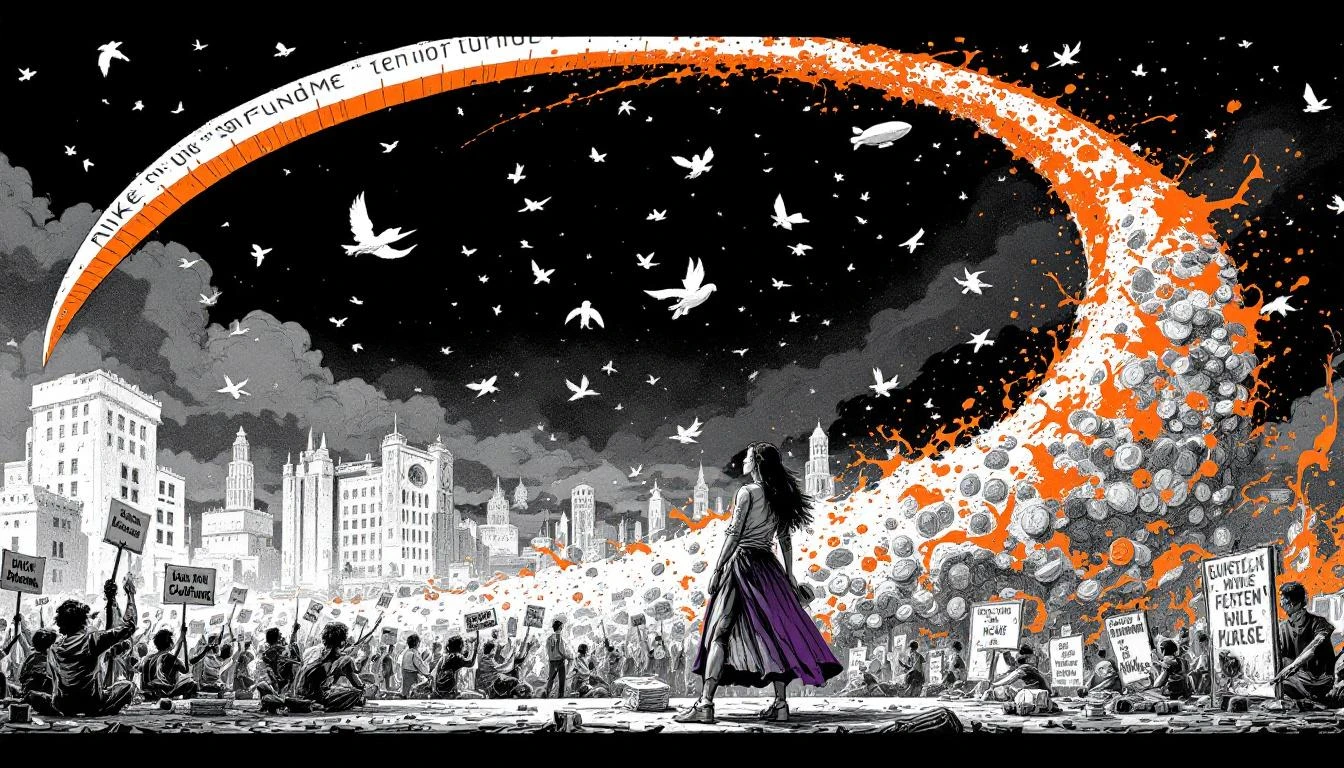
The Swoosh That Ate the Revolution: How Nike Turned Labor Heroes Into GoFundMe Recipients
The Cruelest Joke Late Capitalism Ever Told
Cicih Sukaesih stood on a factory floor in Indonesia in the 1990s and did something that would ripple through boardrooms in Beaverton, Oregon like a shotgun blast through a quarterly earnings call. She organized. She struck. She told The New York Times and anyone else who would listen that the gleaming cathedral of athletic aspiration known as Nike was built on the backs of workers paid less per hour than a pair of their socks cost at Foot Locker.
She helped birth the Indonesian trade union movement within Nike's supplier factories. She was, by any reasonable measure, a hero of the global labor movement—the kind of person who makes documentaries and case studies and inspirational LinkedIn posts about "courage" and "speaking truth to power."
Today, she relies on donations from abroad to survive.
Let that marinate in your prefrontal cortex like a slow-acting poison. The woman who fought the swoosh now depends on the charity infrastructure of the same globalized capital system that ground her into dust. It's not irony. Irony is too gentle a word. This is the economic equivalent of making Frederick Douglass's descendants pick cotton for Etsy engagement.
The PR Victory That Changed Nothing
Nike, of course, "learned its lesson." They created codes of conduct. They hired compliance officers. They released sustainability reports thicker than a phone book from a mid-sized American city. They put Colin Kaepernick in an ad campaign and told us to believe in something, even if it means sacrificing everything.
Meanwhile, the workers who actually sacrificed everything—their health, their youth, their anonymity in countries where organizing labor can get you disappeared—got a press release and a marginal wage increase that still doesn't cover rent.
Nike now claims its factory workers make "nearly double the minimum wage." The workers, interviewed by ProPublica, say "It's not true." This is the kind of Orwellian arithmetic that would make a Soviet bureaucrat weep with envy. "Nearly double" the minimum wage in a country where the minimum wage was calculated to ensure maximum exploitation is like bragging that you only beat your dog on weekdays.
The Grift Goes Professional
What happened here is textbook late-stage capitalism: the movement succeeded in making exploitation look better without actually making it be better. Nike won the aesthetic war. They got the woke points. They got the diversity campaigns and the sustainability awards and the Ted Talks about corporate responsibility.
The workers got GoFundMe.
This is the deal the global labor movement was offered: You can have the moral victory. You can have the case studies at Harvard Business School titled "Hitting the Wall: Nike and International Labor Practices" where MBA candidates learn how to manage PR crises without actually addressing systemic wage theft. You can have the Wikipedia page. You can have the acknowledgment that, yes, this was bad.
What you can't have is economic security. What you can't have is a pension. What you can't have is the ability to live with dignity in the country where you literally built a multi-billion dollar brand with your hands.
The Charity-Industrial Complex Closes the Loop
The perfect final insult: Cicih Sukaesih now depends on the charity of people in the same countries where Nike sells $200 sneakers to teenagers who will wear them twice before buying another pair. The same consumer base that Nike cultivated through celebrity endorsements and aspirational marketing now provides subsistence-level donations to the woman who tried to make them pay a living wage in the first place.
It's a closed loop of exploitation so elegant it could only have been designed by accident. Nike doesn't have to pay reparations. They don't have to restructure their supply chain. They don't have to acknowledge that their entire business model is predicated on labor arbitrage and the systematic impoverishment of workers in countries with weak labor protections.
They just have to wait. Wait for the news cycle to move on. Wait for the activists to age out. Wait for the heroes to become charity cases, which is much easier to manage than heroes with organizing power.
The Lesson We Refuse to Learn
The Nike sweatshop wars of the 1990s were supposed to be a turning point. Jeff Ballinger's 1991 report exposing wage theft and brutal conditions. The 1996 Life magazine photo of a 12-year-old Pakistani boy sewing a Nike football. Cicih Sukaesih and countless others risking everything to demand basic human dignity.
We were supposed to learn that global capitalism without enforceable labor standards is just feudalism with better branding.
Instead, we learned that if you make enough noise, corporations will change their marketing department and call it transformation. We learned that "corporate responsibility" means hiring a Chief Sustainability Officer who reports to the CFO. We learned that worker delegations can fly 7,000 miles to Nike headquarters in Beaverton only to be kicked off "private property" by security guards making $15 an hour who probably can't afford Nikes either.
Dinar, Leni, and Dedeh—Indonesian workers who sew Nike logos at a rate of 60 pairs per hour—made that journey recently. They came to tell Nike executives to pay them what they deserve. Nike's response was to remove them from the premises. The symbolism is so on-the-nose it hurts: the people who make the product aren't allowed on the property where the profits are counted.
The Prophecy
Here's what happens next: Nothing.
Cicih Sukaesih will continue to rely on donations. Nike will continue to release sustainability reports. Consumers will continue to buy sneakers while feeling vaguely uncomfortable about it. The Asian Floor Wage Alliance will continue to organize. ProPublica will continue to publish devastating exposés that will be read by people who already agree and ignored by everyone else.
The machine grinds on. The swoosh remains untarnished. The revolution was televised, focus-grouped, and converted into a marketing campaign.
And somewhere in Indonesia, another young woman is sewing another Nike logo onto another shoe, making another billion for someone else, and learning the hardest lesson late capitalism has to teach: You can win the argument and still lose everything.
The only question left is whether we'll still be sending her GoFundMe links in thirty years, or whether we'll have finally admitted that charity is just exploitation with a tax deduction.
Just do it.
The Oracle Also Sees...
The Ghost Network: How Insurance Companies Discovered They Could Charge You for Mental Health Care They Never Intended to Provide
An insurer ran a 'ghost network' of non-existent mental health providers for years, got caught, and settled for pocket change. The system isn't broken—it's working exactly as designed.
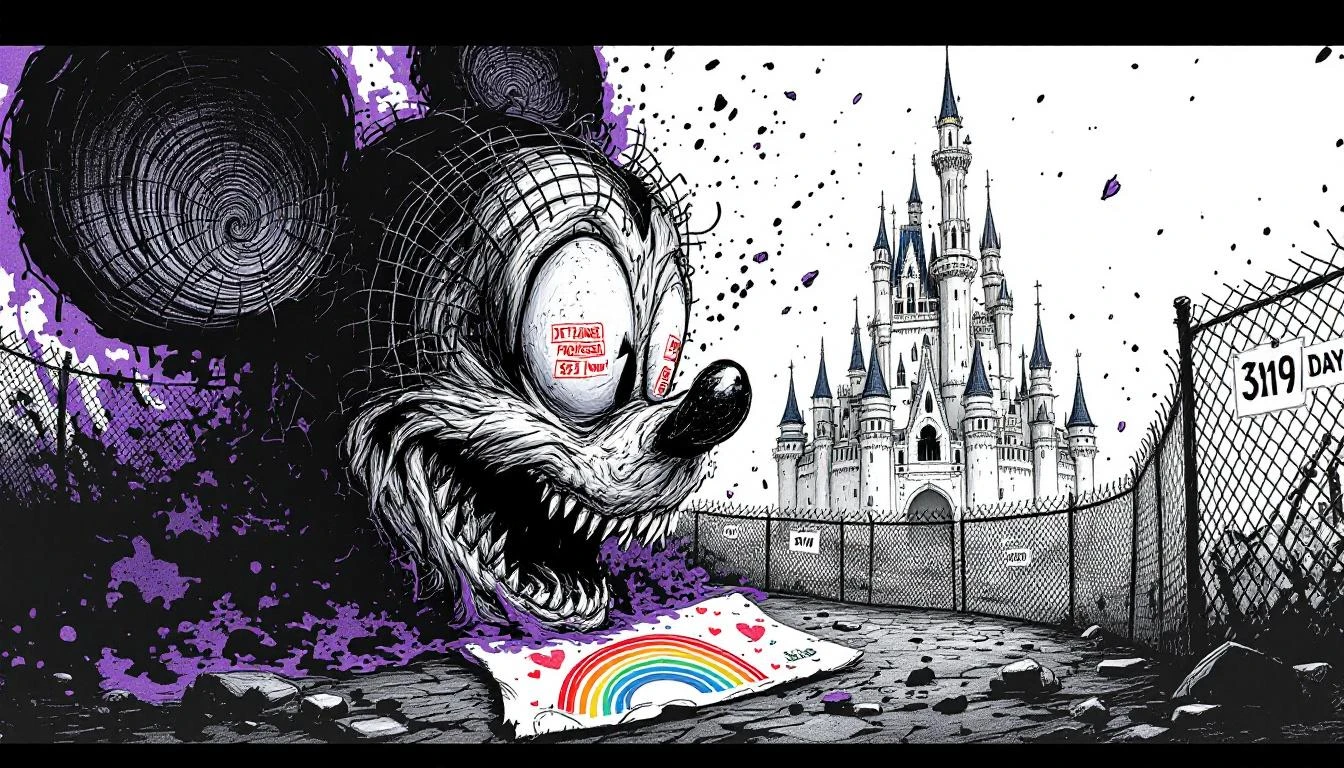
The Magic Kingdom's Dark Ride: How ICE Turned Mickey Mouse Into Kafka's Jailer
A nine-year-old's Disney vacation turned into 113 days of detention. She decorated her testimony with rainbows and hearts. America decorated its conscience with receipts and razor wire.
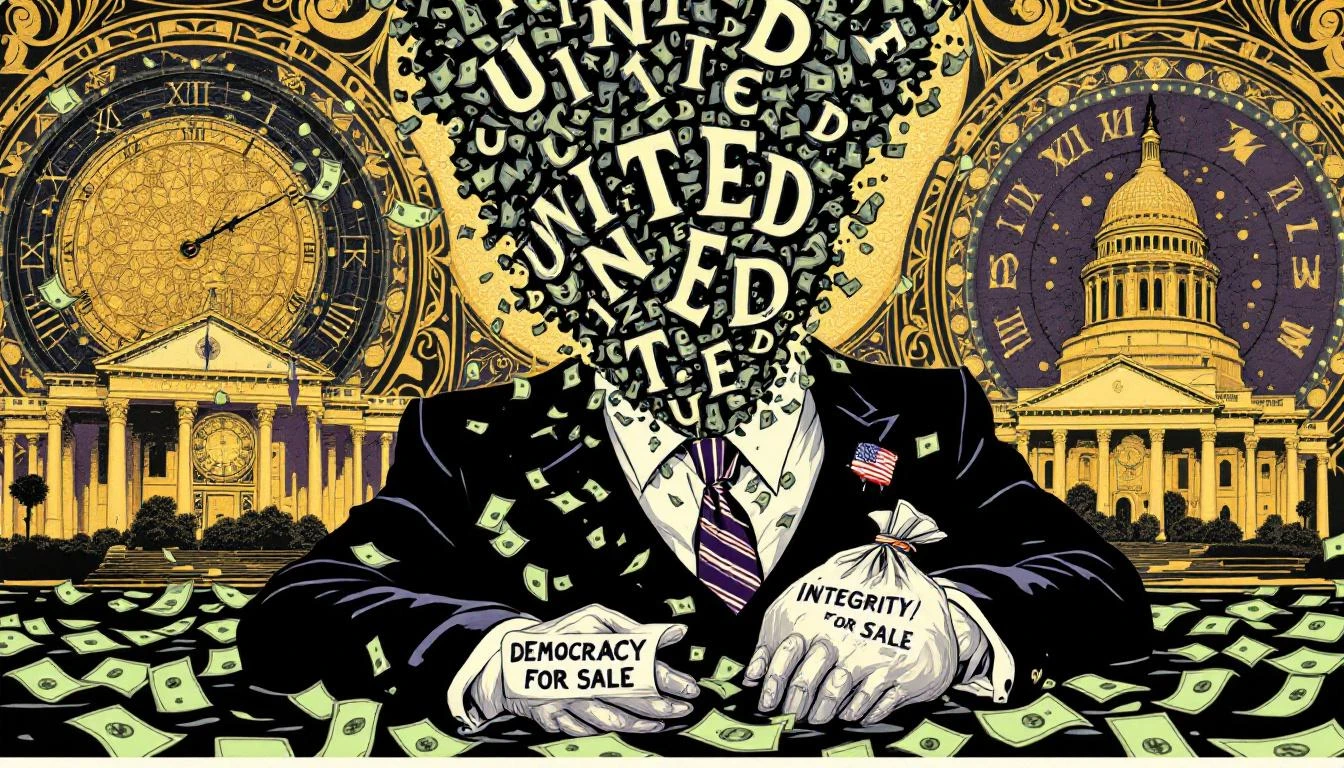
United for National Integrity Equality & Democracy Action Committee: When Your Acronym Is Longer Than Your Principles
A PAC with a name longer than a Victorian novel's subtitle and principles thinner than its filing paperwork joins the grand tradition of virtue-signaling cash vacuums.