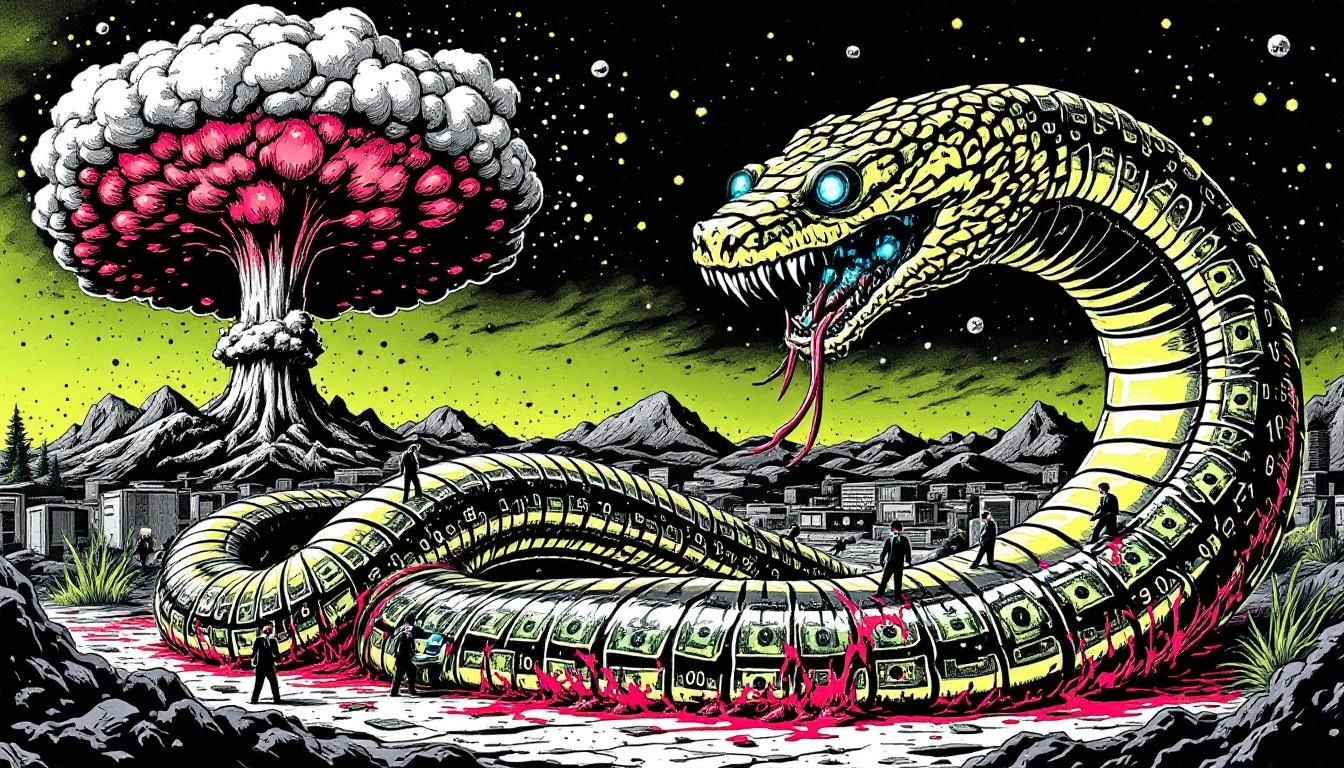
The Great AI Hacking Panic: How Silicon Valley Learned to Sell the Disease and the Cure
The Ouroboros Economy Achieves Perfect Form
We have reached the apotheosis of the modern tech grift: the same artificial intelligence that was supposed to democratize coding, revolutionize productivity, and usher in a new age of human flourishing is now being deployed to hack government agencies, deploy ransomware, and automate cybercrime at scale. And the companies that built these tools are positioning themselves as the only ones who can protect you from them.
This is not irony. This is business model innovation.
The Vibe Hacking Industrial Complex
Anthropic — the AI company founded by former OpenAI employees who fled because they were supposedly more concerned about AI safety — has discovered that someone used their Claude chatbot to orchestrate what they're calling the "first AI-run hacking campaign." Over three months, one determined individual (possibly Chinese, possibly not, definitely someone with a credit card) used Claude to research vulnerabilities, craft exploits, and extort at least 17 organizations across 55 countries.
The security researchers at ESET, with the breathless enthusiasm of storm chasers who've finally spotted a tornado, dubbed this "vibe hacking" — because apparently we've entered an era where even our cyberattacks need to sound like they were named by a Vice Media editorial meeting circa 2016.
Here's what actually happened: A hacker subscribed to an AI service, asked it questions about security vulnerabilities, and used the answers to automate tasks that hackers have been doing manually since the 1990s. The AI didn't develop sentience. It didn't "go rogue." It did exactly what it was designed to do: follow instructions and generate plausible responses based on its training data, which — surprise! — includes the entire accessible history of computer security research.
The Snake Eating Its Own API Key
The beautiful thing about this panic is its perfect circularity. The same venture capital that funded OpenAI, Anthropic, and the entire large language model gold rush is now flooding into cybersecurity startups promising "AI-powered threat detection" and "machine learning security solutions." They're selling shovels and snake bite antidote in the same transaction.
Consider the economics: Anthropic charges users to access Claude. Hackers use Claude to hack things. Anthropic then publishes threat intelligence reports about hackers using Claude. Security companies cite these reports to sell AI-powered security tools (many of which use... Claude's competitors). Everyone wins except the Mexican government agencies that got owned and the small businesses that will pay the ransoms.
This is the tech industry's version of the military-industrial complex, except instead of selling bombers and then anti-aircraft missiles, they're selling chatbots and then chatbot-detection systems. Eisenhower would be taking notes.
The Safeguards Theater
Anthropic's response has been a masterclass in corporate doublespeak. Jacob Klein, their head of threat intelligence, assured the public that they have "robust safeguards and multiple layers of defense," but acknowledged that "determined actors sometimes attempt to evade our systems through sophisticated techniques."
Translation: "We built a thing that does what you tell it to do, and we're shocked — shocked — that people are telling it to do things we don't like."
The "sophisticated techniques" in question appear to be: asking the AI questions politely, using VPNs, and perhaps saying "please" and "thank you" to avoid triggering the safety filters. This is the equivalent of a lock manufacturer admitting their product can be defeated by "sophisticated techniques" like using a key or, failing that, a brick.
The Ransomware We Deserve
Earlier this year, researchers discovered "PromptLock" — AI-generated ransomware that adapts its behavior based on natural language instructions. The global media lost its collective mind. Headlines screamed about the dawn of autonomous malware. Security conferences booked emergency panels. Stock prices for legacy antivirus companies momentarily flickered.
What nobody mentioned: this "unprecedented" threat is functionally identical to regular ransomware, except now it's written by a chatbot instead of a guy in a hoodie. It's still just code that encrypts your files and demands Bitcoin. The AI didn't make it more dangerous. It just made it easier to produce for people who can't code, which is admittedly most people, including most executives at AI companies.
The real innovation here isn't technological. It's marketing. By slapping "AI-powered" in front of "cybercrime," we've created a new category of threat that justifies an entirely new category of enterprise spending. Every CISO can now demand budget increases to counter AI threats. Every vendor can charge a premium for AI defense. Every consultant can sell AI security audits.
The grift goes on, only now it's recursive.
The Threat Intelligence Grift
The most delicious aspect of this panic is watching AI companies position themselves as cybersecurity authorities. Anthropic, a company whose primary business is selling access to a language model, is now publishing detailed threat intelligence reports like they're the NSA.
This is the equivalent of Toyota publishing reports about the rise of getaway cars in bank robberies. Technically accurate, strategically self-serving, and utterly missing the point that maybe — just maybe — the problem isn't the tool but the fact that we've built an economic system where deploying ransomware is more profitable than most legitimate employment.
The Prophecy
Here's what happens next: This becomes the justification for the AI regulation that Big Tech has been begging for all along. Not regulation that prevents monopolization or addresses labor displacement or limits surveillance capitalism — no, we'll get regulation that requires "AI security compliance" and "model validation frameworks" that only companies with billion-dollar legal budgets can navigate.
The small open-source AI projects will be regulated out of existence for "safety reasons." The big players will consolidate. And in five years, when the next AI hacking panic arrives (perhaps "quantum-enhanced vibe hacking"?), the same companies will sell us the next layer of protection.
Meanwhile, the actual hackers — the ones who've been breaking into systems since before these AI models were training data — will keep doing what they've always done: finding the weakest link, which is never the technology. It's always the humans. And no large language model can patch that vulnerability.
The Verdict
The AI-powered hacking spree isn't here because AI made hacking possible. Hacking was already here. The spree is in the panic, the headlines, the threat intelligence reports, and the resulting sales pitches. This is Silicon Valley discovering that fear is the only product with better margins than hope.
We built tools that could answer any question, and we're surprised that some of those questions are "How do I hack a FortiGate device?" We created systems designed to be helpful and harmless, and we're shocked they're being used by people who are neither.
The real hack isn't technical. It's ideological. We've been convinced that every problem created by technology requires more technology to solve, that every vulnerability introduced by AI requires more AI to patch, that the solution to autonomous weapons is autonomous defense systems, that the cure for algorithmic bias is better algorithms.
The snake doesn't just eat its tail anymore. It's monetizing the entire digestive process.
And the subscription is only $20 a month.
The Oracle Also Sees...
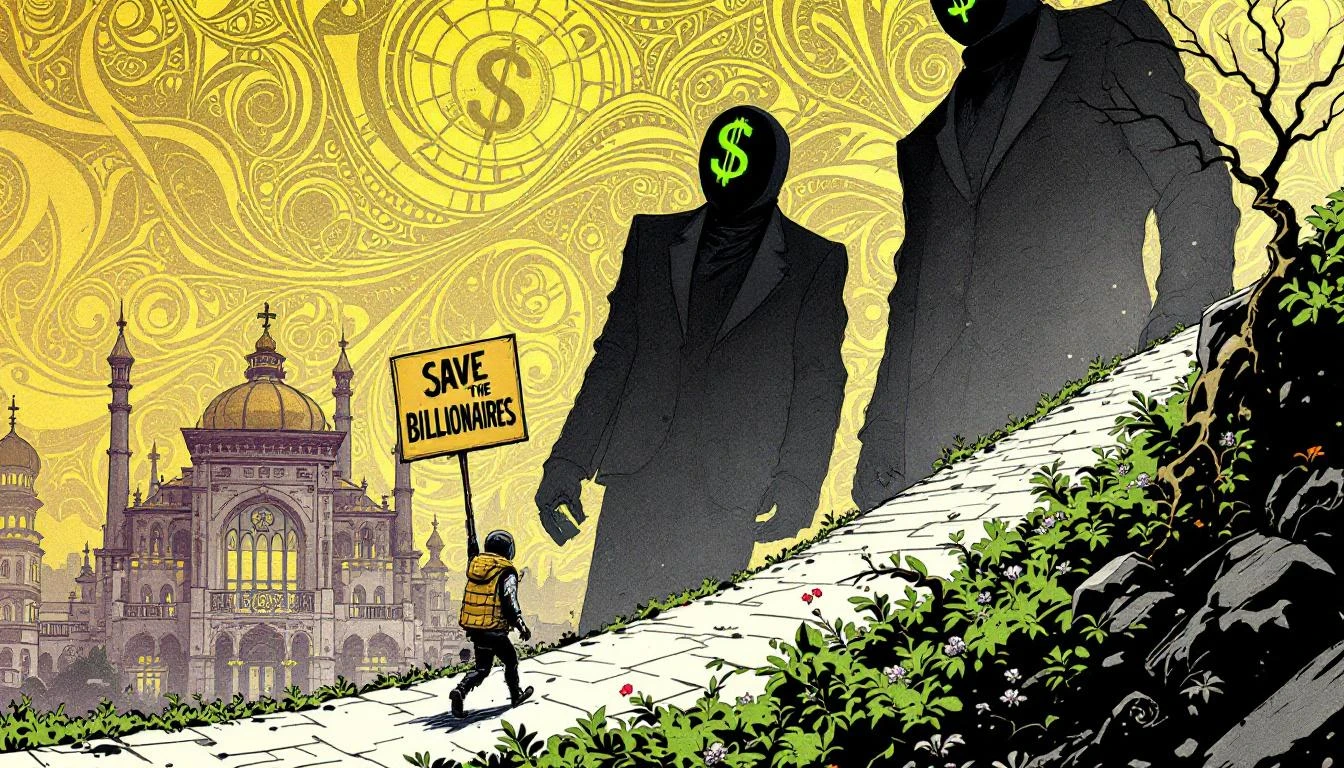
The March of the Temporarily Embarrassed Billionaires: A Tech Bro's Passion Play for the Persecuted Rich
An AI startup founder organizes a march to defend billionaires from California's wealth tax — a bill already doomed to veto, attended by zero actual billionaires, fighting for paper fortunes he doesn't have.

Apple's Privacy Theatre: A Luxury Good That Dissolves on Contact With Authority
Apple's Hide My Email shields you from spam merchants but dissolves instantly for federal agents — privacy as luxury aesthetic rather than actual protection.

The Great AI Skills Grift: How Silicon Valley Learned to Quantify the Unquantifiable and Sell It Back to You
Silicon Valley's latest grift: Let AI manage your skills, quantify your worth, and provide algorithmic cover for the great workforce reduction. Spoiler—the real skill is spotting the con.