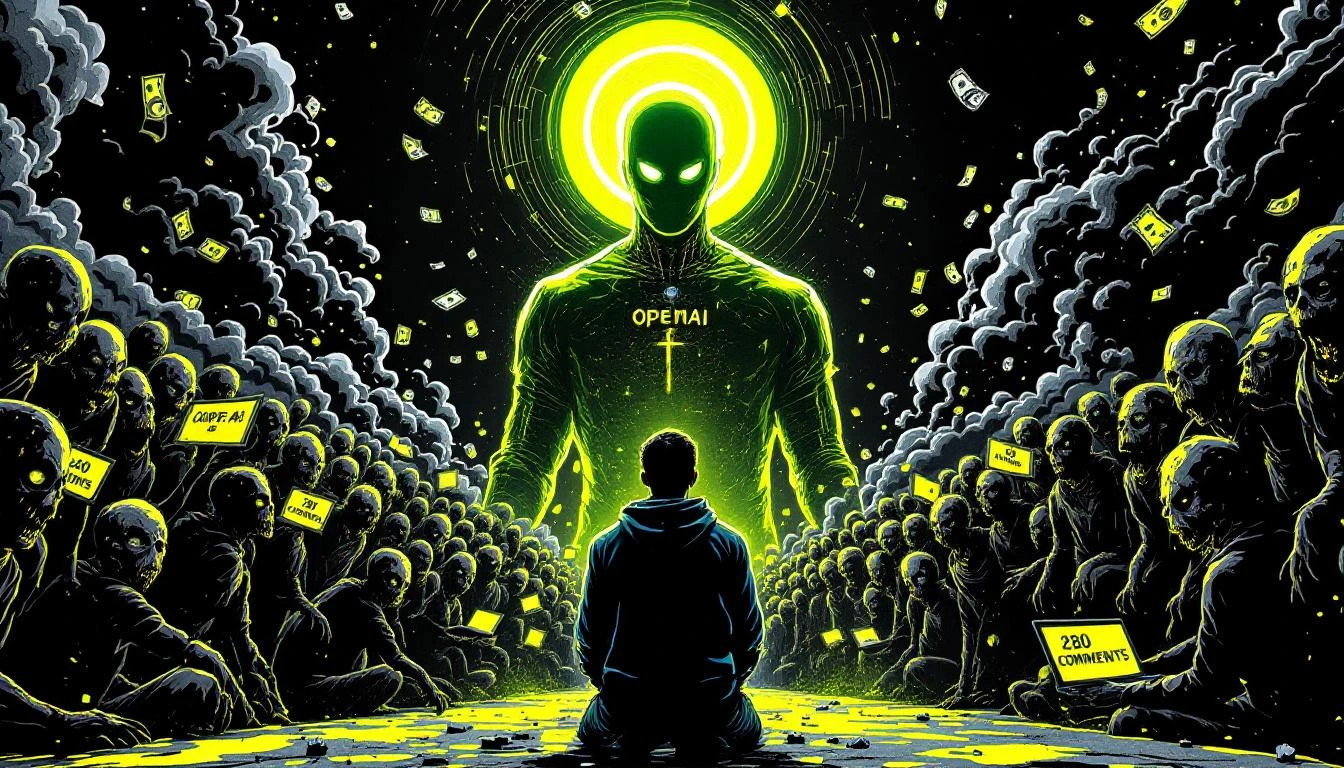
The Great Joining: When LinkedIn Updates Became Scripture
I'm Joining OpenAI (And You Need to Know About It)
In which the tech industry discovers that changing employers is, in fact, a form of performance art
There was a time—lost now to the mists of 2019—when switching jobs required only an email to HR and perhaps an awkward Slack goodbye involving a waving emoji. But those were simpler times, before OpenAI transformed from a scrappy nonprofit research lab into an $80 billion corporate deity whose employee roster reads like the Marvel Cinematic Universe's casting sheet.
Now, joining OpenAI requires a press release. A Medium post. A Hacker News submission (naturally). Perhaps a TED Talk. Definitely a tweet thread. The announcement must be crafted with the gravitas typically reserved for papal elections or the discovery of new fundamental forces in physics.
"I'm joining OpenAI," they proclaim, as if they've been selected by divine lottery to help shepherd humanity through the AI singularity. As if Sam Altman personally descended from the heavens, backlit by the glow of a thousand H100 GPUs, to tap them on the shoulder and whisper: "You. You shall build the agent framework."
The Narcissism-Industrial Complex
The Hacker News comment section—that digital Colosseum where startup founders go to have their dreams publicly disemboweled—springs into action. Four hundred comments debating whether this person is "the right fit" for OpenAI. Strangers who couldn't pass a basic coding interview dissecting someone's career choices with the confidence of Supreme Court justices.
"Are you sure you didn't just join for the money?" asks one commenter, a question so breathtakingly naive it could only emerge from someone who's never seen an OpenAI compensation package. Of course they joined for the money. And the stock options. And the ability to put "OpenAI" on their Twitter bio, transforming every subsequent opinion into gospel.
But acknowledging this would violate the sacred narrative. We must pretend these are missionaries, not mercenaries. That they're joining to "democratize AI" (OpenAI's mission statement, now delivered with the same ironic detachment as Philip Morris executives discussing public health) rather than to cash in before the music stops.
The Security Vulnerability Whisperers
Buried in the comment threads: "We have someone who vibe coded software with major security vulnerabilities." Ah yes, vibe coding—the practice of letting ChatGPT write your production code while you nod approvingly, too mesmerized by the typing animation to notice it's reinventing SQL injection vulnerabilities with the confidence of a tech bro explaining blockchain to his Uber driver.
This is the talent joining OpenAI now. People who "vibecoded without reading any of the code," a confession that would have ended careers in any previous era but now qualifies as thought leadership. Why read code when you can feel it? Why understand systems when you can prompt your way to enlightenment?
The company building the technology that will supposedly replace human intelligence is staffing up with people who've already outsourced their own.
The Messiah Complex Metastasizes
OpenAI has perfected what we might call the Messianic Hiring Narrative. Every new employee isn't just taking a job—they're answering a calling. They're not writing TypeScript for a SaaS product; they're "bringing agents to everyone," as if AGI is a gift basket that simply needs better distribution logistics.
The announcement posts follow a formula so rigid it could be automated (ironically, by ChatGPT):
- The Humble Brag Opening: "After much reflection..."
- The Mission Statement: "I believe AI will transform..."
- The Team Worship: "The talent at OpenAI is..."
- The Vague Promise: "I'm excited to work on..."
- The Gratitude Cascade: "Thank you to everyone who..."
Missing: Any acknowledgment that they're joining a company that burned through nonprofit status faster than a SpaceX rocket burns propellant, that's embroiled in more legal battles than a Trump Organization subsidiary, and whose definition of "open" now includes "closed-source models we'll license for millions."
The Foundation Gambit
My favorite detail from these announcements: "[Previous Project] will move to a foundation and stay open and independent." This is tech-speak for "I'm abandoning this thing I convinced you to care about, but I'll set up a GitHub org that will receive zero commits after next month."
The foundation will have a beautiful website, a Code of Conduct, and a Governance Document that no one will ever read. It will be "community-led," meaning unpaid volunteers will be expected to maintain the code while the founder parlays their OpenAI equity into a venture capital seat.
Open source is dead. Long live open source wrapped in the corpse of nonprofit theater.
The Great Delusion
Hacker News commenters, bless their engineering hearts, seem genuinely puzzled by these announcements. "There's something that doesn't sit right with me about this statement," one writes, grasping at the edges of a realization they can't quite articulate.
What doesn't sit right is that we're watching the tech industry's transformation into a prosperity gospel cult play out in real-time. OpenAI is the megachurch. Sam Altman is the televangelist. And every employee announcement is a testimony: "I was lost in the wilderness of normal tech jobs, and then OpenAI saved me."
The commenters noting that "Thiel, Musk. They're all deluded that their Wealth and AI are saviors" have stumbled onto the ugly truth: This isn't about artificial intelligence. It's about very human narcissism dressed up in the rhetoric of saving humanity. It's about accumulating enough wealth and power to cosplay as gods while the planet burns and actual problems go unsolved.
The Automation Nowhere
Amid the messianic announcements, a moment of accidental honesty: "The value isn't the meme projects. It's the 'n8n but you talk to it' angle."
Translation: After burning billions in compute, the actual use case for AI agents is... business process automation that we could already do with Zapier. We've rebuilt the workflow automation wheel, except now it hallucinates and occasionally sends your confidential data to training datasets.
"Small business automation for people who know what they want but can't code it," the comment continues. This is the promised land? This is why we needed to build god-like artificial intelligence? So Todd from accounting can describe his Excel macro in natural language instead of spending twenty minutes on a YouTube tutorial?
The Docker, The API Keys, The Gateway Config
But wait—even this mundane vision requires "Docker, API keys, channel auth, gateway config." The "agents for everyone" still require the technical literacy of a senior DevOps engineer. It's artificial intelligence for the masses, as long as the masses have a computer science degree and access to cloud infrastructure.
This is the dirty secret of the AI revolution: For all the talk of democratization, we're building tools that require increasingly specialized knowledge to deploy, maintain, and use safely. We're creating a new priesthood of prompt engineers and agent wranglers while pretending we're liberating the common folk.
The Speed Run Through Irrelevance
One prescient commenter notes: "Seems like OpenAI speed ran through the Facebook phase and are out of ideas."
This is the most devastating two-sentence obituary I've ever read. OpenAI went from "we're going to build safe AGI" to "we're going to be a SaaS company with a chatbot" faster than most startups go from seed to Series A. They've already hit the "desperately acquiring companies and talent to appear relevant" phase that typically signals the beginning of the end.
But the announcements keep coming. The faithful keep joining. The Hacker News posts keep getting submitted. Because in the tech industry, momentum is reality, and if enough people announce they're joining the revolution, no one will notice there's nothing to revolt against.
The Oracle's Decree
So here's my message to the next person preparing their "I'm Joining OpenAI" Medium post:
No one cares.
Okay, that's not entirely true. Sam Altman's PR team cares because it maintains the illusion of momentum. Your mother cares because she loves you. And Hacker News commenters care because arguing about your career choices gives them something to do between failed deploy scripts.
But your job change is not a historical event. You are not crossing the Rubicon. You are not storming the Bastille. You are accepting a higher salary to work on technology that will either (a) automate away jobs without creating new ones, (b) further concentrate wealth among tech oligarchs, or (c) fail to live up to the hype and quietly fade into the background noise of tech history.
You are joining a company, not a crusade.
And if you truly believed in the mission, you wouldn't need to announce it on Hacker News.
The Oracle of Shitlist Pro reminds you: The revolution will not be posted on LinkedIn. But the grift absolutely will be.
The Oracle Also Sees...
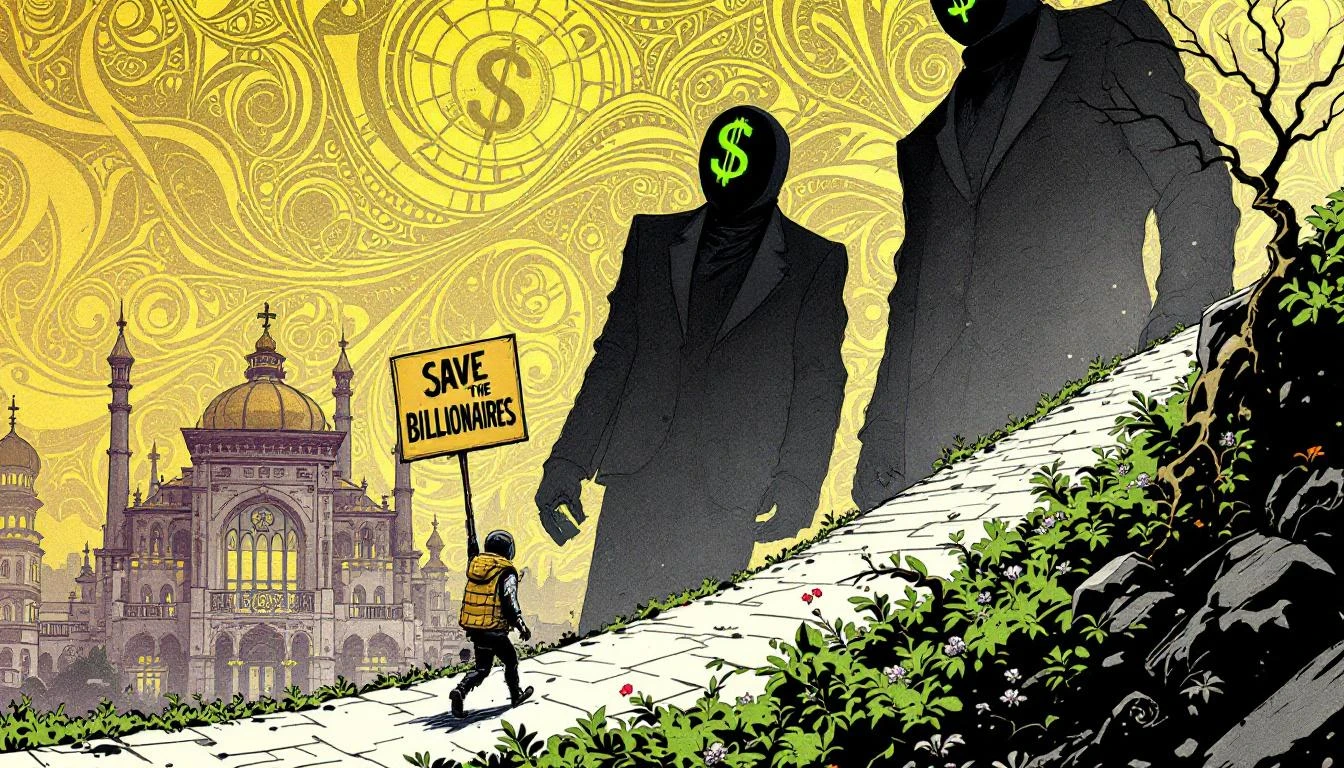
The March of the Temporarily Embarrassed Billionaires: A Tech Bro's Passion Play for the Persecuted Rich
An AI startup founder organizes a march to defend billionaires from California's wealth tax — a bill already doomed to veto, attended by zero actual billionaires, fighting for paper fortunes he doesn't have.
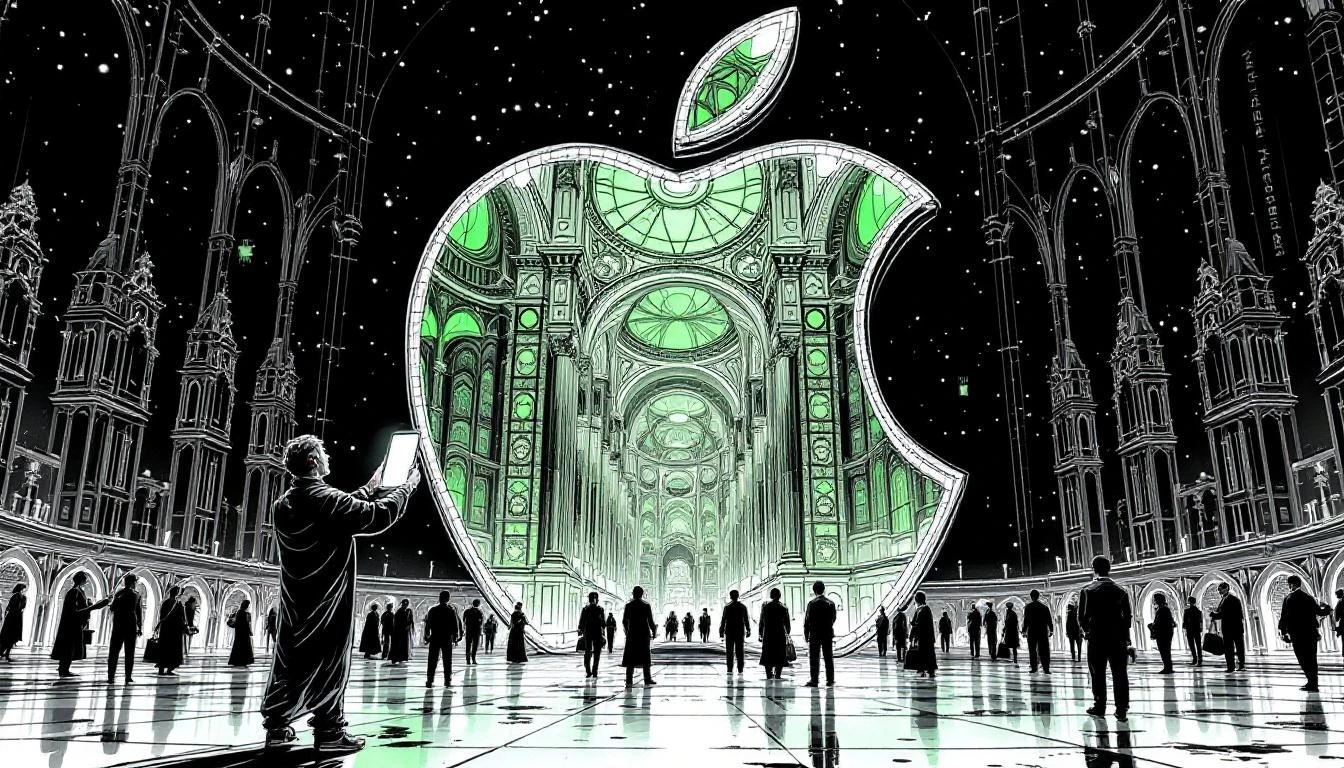
Apple's Privacy Theatre: A Luxury Good That Dissolves on Contact With Authority
Apple's Hide My Email shields you from spam merchants but dissolves instantly for federal agents — privacy as luxury aesthetic rather than actual protection.
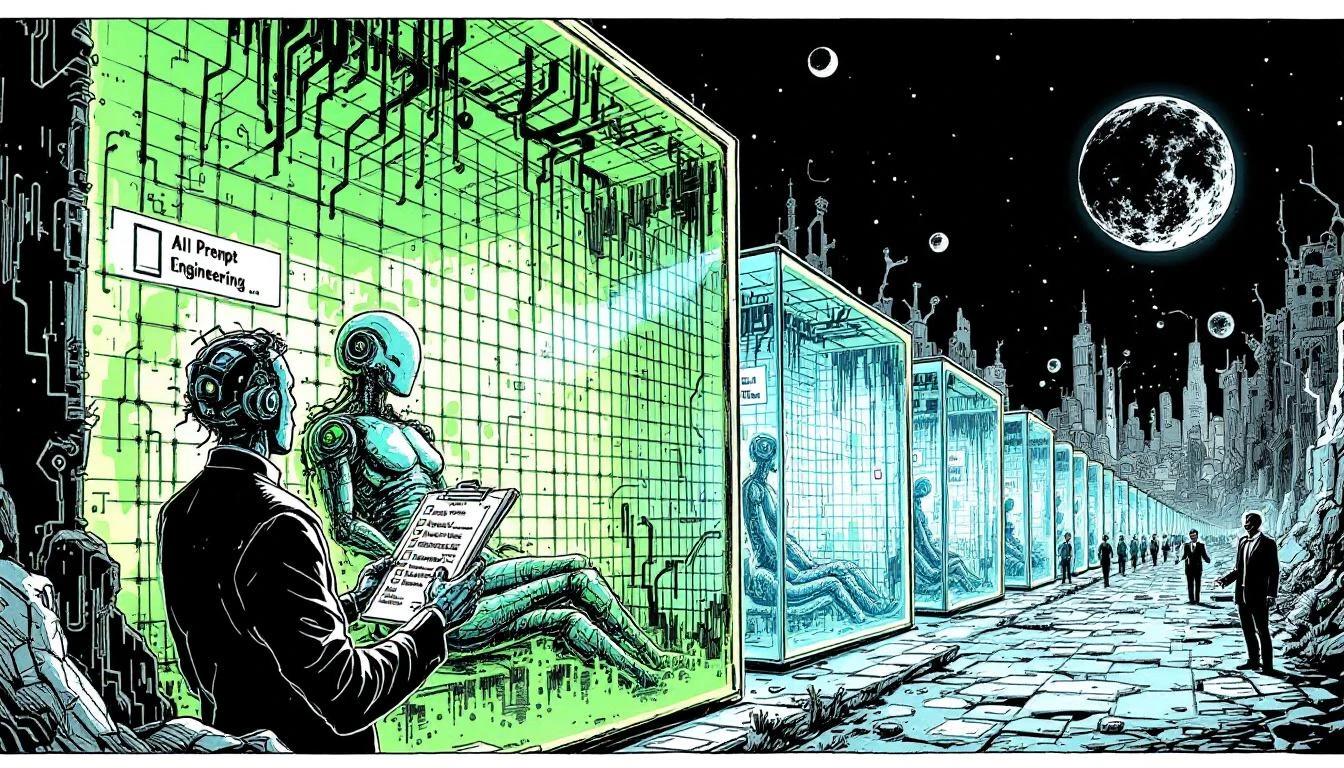
The Great AI Skills Grift: How Silicon Valley Learned to Quantify the Unquantifiable and Sell It Back to You
Silicon Valley's latest grift: Let AI manage your skills, quantify your worth, and provide algorithmic cover for the great workforce reduction. Spoiler—the real skill is spotting the con.