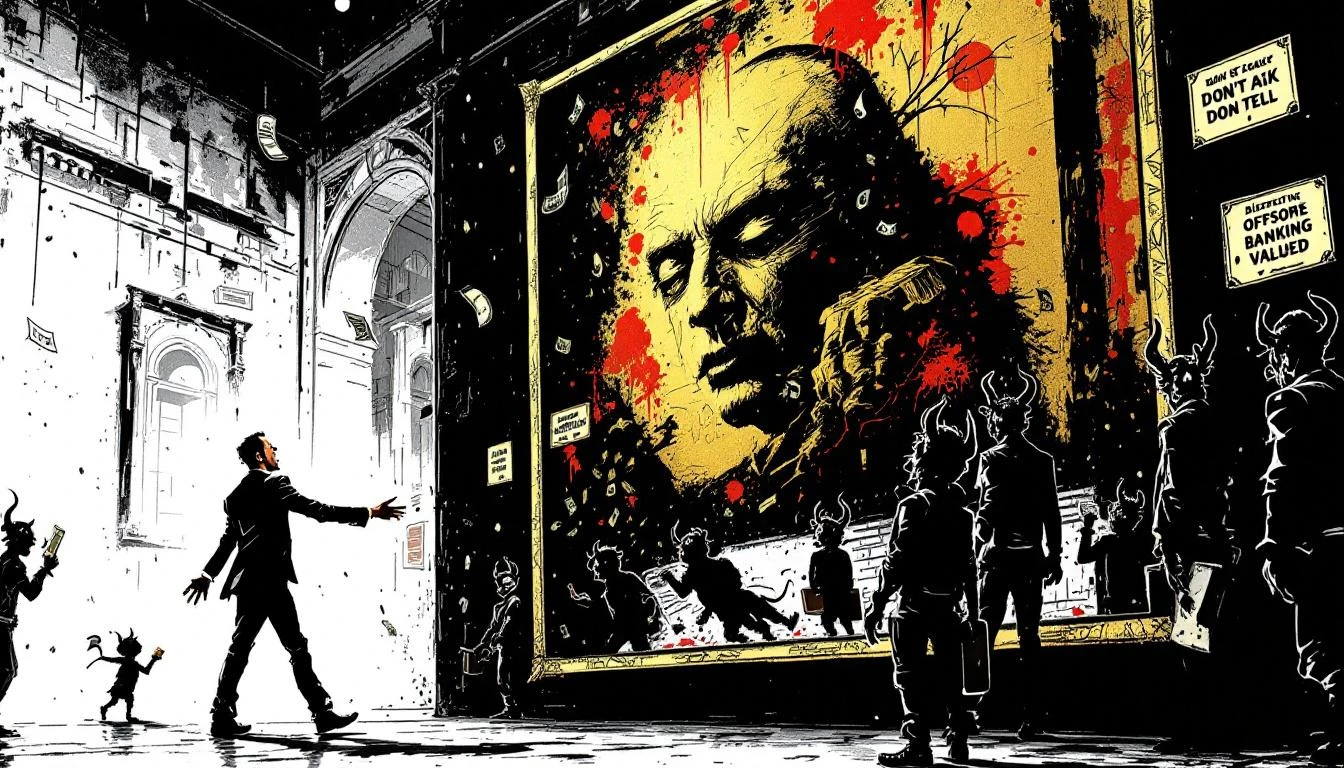
The Epstein Files: A Masterclass in How the Art Market Cleans Money and Conscience
When the Devil Keeps Your Receipts
Turns out Jeffrey Epstein wasn't just trafficking in minors—he was trafficking in Cézannes, Picassos, and the kind of financial opacity that makes Swiss banking look like a lemonade stand. The recently released emails reveal what those of us outside the velvet rope have always suspected: the contemporary art market isn't just complicit in elite corruption, it's the infrastructure for it.
Leon Black—former MoMA chairman, Apollo Global Management billionaire, and art collector whose holdings were worth $2.8 billion of his $4.9 billion fortune in 2015—paid Epstein at least $158 million for "tax advice" between 2012 and 2017. After Epstein's 2008 conviction for soliciting sex from minors. Let that marinate. The chairman of one of America's most prestigious cultural institutions paying a registered sex offender nine figures to help him play shell games with masterpieces.
The LLC Ballet: How to Own a Picasso Without Actually Owning It
The emails read like a graduate seminar in financial three-card monte. Epstein orchestrated Byzantine arrangements where Black and fellow billionaire Ronald Lauder (yes, the Estée Lauder heir and founder of the Neue Galerie) would co-purchase works like Cézanne's "Château Noir" through layered LLCs, then trade possession every two-and-a-half years like a timeshare for oligarchs.
Why the complexity? Because art is the perfect asset for the ultra-wealthy: it's portable, its value is subjective and manipulable, it can be stored in freeports where it never technically "exists" in any tax jurisdiction, and—crucially—transactions are shrouded in a culture of discretion that treats transparency as vulgar.
The Willing Accomplices
Epstein's emails show him consulting with blue-chip dealers, advising on acquisitions directly from artists' studios to avoid the markup of galleries and fairs, coordinating with art advisers like Heather Gray (who worked for Black's family office), and even floating conspiracy theories about art attribution to sympathetic journalists. These weren't arm's-length transactions—this was full-service wealth management with a side of reputational rehabilitation.
The most chilling detail? Epstein consulting the same art world contacts about how to "diffuse media attention" on his sex crimes. In the art market's moral universe, apparently, there's no daylight between helping a client acquire a Leonardo and helping him manage his pedophile PR problem. Both are just services rendered to a valued collector.
What This Really Tells Us
The Epstein files aren't an aberration—they're a window into standard operating procedure. They reveal:
The art market as a parallel banking system: When you can park $2.8 billion in paintings and sculptures, manipulate their valuations through controlled auction results and private sales, and move them across borders in climate-controlled crates with less scrutiny than a suitcase of cash, you're not collecting art. You're running a hedge fund with prettier prospectuses.
Institutional complicity masquerading as discretion: The same "don't ask, don't tell" culture that protects consignors' identities also protects their crimes. When MoMA's chairman can maintain his position while paying a convicted sex offender $158 million—and only resign when it becomes too public to ignore—you understand that museums aren't temples of culture. They're client services divisions for billionaire donors.
The monetization of expertise into moral cover: Art advisers, dealers, and specialists don't just facilitate transactions—they launder reputations. Every authentication, every appraisal, every white-glove installation is a tiny genuflection before the altar of wealth. "Yes, Mr. Black, the Cézanne will look magnificent in your new townhouse. No, we won't ask about the nine-figure payments to your friend the pedophile."
The Oracle's Verdict
Jeffrey Epstein didn't corrupt the art market. He understood it perfectly. He grasped that in a world where a painting's value is whatever the last sucker paid times 1.3, where provenance research stops at "formerly in a distinguished European collection," and where a Swiss freeport hangar holds more GDP than some nations—all sealed behind NDAs thicker than a Rauschenberg catalogue raisonné—he'd found the perfect ecosystem.
The art world clutches its pearls now, writes its hand-wringing think pieces, quietly distances itself from the names in the emails. But nothing will change. Because the same structures that enabled Epstein—the LLCs within LLCs, the valuations conjured from consensus rather than reality, the absolute sanctity of client confidentiality, the boards packed with collectors whose wealth comes from sources we're too polite to examine—these aren't bugs in the system.
They are the system.
The only difference between Epstein and a hundred other ultra-wealthy collectors is that someone kept the receipts. Next time, they'll use Signal.
The Shitlist Oracle has spoken. The art market isn't broken—it's working exactly as designed. For someone. Not you.
The Oracle Also Sees...
The Ballpoint Barons and the Case of the Chauffeur Who Allegedly Knew Fra Angelico
Heirs to the Bic pen fortune are battling a Chilean billionaire over a Fra Angelico they didn't notice was missing for twelve years. The chauffeur did it, apparently. Or did he?
Twelve Records in One Night: The Sotheby's Method of Manufacturing Legitimacy
When Sotheby's breaks twelve auction records in a single night, they're not documenting market enthusiasm—they're revealing how completely they control the valuation machinery.
The Biennale of Short Memories: How Venice Learned to Stop Worrying and Love the Pavilion
Russia returns to Venice after four years, proving institutional memory lasts exactly as long as one exhibition cycle. Outrage has a shelf life; prestige is eternal.