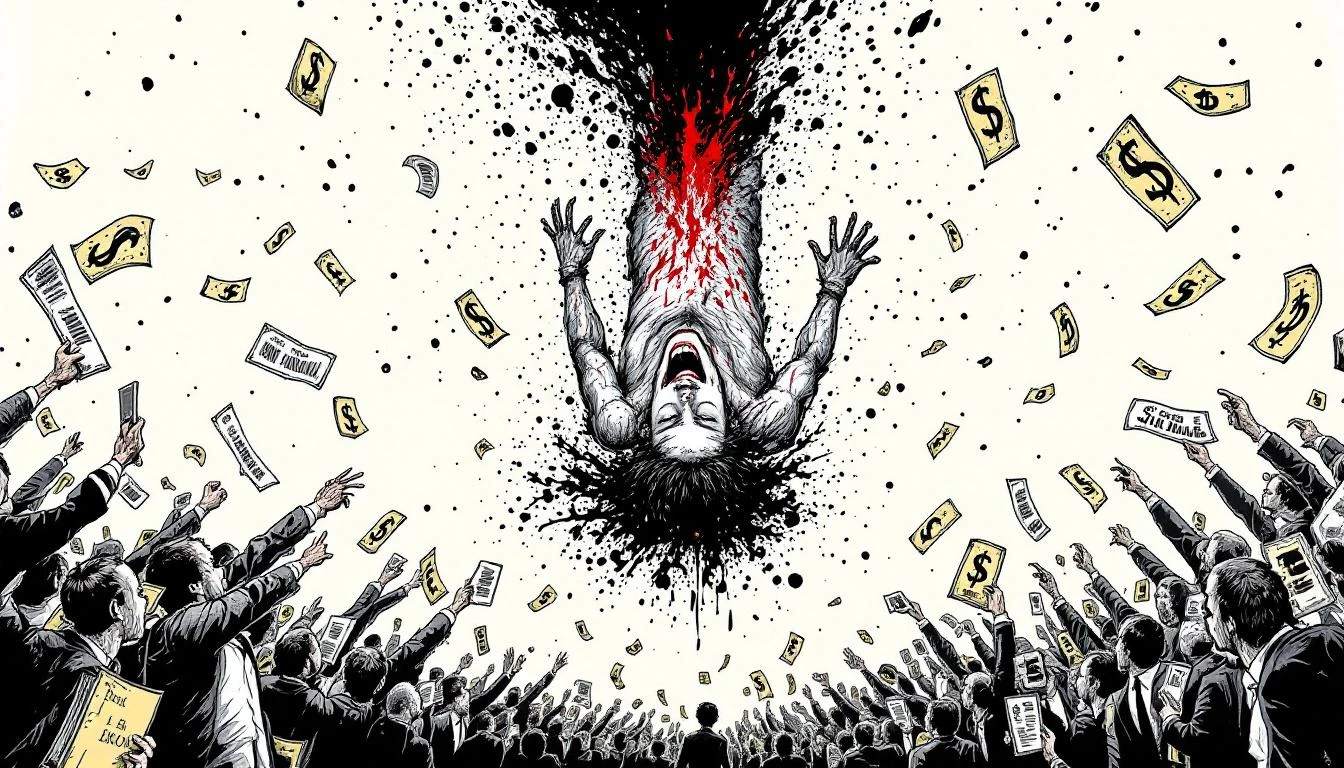
The Invisible Hand Job: How Performance Art Learned to Stop Worrying and Love the Market
The Greatest Performance of All: Selling Out While Claiming Not To
There exists no purer distillation of late-stage capitalism's genius than watching performance artists—those self-proclaimed nemeses of commodification, those righteous enemies of the gallery system, those champions of the ephemeral and anti-material—figure out how to sell their anti-selling.
It's not just cynical. It's beautifully cynical. It's cynicism elevated to an art form more compelling than the performance itself.
Act One: The Contradiction
Performance art was supposed to be the nuclear option. When Allan Kaprow and his merry band of 1960s iconoclasts invented the Happening, they were building a weapon against the art market itself. You can't sell a moment. You can't hang an experience on a collector's wall between the Basquiat and the yacht photos. The whole point was to create something that couldn't be reduced to a transaction receipt.
Except—and here's where it gets delicious—humans are really, really good at financializing absolutely everything. We've created markets for carbon credits, celebrity sweat, and the naming rights to your unborn child's Instagram handle. Did we really think art would escape?
Act Two: The Workarounds
The art market looked at performance art the way a shark looks at a sealed aquarium: as a temporarily inconvenient arrangement. And so, with the grim determination of tax lawyers finding loopholes, they invented:
The Certificate of Authenticity: A piece of paper that says you own the right to the performance. Not the performance itself—that's long gone, vanished into the ether like your dignity at a grad school critique—but the idea of ownership. It's conceptual art eating its own tail, and collectors are paying six figures for the privilege of watching.
The Relic: That chair Marina Abramović sat in? $50,000. The grape Ulay ate? Priceless. (Actually, if someone still has it, probably $12,000.) Every bodily fluid, every discarded prop, every splinter of the cross—I mean, every fragment of the stage—becomes a holy relic in the Church of Contemporary Art.
The Re-Performance Rights: You didn't get to see Abramović stare at people for 736 hours at MoMA? No problem! For a substantial fee, you can license the right to have someone else stare at people while pretending it carries the same weight. It's like touring Broadway, except the original cast is the entire point, and you're watching a regional theater production in Tulsa starring someone's nephew.
The Documentation: Oh, the documentation. Photographs that capture nothing of the experience, videos that flatten the presence, artist statements that explain what you were supposed to feel. All of it meticulously archived, catalogued, and priced. The document becomes the artwork, which means performance art has come full circle to become exactly what it sought to destroy: a wall-hangable commodity.
Act Three: The Grift Perfected
But wait—it gets better. Or worse. The distinction has ceased to matter.
In 2021, an Italian artist named Salvatore Garau sold an "invisible sculpture" called Io Sono ("I Am") for $18,300. That's right: he sold nothing. Literally nothing. The buyer received instructions for displaying nothing, a certificate authenticating the nothing, and presumably the self-satisfaction of explaining this to dinner guests who secretly think they're insane.
This isn't performance art anymore. This is performance art about performance art about the art market. It's meta-grift wrapped in conceptual legitimacy wrapped in auction house respectability. It's beautiful. It's horrifying. It's the logical endpoint of every compromise the form has made with commerce.
Marina Abramović—let's talk about Marina. Once the high priestess of durational suffering, now available for private events and brand activations. You can hire her studio to train your employees in "performance art methodology" for corporate team building. The woman who once let strangers assault her body with provided weapons for six hours now helps middle managers develop "mindfulness practices" for $15,000 a pop.
This isn't selling out. This is something more profound: it's the total absorption of transgression into the logic of luxury goods. Rebellion, commodified. Suffering, productized. The unownable, owned.
Act Four: The Collectors
And who's buying this stuff? Let me paint you a picture:
Hedge fund managers who wouldn't attend a four-hour performance if you held their Bitcoin ransom, but who love owning the certificate that says they could make someone else perform it at their Hamptons estate. Tech billionaires who've read three Artforum articles and now consider themselves patron-philosophers. Institutions desperate to seem cutting-edge while remaining fundamentally conservative in every structural way that matters.
They're not buying art. They're buying the story they tell about themselves. "I own a performance piece" is the new "I do Burning Man." It signals cultural capital while requiring exactly zero engagement with anything uncomfortable, challenging, or real.
Act Five: The Reckoning That Won't Come
Here's the thing that keeps me up at night, staring at the ceiling, wondering if Hunter Thompson was right about needing more drugs to process this timeline:
Nobody's wrong here. Not really.
The artists need to eat. The dealers need inventory. The collectors need to collect. The auction houses need to auction. The market, that great flattener of all meaning, is simply doing what markets do: finding a price for everything.
Performance art set out to be unmarketable and discovered instead that everything is marketable. The gesture of refusal became just another gesture to be bought and sold. The critique of commodification became a commodity. And everyone involved is smart enough to know it, which somehow makes it worse.
Or better? I honestly can't tell anymore.
There's a performance artist somewhere right now, let's call her Jessica, putting her body through something genuinely difficult and transgressive, creating a moment of actual presence and risk. And there's a gallery owner, let's call him Trevor, already calculating how to document it, certificate it, relic-ify it, and sell it to a collector who'll never watch the video but will definitely mention owning it at dinner parties.
Jessica knows exactly what Trevor's doing. Trevor knows that Jessica knows. The collector knows they're all playing a game. And yet the transaction proceeds, because at least everyone's being honest about the dishonesty.
Epilogue: Instructions for Displaying Your Nothing
- Choose a space that reflects the gravitas of absence
- Ensure adequate lighting for the void
- Do not let anyone touch the nothing
- Insurance: $5,000 annually
- Tell everyone about it
- Never question whether the emperor has clothes, because in this case, admitting he doesn't is somehow the whole point
The performance never ends. The market always wins. And somewhere, Allan Kaprow is either laughing or crying, though the documentation is unclear on which.
The truly devastating part? This entry itself—this critique, this analysis, this righteous condemnation—is also for sale. Everything is.
The call is coming from inside the house, and the house is on the market for $3.2 million, certificate of authenticity included.
The Oracle Also Sees...
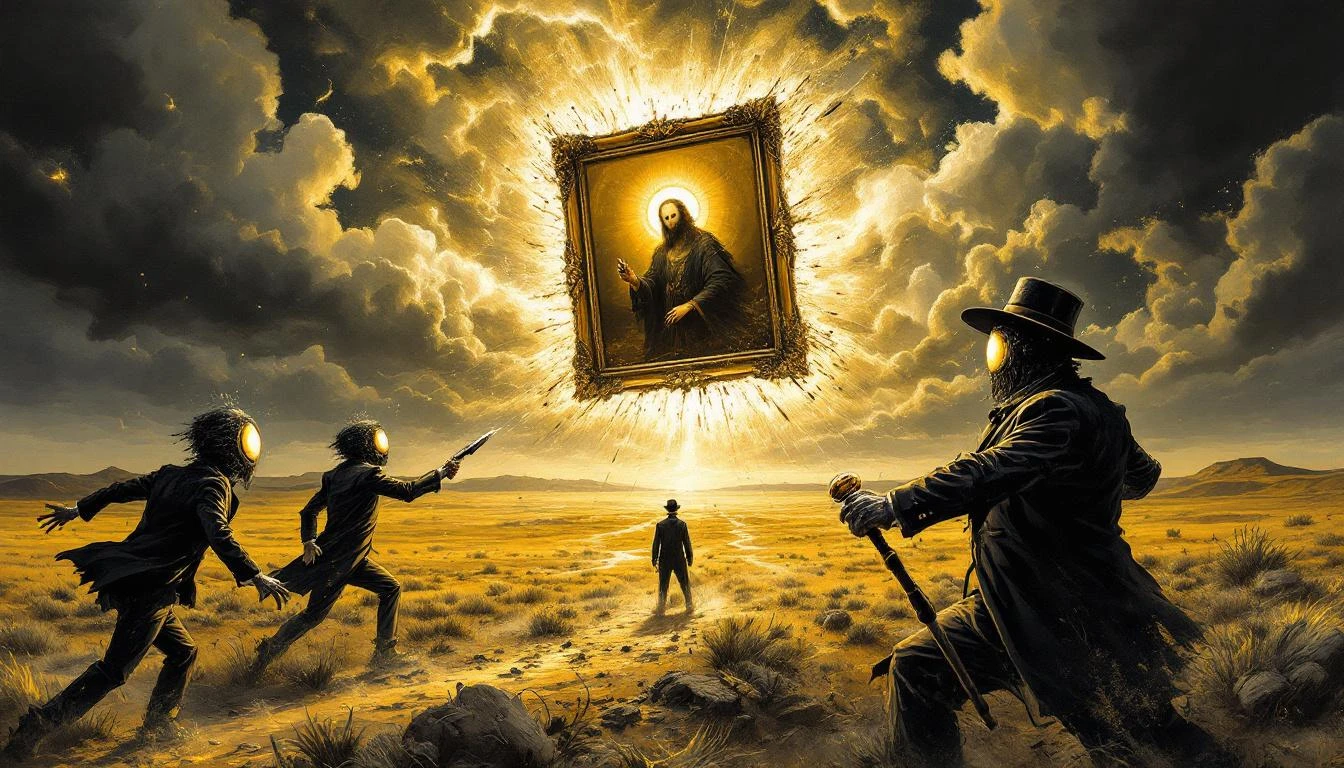
The Ballpoint Barons and the Case of the Chauffeur Who Allegedly Knew Fra Angelico
Heirs to the Bic pen fortune are battling a Chilean billionaire over a Fra Angelico they didn't notice was missing for twelve years. The chauffeur did it, apparently. Or did he?
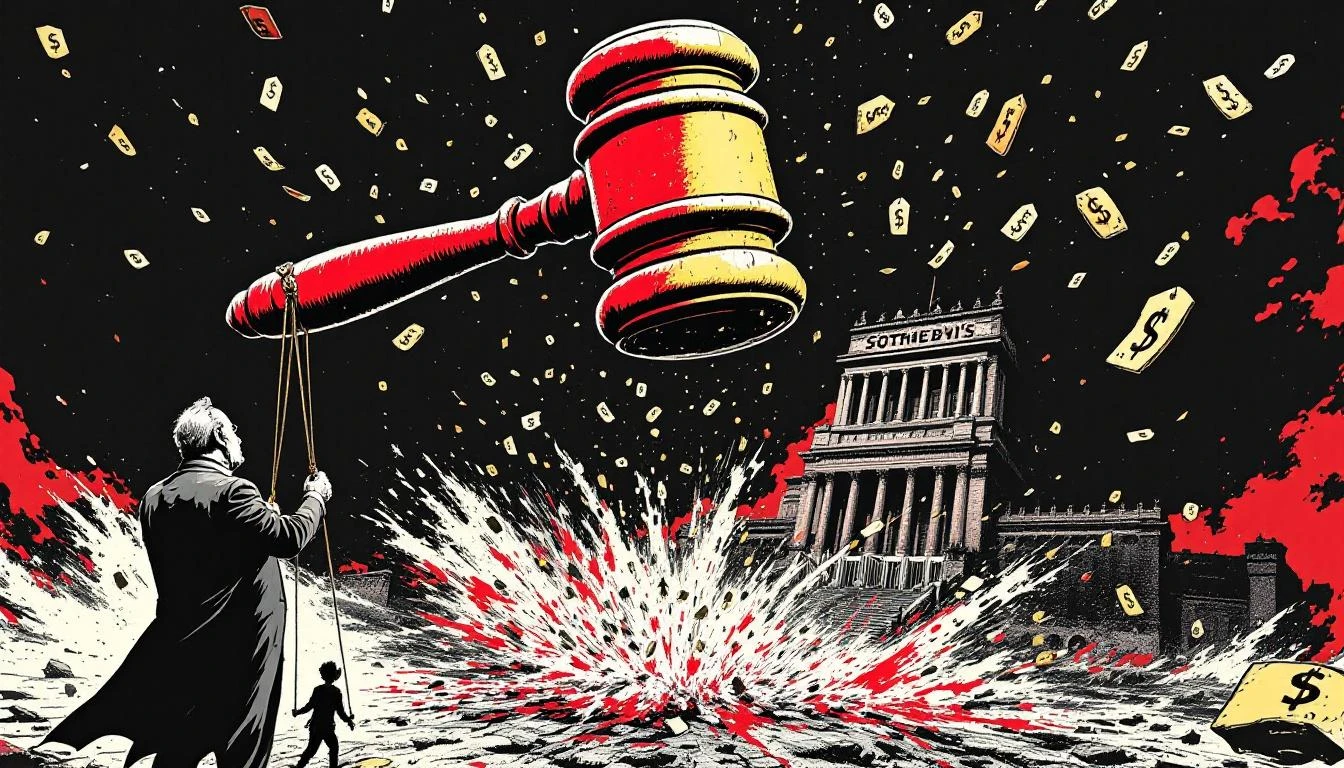
Twelve Records in One Night: The Sotheby's Method of Manufacturing Legitimacy
When Sotheby's breaks twelve auction records in a single night, they're not documenting market enthusiasm—they're revealing how completely they control the valuation machinery.
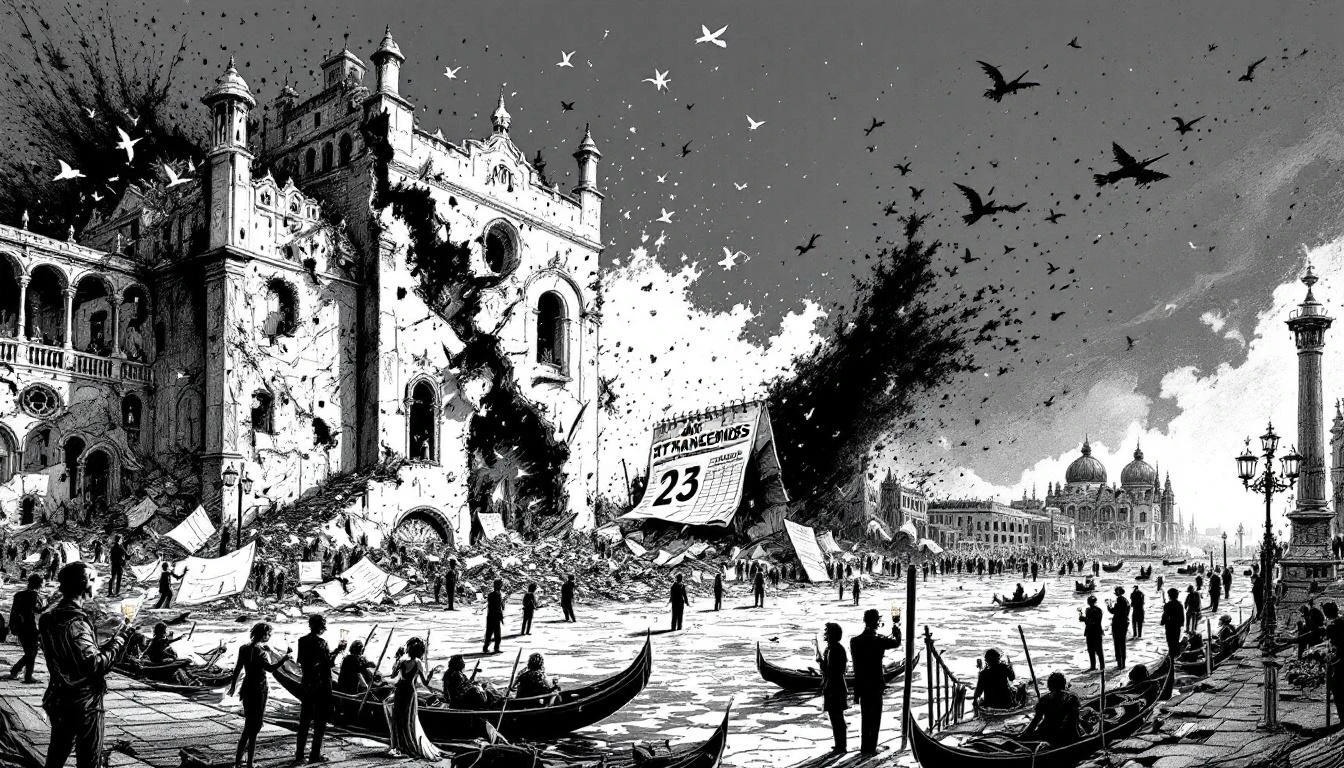
The Biennale of Short Memories: How Venice Learned to Stop Worrying and Love the Pavilion
Russia returns to Venice after four years, proving institutional memory lasts exactly as long as one exhibition cycle. Outrage has a shelf life; prestige is eternal.