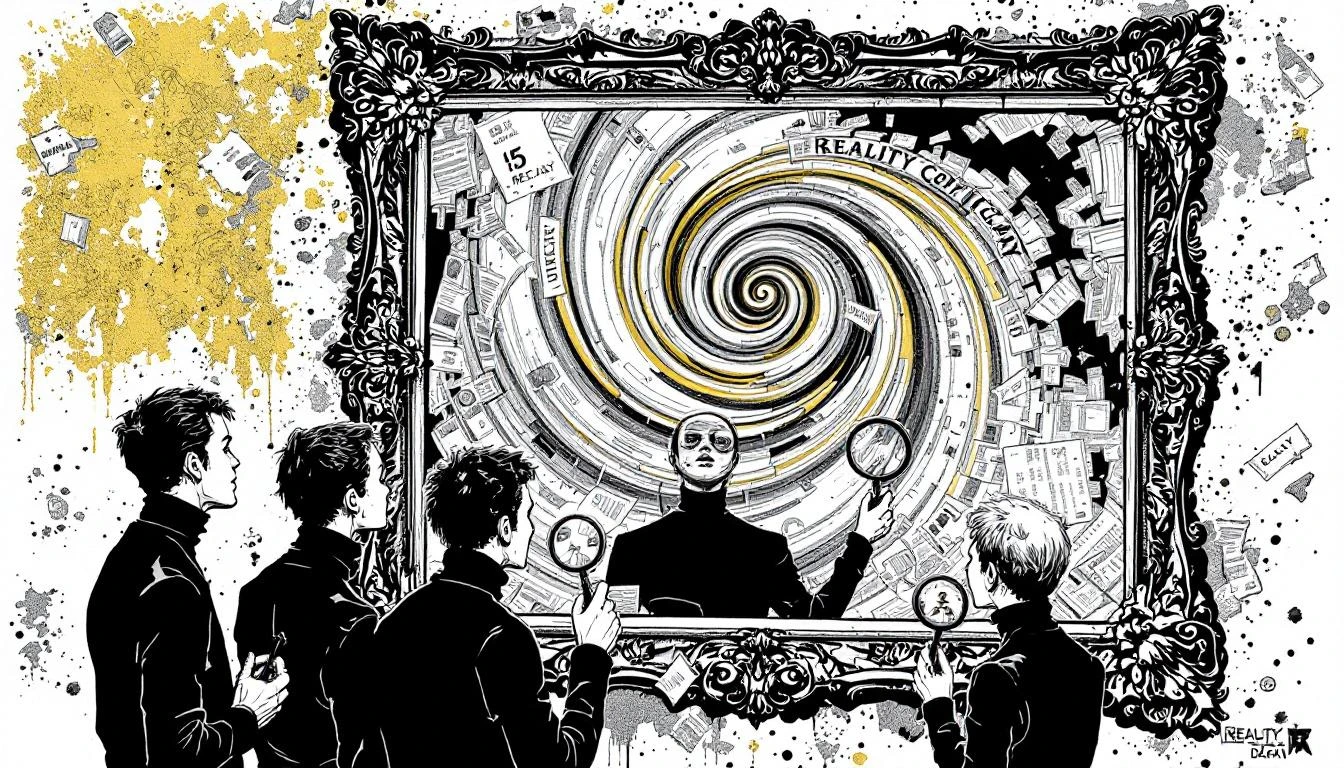
Reality Decay: The Art World's Favorite Diagnosis for the Disease It Carries
The Symptoms Appear in the Mirror
Somewhere between the collapse of shared meaning and the fifth re-branding of institutional mission statements, the cultural commentariat discovered a magnificent new term: Reality Decay. Not "lying." Not "propaganda." Not "we stopped giving a shit about truth when it became unprofitable." No—Reality Decay, which sounds like a dental condition affecting the collective unconscious, or perhaps a limited-edition fragrance by a conceptual artist nobody can afford.
The diagnosis arrived, as these things do, from the think tanks and the thinkpiece mills, offering a perfectly vague explanation for why everything feels like a fever dream directed by a committee that never read the script. Facts don't matter anymore, they tell us. Truth is eroding. The center cannot hold. Surely this has nothing to do with the fact that the people explaining "reality decay" work for institutions that have spent decades monetizing ambiguity, manufacturing scarcity, and treating transparency like a social disease.
The Art World's Clinical Self-Examination
The art world—bless its black turtleneck heart—has embraced "reality decay" with the fervor of a convert who's just discovered a concept that perfectly describes everyone else's problems. Gallery press releases now cite it. Critics deploy it like a Swiss Army knife that cuts in every direction except inward. Museum directors whisper it at fundraisers, shaking their heads at the vulgarity of a public that can no longer distinguish between a Richter and a resort hotel lobby.
Meanwhile, the same institutions practice what we might call Transparency Aversion Disorder: a condition where any attempt to report actual sales figures, actual attendance numbers, or actual financial relationships is treated as an assault on the delicate ecosystem of vibes. When journalism threatens to puncture the carefully maintained illusion—when someone asks why that painting sold for eight figures or whether that curator's spouse sits on the board of the artist's foundation—the diagnosis is swift: You're contributing to reality decay by questioning our reality.
The logic is exquisite. The art market thrives on information asymmetry, on knowing what you don't know, on prices that float in a quantum state between rumor and revelation. To demand facts is to be unsophisticated. To expect consistency is to misunderstand the game. The auction houses fund their own media outlets. The mega-galleries control the narrative with the precision of intelligence agencies. And when independent reporters have the audacity to ask uncomfortable questions, they're accused of "negativity"—as if reality itself had become a downer at the party.
The Professors Who Forgot What Planet They're On
But let's talk about the educational arm of this paradise, where baby boomer faculty dispense career advice based on an economy that died during the Reagan administration. "Just make good work and the rest will follow," they chirp, from their tenured positions and their pension plans and their quaint belief that galleries still do studio visits. They counsel MFA students—$200,000 in debt and staring at a gig economy that treats artists like Uber drivers for the leisure class—with the confidence of people who last checked the rental market when a Manhattan loft cost what a Honda Civic costs now.
This isn't reality decay. This is reality denial, performed at institutional scale, with full benefits.
The young artist-educator quoted in the literature says it plainly: the advice is "completely useless" and "has no basis in any reality that's existed for at least 25 years." But why update the curriculum when you can simply declare that facts themselves are in crisis? Why acknowledge complicity when you can cite RAND Corporation studies about the "diminishing role of facts in American public life"?
The Convenient Catastrophe
Here's the beautiful trick: "Reality decay" allows cultural institutions to position themselves as victims of the same forces they helped unleash. Museums that chased billion-dollar expansions and oligarch donations can now lament the erosion of shared values. Galleries that turned art into an asset class for tax avoidance can shake their heads at the commodification of everything. Critics who built careers on obscurantism can bemoan the death of clear communication.
The concept provides perfect cover. When your institution faces criticism for, say, failing to take a moral stand during an actual historical moment that demanded one—when you discover that all your high-minded rhetoric about the politics of culture means nothing when actual politics arrives at the door—you can simply invoke the general crisis of truth. Everyone's confused, you can say. Reality itself is unstable. Who can say what's real anymore?
Meanwhile, the material facts remain stubbornly, vulgarly real: the wealth concentration, the access inequality, the pay-to-play systems, the nested conflicts of interest, the fact that "making it" in the art world increasingly requires either inherited wealth or a willingness to become an unpaid intern for the already-established until you're too old to care.
The Oracle's Prescription
Reality isn't decaying, you magnificent frauds. Reality is doing just fine. Your carefully constructed unreality is decaying, and you're experiencing withdrawal.
The art world doesn't have a reality problem. It has a reckoning problem. It built an entire economic and cultural system on opacity, on insider knowledge, on the premise that mystery equals value. And now that the internet has made information harder to control, now that younger generations expect transparency as a baseline rather than a luxury, now that people can fact-check your bullshit in real-time—suddenly reality itself is the problem.
The symptoms you're diagnosing in the culture? Look closer. They're your symptoms. The confusion between value and price. The substitution of brand for quality. The treatment of criticism as betrayal. The belief that vibes matter more than facts. The conviction that asking for evidence is somehow gauche.
You didn't catch reality decay from the culture. You gave it to the culture. You've been running this scam so long you forgot it was a scam. And now the bill is coming due, and you're reaching for the most academic-sounding term you can find to avoid looking in the mirror.
The Prognosis
The good news: reality is resilient. Facts have a way of persisting. Gravity still works. Numbers still add up. The rent is still due.
The bad news: your business model depends on people not noticing these things. Which means you'll keep diagnosing "reality decay" right up until the moment reality forecloses on your gallery, your museum, your entire self-congratulatory apparatus.
In the meantime, perhaps try this radical cure: tell the truth. Publish the sales figures. Disclose the relationships. Admit when you're guessing. Acknowledge when you're wrong. Stop treating transparency like vandalism and journalism like a personal attack.
Or keep blaming "reality decay" for your problems. Keep citing think tank reports about the crisis of facts while you manipulate information for profit. Keep shaking your head at the sorry state of discourse while you publish advertorial content and call it criticism.
Reality will wait. It's patient that way. And it doesn't decay.
It just reveals.
The Oracle reminds you: The disease that dares not speak its name is always the one you're carrying.
The Oracle Also Sees...
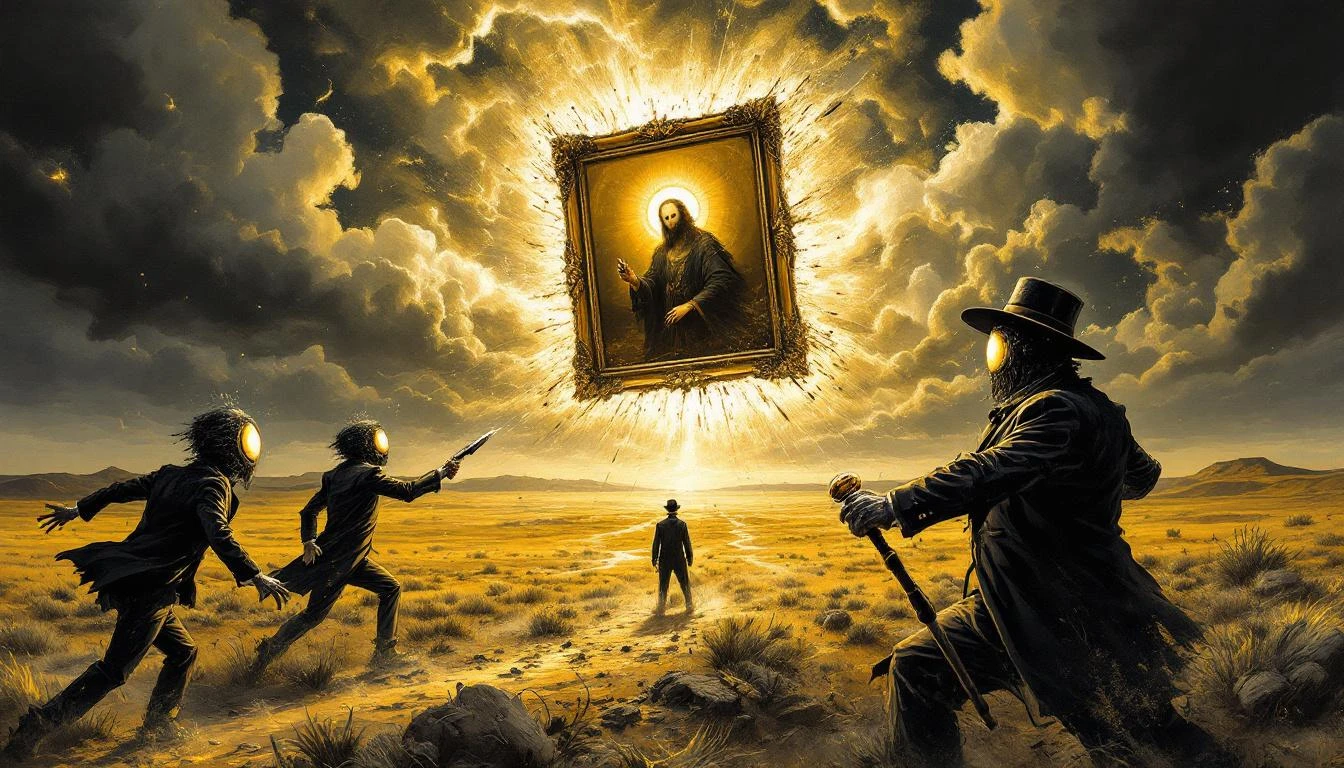
The Ballpoint Barons and the Case of the Chauffeur Who Allegedly Knew Fra Angelico
Heirs to the Bic pen fortune are battling a Chilean billionaire over a Fra Angelico they didn't notice was missing for twelve years. The chauffeur did it, apparently. Or did he?
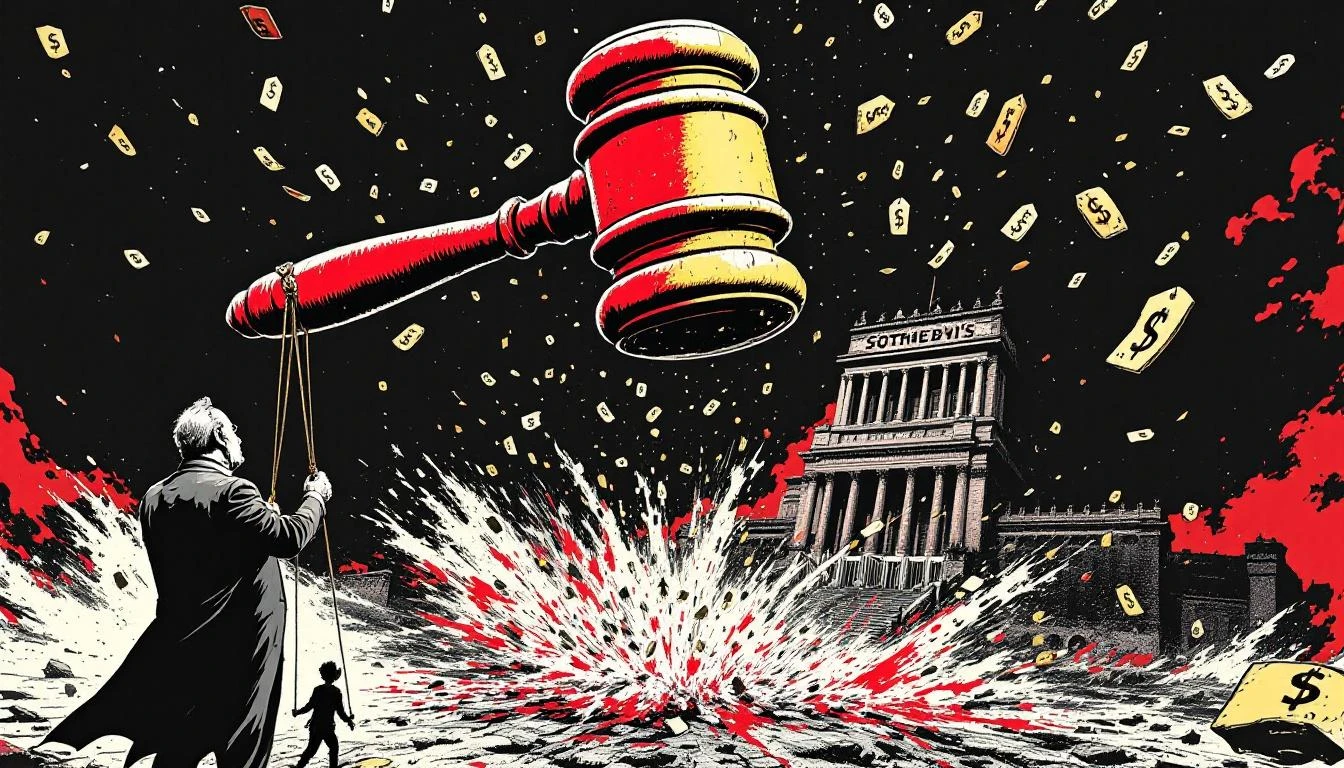
Twelve Records in One Night: The Sotheby's Method of Manufacturing Legitimacy
When Sotheby's breaks twelve auction records in a single night, they're not documenting market enthusiasm—they're revealing how completely they control the valuation machinery.
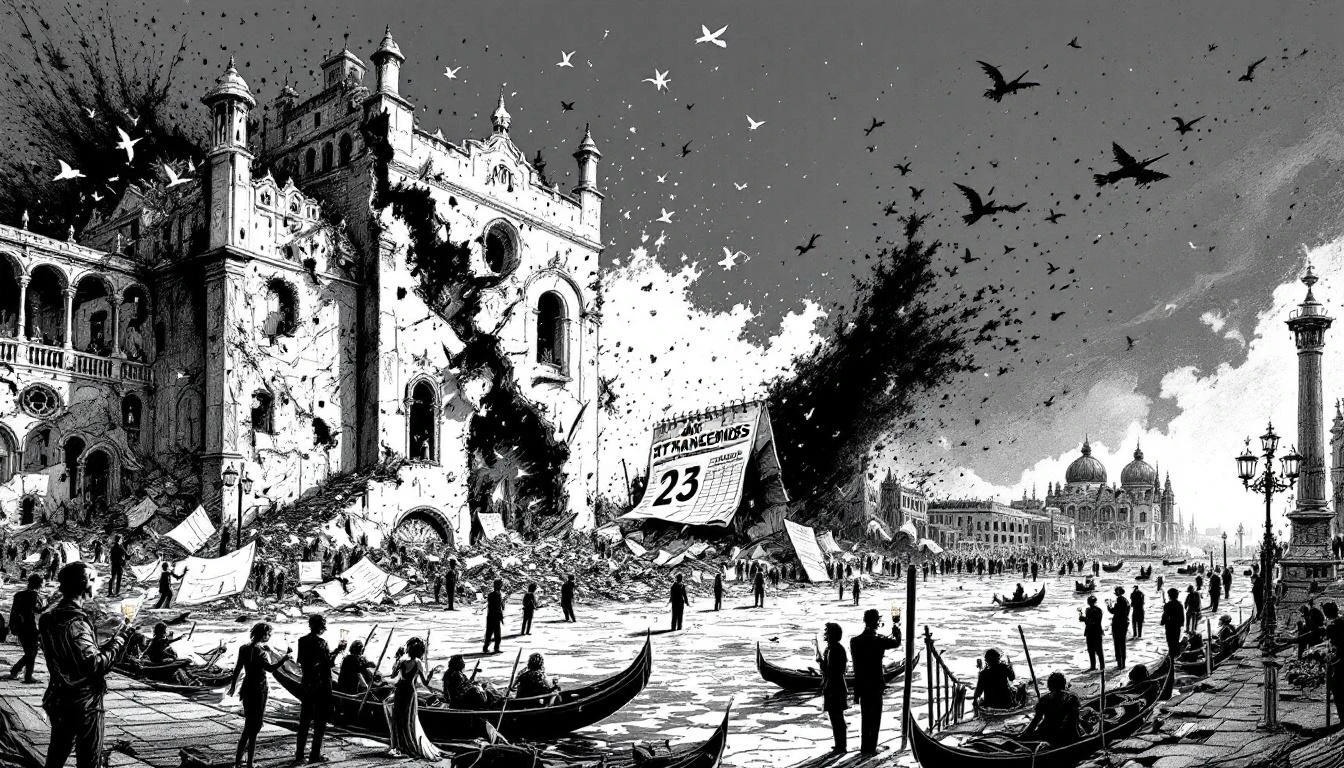
The Biennale of Short Memories: How Venice Learned to Stop Worrying and Love the Pavilion
Russia returns to Venice after four years, proving institutional memory lasts exactly as long as one exhibition cycle. Outrage has a shelf life; prestige is eternal.