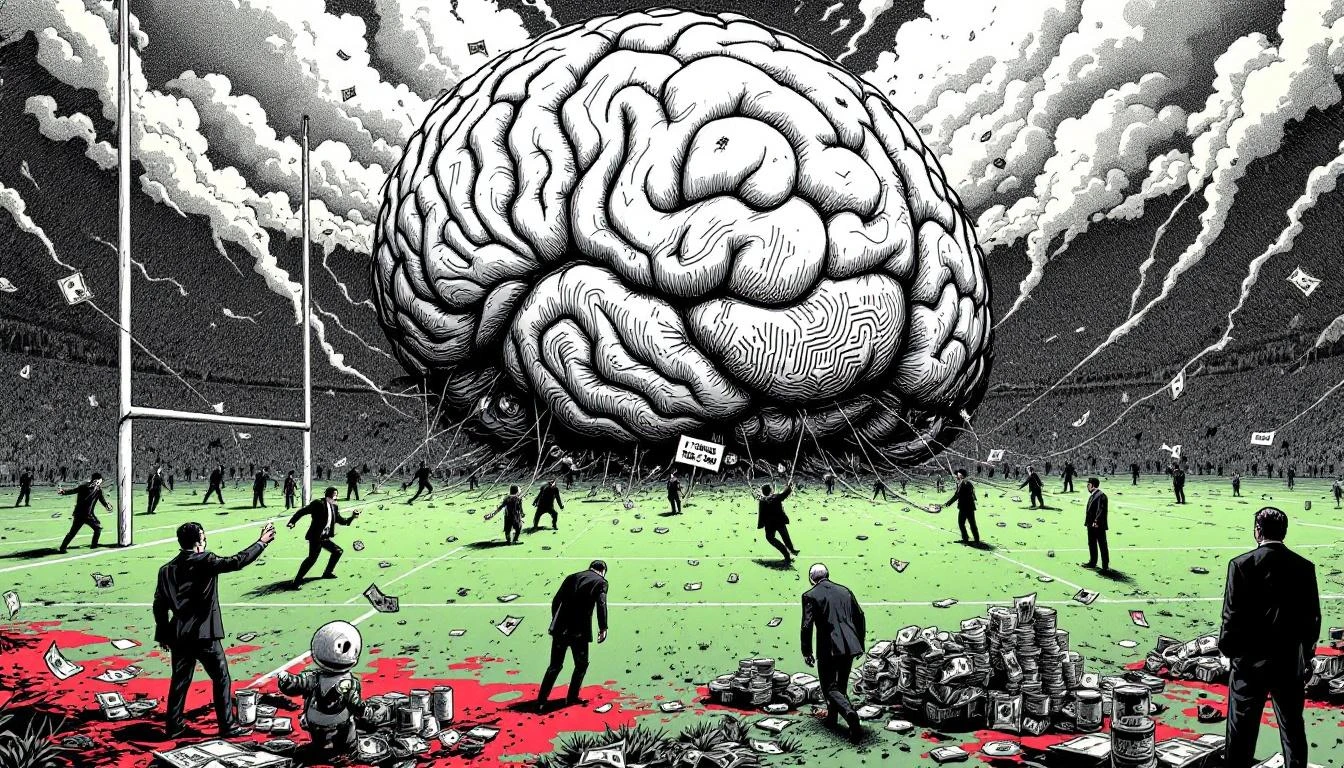
The Super Bowl Curse Cometh: When AI Companies Buy Ads, Duck and Cover
The Pets.com Sock Puppet Has Returned, and This Time It's Wearing a Neural Network
There exists in the annals of American capitalism a certain iron law, as reliable as gravity and twice as cruel: When technology companies start buying Super Bowl ads to explain their products to your drunk uncle, the bubble is already deflating. The hissing sound you hear isn't the beer tap — it's seven years of venture capital dreams escaping through a $7 million, 30-second valve.
This year's big game delivered the prophecy right on schedule. Anthropic. OpenAI. Google. Amazon. Meta. The entire AI industrial complex lined up like lemmings at a cliff's edge, each clutching a suitcase full of investor money and a desperate pitch about chatbots that can... what, exactly? Find your lost dog? Write your grocery list? Convince Chris Hemsworth that Alexa wants him dead?
The pitch meeting must have been extraordinary: "Listen, we've raised $47 billion at a $157 billion valuation, but Karen in accounting still doesn't know what we do. What if — hear me out — what if we spent the GDP of a small nation to air a 30-second spot between beer commercials featuring freaky robots getting their drink on?"
And someone said yes. Many someones said yes.
The History of Hubris, Televised
We've seen this movie before, and the ending never changes.
Dot-com boom, 2000: Super Bowl XXXIV featured seventeen internet companies. Pets.com. Epidemic.com. Computer.com. LifeMinders. WebEx. Within months, most were dead. Pets.com's sock puppet became a cultural punchline, a mascot for an entire generation's financial stupidity.
Crypto winter, 2022: Super Bowl LVI was nicknamed "The Crypto Bowl." FTX. Crypto.com. Coinbase. EToro. Wall-to-wall blockchain evangelism selling the future of money to people who just wanted to watch grown men give each other concussions. FTX's founder is now serving 25 years in federal prison. The stadium that bore Crypto.com's name got quietly renamed.
The pattern is clear, brutal, and apparently unteachable: When an industry needs to convince regular people it matters, it's because the smart money already knows it doesn't.
The Desperation Stinks Like Stale Beer and Bad Decisions
Ro CEO Zachariah Reitano — bless his optimistic heart — wrote that Super Bowl ads can take you "from a brand most people have never heard of to one your mom is texting you about."
Yes. And then what? Your mom texts you asking, "What's Anthropic?" and you reply, "It's like ChatGPT but with principles," and she says, "What's ChatGPT?" and you realize you've just described a company burning through hundreds of millions of dollars annually to build a slightly different flavor of autocomplete that nobody asked for.
The ads themselves told the whole sad story. According to MNTN CEO Mark Douglas, they "fell flat" and were "poorly executed." Of course they were. How do you sell artificial intelligence to someone who just wants to watch football? You can't. You can only create expensive confusion, which is exactly what happened.
Chris Hemsworth thinking Alexa wants to kill him? That's not marketing. That's a Freudian slip. The ads accidentally told the truth: these companies have built powerful tools they don't fully understand, can't adequately explain, and are increasingly desperate to monetize before the quarterly earnings calls turn into funeral dirges.
The IPO Sprint to Nowhere
PitchBook nailed it: this Super Bowl ad war is about the "land grab for market share ahead of reported public listings." Translation: OpenAI and Anthropic are racing to IPO before anyone realizes the emperor's new neural network is just very expensive pattern matching.
And here's where it gets genuinely dark: OpenAI just announced plans to sell ads in ChatGPT. Let that marinate. The supposed revolutionary technology that will transform human civilization... needs to show you ads for DoorDash to stay solvent. Anthropic spent millions on Super Bowl ads specifically to mock OpenAI for this pivot, which is like watching two people drowning fight over who's wearing the nicer swimsuit.
The AI arms race has devolved into a circular firing squad, broadcast in 4K to 120 million people who couldn't care less.
The Real Bubble: Attention, Not Technology
Here's the uncomfortable truth that $50 billion in venture capital can't purchase: AI works. It's just not worth what they're charging.
The technology is real. Large language models can do impressive things. But "impressive" and "economically viable" occupy different planets in the solar system of capitalism. Every AI company is burning cash like it's 1999, praying that somehow, somewhere, someone will figure out a business model beyond "charge enterprises $30 per seat per month for spicy autocomplete."
They won't. Because the technology wants to be free — or at least, commodity-priced. Open-source models nip at the heels of proprietary ones. Meta gives away Llama like a drug dealer's first sample. The moat is a puddle.
So they buy Super Bowl ads. They hire Serena Williams. They make Chris Hemsworth pretend to be afraid of his kitchen. They do anything except confront the core problem: they've built impressive technology for a market that barely exists at prices nobody can sustain.
The Curse Arrives Right On Schedule
Mark your calendars. In twelve months, eighteen at most, we'll read the postmortems. The layoffs will come first — 10%, then 20%, then "strategic restructuring." The valuations will quietly get cut. Series G investors will take haircuts that would make a medieval barber blush. Someone will write a book called "The AI Bubble: How Silicon Valley Learned Nothing From History."
The Super Bowl curse isn't magic. It's logic. When companies spend fortunes trying to create demand that doesn't organically exist, they're not investing in growth. They're paying for a eulogy.
The freaky robots getting their drink on aren't celebrating. They're at the wake. Chris Hemsworth isn't afraid Alexa will kill him. He's afraid his stock options will expire worthless. And somewhere, the ghost of the Pets.com sock puppet watches and laughs, because it's seen this episode before, and it knows exactly how it ends.
The AI bubble isn't bursting. It's already burst. The Super Bowl ads were just the sound of seven years of hype hitting the pavement at terminal velocity.
Pass the beer. We're going to need it.
The Oracle Also Sees...
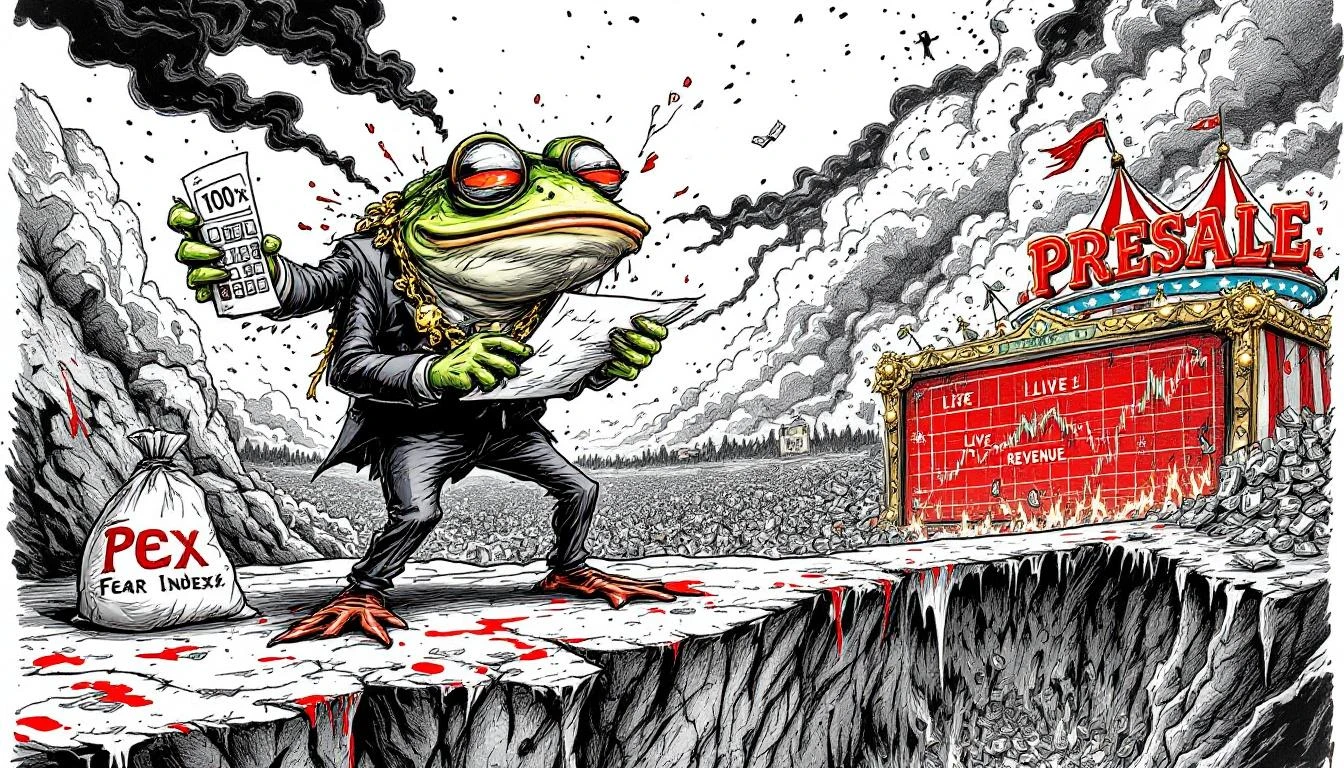
AlphaPepe and the Weaponized Mathematics of Desperation
When the Fear Index hits 13 and the market bleeds, AlphaPepe emerges to promise 100x returns through 'live DEX revenue' and the kind of mathematical confidence that only comes from tokens that haven't met reality yet.
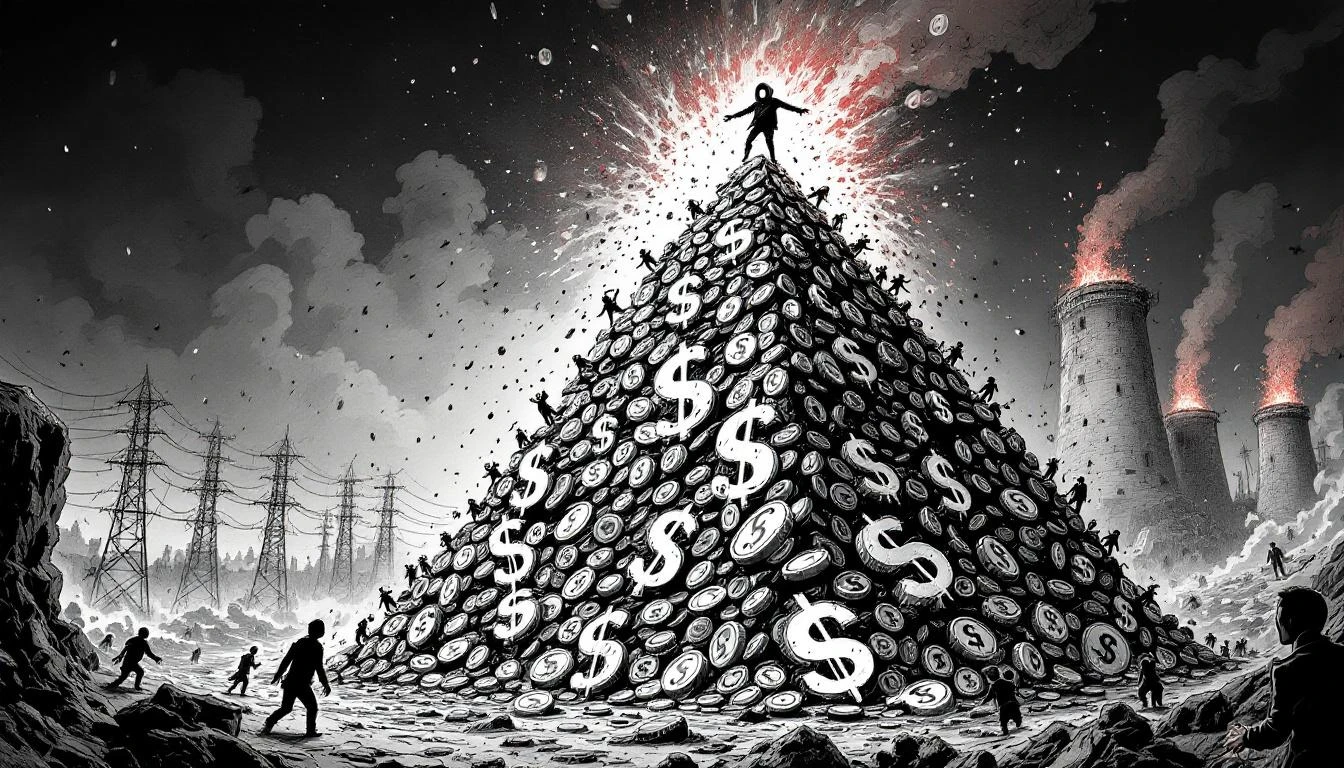
The Great Crypto Grift: How Digital Beanie Babies Became a Religion
Cryptocurrency: where libertarian fantasy meets Ponzi mathematics, environmental catastrophe gets monetized, and millions learned that 'decentralized' just means 'no one to call when it all collapses.'
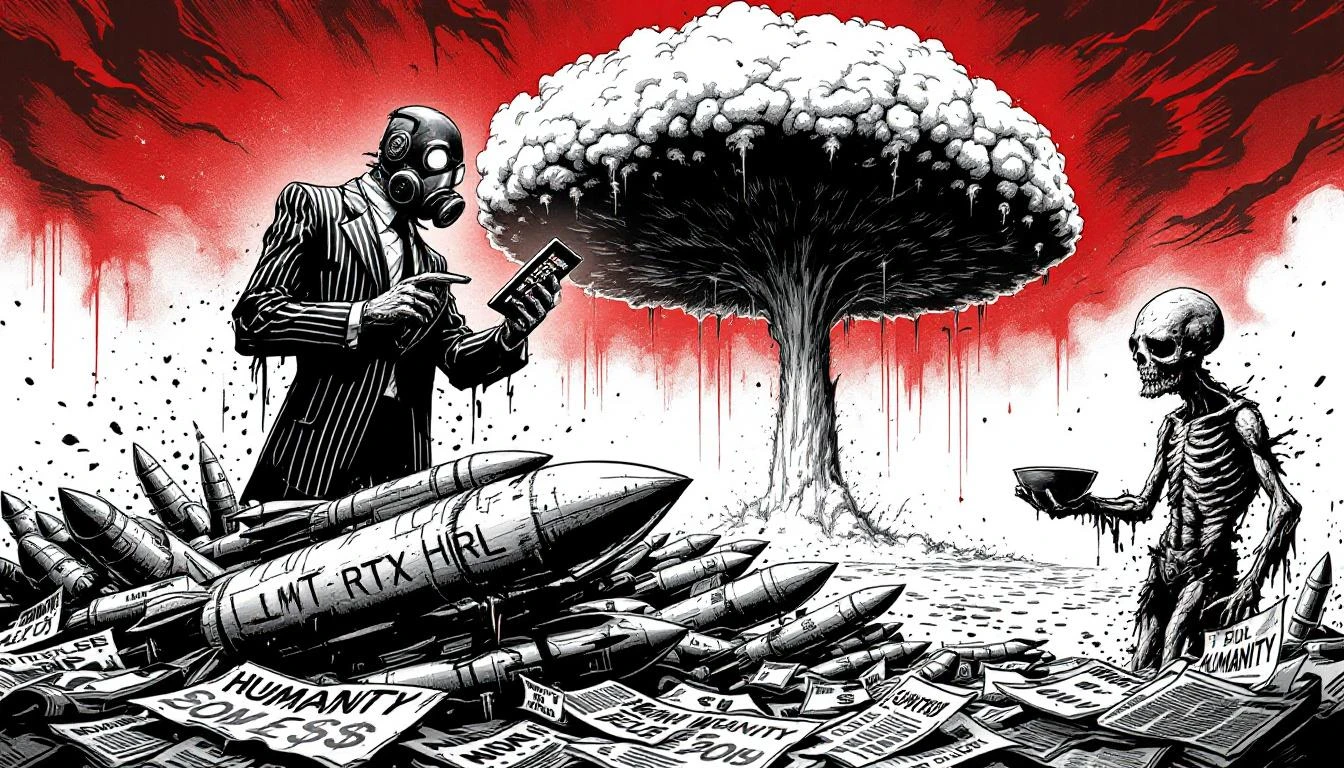
The Ghoul's Guide to Profiting from Armageddon: Eleven Magical Stocks to Keep You Warm While the World Burns
Wall Street discovers you need exactly eleven stocks—not ten, not twelve—to profit from potential war with Iran. The precision is what makes it art.