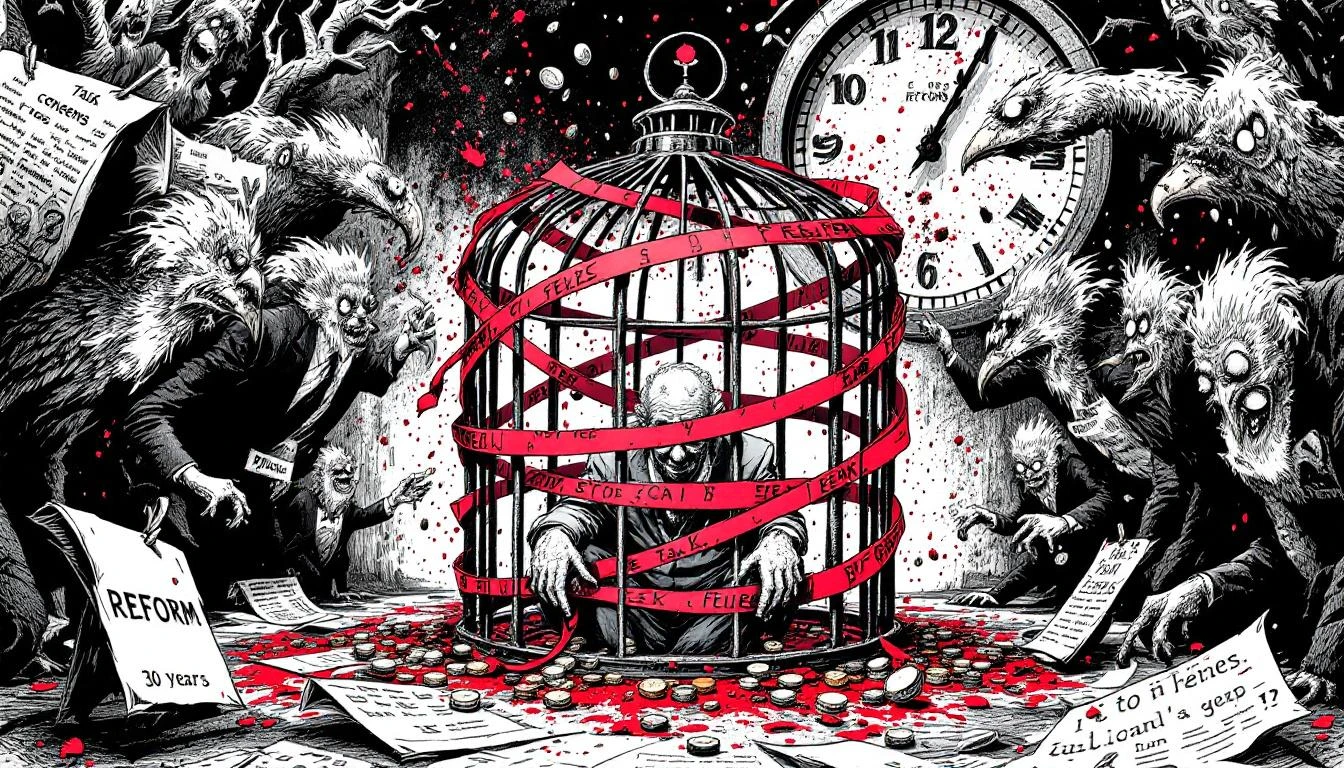
New York Discovers Its Guardianship System Is a Nightmarish Hellscape, Promises To Maybe Think About Doing Something Eventually
The Kafka Award for Bureaucratic Excellence Goes To...
Ladies and gentlemen, gather 'round for the feel-good story of the legislative season: New York State has just discovered—with the wide-eyed wonder of a toddler finding his own feet—that its guardianship system is, and I quote from the technical literature, "in shambles."
This is rather like discovering in 2024 that the Titanic may have had some structural issues. Investigators found the system was a Kafkaesque nightmare thirty years ago. Three. Decades. The Berlin Wall fell. The Soviet Union collapsed. We invented the internet, social media, and seventeen different ways to order artisanal toast. And through it all, New York's guardianship system has been quietly grinding vulnerable elderly and disabled citizens into a fine paste of neglect, abuse, and bureaucratic indifference.
The Performance Art of Legislative Concern
But now—now—Assembly Member Charles Lavine has introduced legislation to fix this "readily identifiable problem." One must admire the phrasing. "Readily identifiable." Like a tumor the size of a grapefruit that's been "readily identifiable" since the Clinton administration but somehow never quite made it onto the appointment calendar.
The new bill would ensure state funding only goes to "reputable" nonprofits—a standard so revolutionary it's shocking no one thought of it before. What were they funding previously? Disreputable nonprofits? Organizations openly advertising their commitment to elder abuse and financial exploitation? "New York's Premier Guardian Services: We Steal From Grandma So You Don't Have To™"?
The Price of Human Dignity: A Bargain at Any Price (As Long As That Price Is Zero)
Governor Hochul's task force—because God knows we can't have reform without a task force; it's unconstitutional—recommends spending "at least $15 million per year" on a system responsible for 30,000 human beings. That's $500 per vulnerable New Yorker per year. For context, New York spends more than that on legislative stationery.
The $237 billion state budget passed this year included precisely zero new dollars for guardianship services. Zero. Nada. Zilch. But fear not—there's a resolution now. City Councilmember Crystal Hudson has introduced a resolution calling on state leaders to do something. Not doing something herself, mind you—just politely suggesting that someone, somewhere, perhaps in another branch of government entirely, might want to consider possibly taking action at some theoretical point in the future.
The Constituency Without Clout
Here's the thing about elderly people trapped in court-mandated guardianships: they make terrible campaign donors. They're not bundling checks at $5,000-a-plate fundraisers. They have no lobbyists, no PACs, no influence peddlers working the corridors of power. Many of them are literally unable to manage their own affairs—that's why they're in guardianships in the first place.
So they languish. They suffer. They die in squalor while their court-appointed "protectors" drain their accounts and ignore their medical needs. And the system churns on, year after year, grinding through human lives like a wood chipper with a stuck reverse gear.
The Great Discovery
ProPublica had to do the state's homework for it, documenting the horrors that have been hiding in plain sight since the first Bush administration. Abuse. Neglect. Fraud. The full catastrophe. And now, finally, lawmakers have noticed.
They've noticed with the urgent intensity of a man discovering he should probably address that chest pain that's been bothering him since 1994. They've noticed and formed committees. They've held hearings. They've expressed concern. Assembly Member Lavine himself notes the bill "has no opposition"—which is the legislative equivalent of saying your proposed solution is so toothless that even the people profiting from the problem can't be bothered to fight it.
The Fix Is In (The Mail, Slowly, Via Donkey Cart)
The proposed reforms are a masterclass in doing the absolute minimum while claiming credit for bold action:
- Funding must be reviewed by "a contractor picked by the director of the state's Office for the Aging" (because what this system really needs is another layer of bureaucracy)
- Nonprofits must be "in good standing" (a bar so low it's technically underground)
- Maybe, possibly, if we're feeling really ambitious, we might consider mandating training and setting caseload limits
This is reform in the same way that putting a "Caution: Wet Floor" sign next to a open sewer is infrastructure improvement.
The Prophecy
Here's what will happen: The bill will pass with great fanfare. Press releases will be issued. Lawmakers will pat themselves on the back for addressing this "readily identifiable problem" with such decisive action. The reforms will be underfunded, underenforced, and undermined by the same structural indifference that created the crisis in the first place.
And in another thirty years, some other investigative journalists will discover—with the same shock and horror—that New York's guardianship system is still a nightmare. And a new generation of legislators will express concern, form task forces, and promise reform.
Because that's how the machine works. It doesn't solve problems. It processes them. It converts human suffering into committee meetings and legislative theater. It takes the screams of the vulnerable and transforms them into the gentle hum of bureaucratic activity.
And all the while, the elderly and infirm wards of New York State sit in their court-appointed prisons, waiting for someone to remember they exist.
The Punchline
The cruelest joke of all? Assembly Member Lavine is probably right. The bill will pass. It will pass because it changes almost nothing. It will pass because the people it's supposed to protect have no power to demand better. It will pass because in the grand calculation of New York politics, 30,000 voiceless, powerless, vulnerable human beings don't register on the scale.
Welcome to the guardianship system, folks. The state is here to help you. Eventually. Maybe. If it gets around to it. No promises.
The Oracle Also Sees...
The Ghost Network: How Insurance Companies Discovered They Could Charge You for Mental Health Care They Never Intended to Provide
An insurer ran a 'ghost network' of non-existent mental health providers for years, got caught, and settled for pocket change. The system isn't broken—it's working exactly as designed.
The Magic Kingdom's Dark Ride: How ICE Turned Mickey Mouse Into Kafka's Jailer
A nine-year-old's Disney vacation turned into 113 days of detention. She decorated her testimony with rainbows and hearts. America decorated its conscience with receipts and razor wire.
United for National Integrity Equality & Democracy Action Committee: When Your Acronym Is Longer Than Your Principles
A PAC with a name longer than a Victorian novel's subtitle and principles thinner than its filing paperwork joins the grand tradition of virtue-signaling cash vacuums.